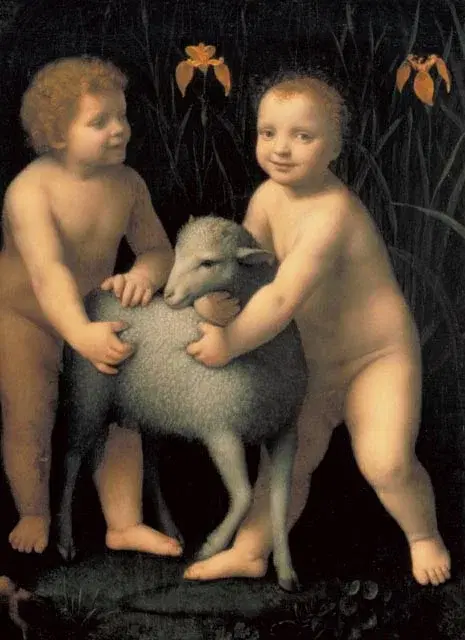
Bernardino Luini
- c. 1480 – 1532
- Italian
- High Renaissance
A brief story
Bernardino Luini was a Lombard painter of the Italian High Renaissance, born around 1480–1485 in Luino on the shores of Lake Maggiore. Little is known with certainty about his early training, though he worked extensively in Milan and its environs and came under the decisive influence of Leonardo da Vinci, whose style he absorbed with such fidelity that several of his works were long attributed to Leonardo himself. His soft modeling of faces, gentle sfumato transitions, and idealized treatment of the Virgin and Child type owe a clear debt to Leonardo's example, though Luini brought his own decorative refinement to these borrowings.\n\nLuini was a prolific artist who worked in both fresco and panel painting, leaving major fresco cycles in churches and oratories throughout Lombardy — most notably at Santa Maria degli Angioli in Lugano, San Maurizio al Monastero Maggiore in Milan, and the sanctuary at Saronno. His altarpieces and devotional panels display an appealing gentleness and accessibility that made his work extremely popular with collectors, particularly in the nineteenth century, when Ruskin praised him enthusiastically. Despite his enormous output, documents about his life remain scarce. He died around 1532, leaving behind a body of work that represents the graceful, provincial flowering of Leonardesque ideals across the north Italian plain.
Did you know?
The most celebrated of Leonardo's Lombard followers, Bernardino Luini translated Leonardesque softness and grace into sweeping fresco cycles and devotional panels that charmed Renaissance Lombardy and nineteenth-century collectors alike.
Don’t stop here
More to explore by Bernardino Luini