David Hockney: A Year in Normandie and Some Other Thoughts about Painting
London, United Kingdom
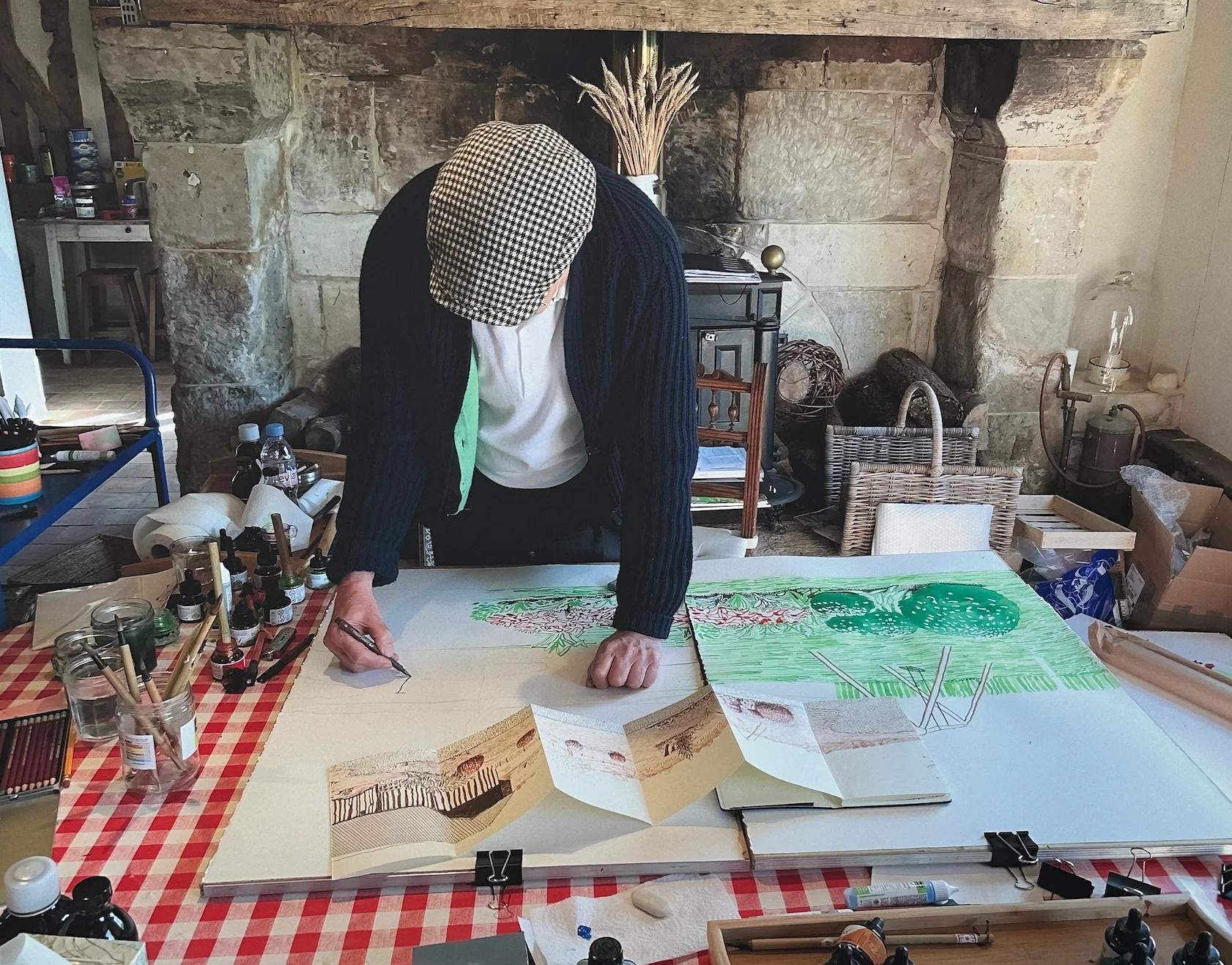
David Hockney is an English painter, draughtsman, printmaker, stage designer, and photographer. As an important contributor to the pop art movement of the 1960s, he is considered one of the most influential British artists of the 20th and 21st centuries.
David Hockney is, above all, an artist obsessed with how we see. Not what we see, but the act of looking itself — how vision works, how memory distorts space, how time bends inside an image. Across seven decades, his work has been a continuous experiment in perception.
He emerged in the 1960s as part of the British Pop generation, but never fully belonged to it. While Pop Art often leaned on irony and mass culture, Hockney was more intimate: swimming pools, bedrooms, friends, lovers, everyday moments rendered with clarity and emotional restraint. His paintings look simple at first glance, but they are carefully constructed puzzles of space and attention.
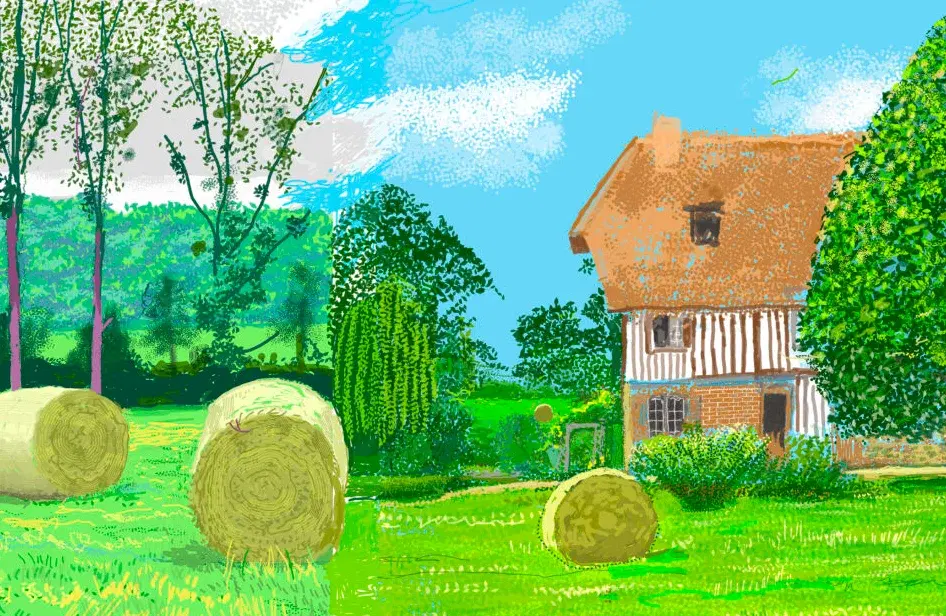
Color is central to Hockney’s language. From the sharp Californian blues of his pool paintings to the luminous greens and violets of his Yorkshire landscapes, color isn’t decorative — it’s structural. It organizes space, sets emotional temperature, and guides the viewer’s eye. Few artists have made light feel so deliberate.
David Hockney refuses to use email… but will happily send you a fax.
Well into the digital age, Hockney insisted on communicating by fax machine, calling email impersonal and ugly. Galleries, assistants, and curators had to keep a fax nearby just for him. Even more absurd: the faxes weren’t just text — they were often hand-drawn sketches, little doodles of pools, chairs, or landscapes, casually faxed across the world like it was totally normal.
Plan your visit — these exhibitions are on view now.
Don’t stop here