Henry Fuseli
- 1741 – 1825
- Swiss
- Romanticism
A brief story
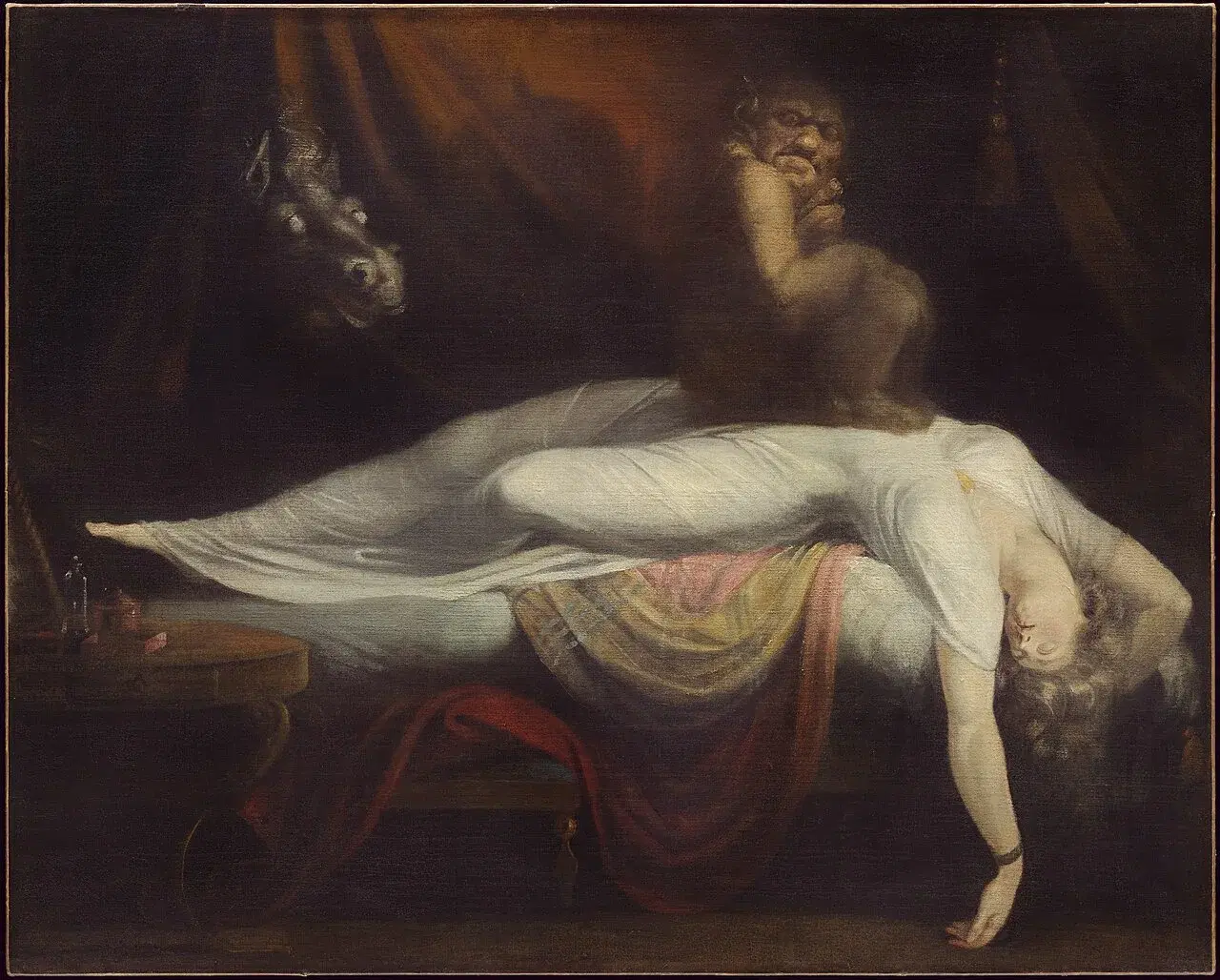
Henry Fuseli was a Swiss-born painter and draughtsman who spent most of his career in Britain, where he became one of the most distinctive voices of the Romantic era. Born Johann Heinrich Füssli in Zurich in 1741, he trained in theology before turning to art, moving to London in 1764 and eventually becoming a naturalized British subject. His early exposure to classical literature, Shakespeare, and Milton deeply shaped the literary and dramatic character of his imagery.\n\nFuseli is best known for his exploration of the irrational, the supernatural, and the erotic — territory largely unexplored by his contemporaries. His most celebrated work, The Nightmare (1781), depicting a sleeping woman tormented by a demonic incubus, became one of the defining images of Gothic imagination and prefigured the psychological concerns of the later nineteenth century. He exhibited regularly at the Royal Academy and served as its Professor of Painting from 1799, a role in which he proved an influential if provocative teacher.\n\nHis draftsmanship was bold and expressive, marked by exaggerated musculature and theatrical poses drawn from Michelangelo and Mannerist sources. Though sometimes dismissed by critics as excessive, Fuseli's willingness to paint the dark recesses of the human psyche — dreams, madness, desire, and fear — ensured his lasting relevance. He died in London in 1825, leaving behind a body of work that anticipates both Symbolism and Surrealism.
Did you know?
Swiss-born Romantic painter Henry Fuseli scandalized and captivated London with visions of nightmares, demons, and desire, producing some of the most psychologically charged images of the eighteenth century.
Don’t stop here
More to explore by Henry Fuseli