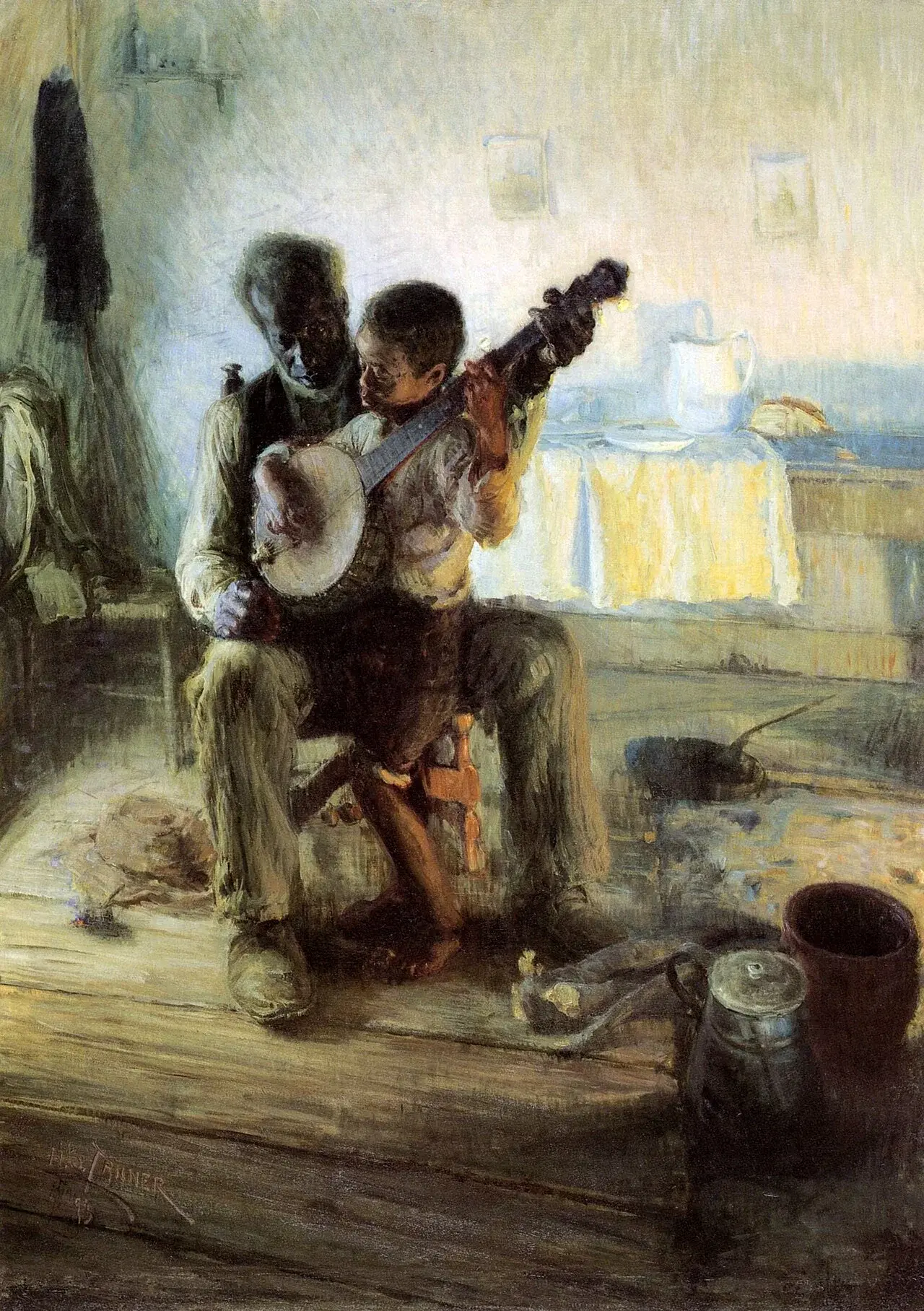
Henry Ossawa Tanner
- 1859 – 1937
- American
- Impressionism, Realism
A brief story
Henry Ossawa Tanner was an African American painter born in Pittsburgh, Pennsylvania, in 1859, and the first Black American artist to achieve sustained international recognition. The son of Benjamin Tucker Tanner, a bishop of the African Methodist Episcopal Church, he was raised in Philadelphia and showed an early passion for art. He studied under Thomas Eakins at the Pennsylvania Academy of the Fine Arts, where Eakins's rigorous realism and emphasis on anatomy and observation left a lasting mark. Facing racial discrimination that made a professional career in the United States difficult, Tanner relocated to Paris in 1891, where he found greater freedom and eventually made his permanent home.\n\nIn Paris, Tanner found both critical success and a deep spiritual purpose. His breakthrough came with 'The Banjo Lesson' (1893) and was confirmed by 'The Resurrection of Lazarus' (1896), which won a medal at the Paris Salon and was purchased by the French government. He developed a luminous, atmospheric palette — often working in blues and greens suffused with an almost otherworldly glow — and devoted much of his career to Biblical subjects treated with emotional sincerity rather than theatrical grandeur. He was also a pioneering figure in breaking racial barriers in the international art world. Tanner died in Paris in 1937, celebrated on both sides of the Atlantic as a master of religious painting and a trailblazer for African American artists.
Did you know?
The first African American painter to win international acclaim, Henry Ossawa Tanner brought quiet luminosity and spiritual depth to Biblical subjects from his adopted home in Paris, opening doors for generations of Black artists.
Don’t stop here
More to explore by Henry Ossawa Tanner