John Constable
- 1776 – 1837
- British
- Naturalism, Romanticism
A brief story
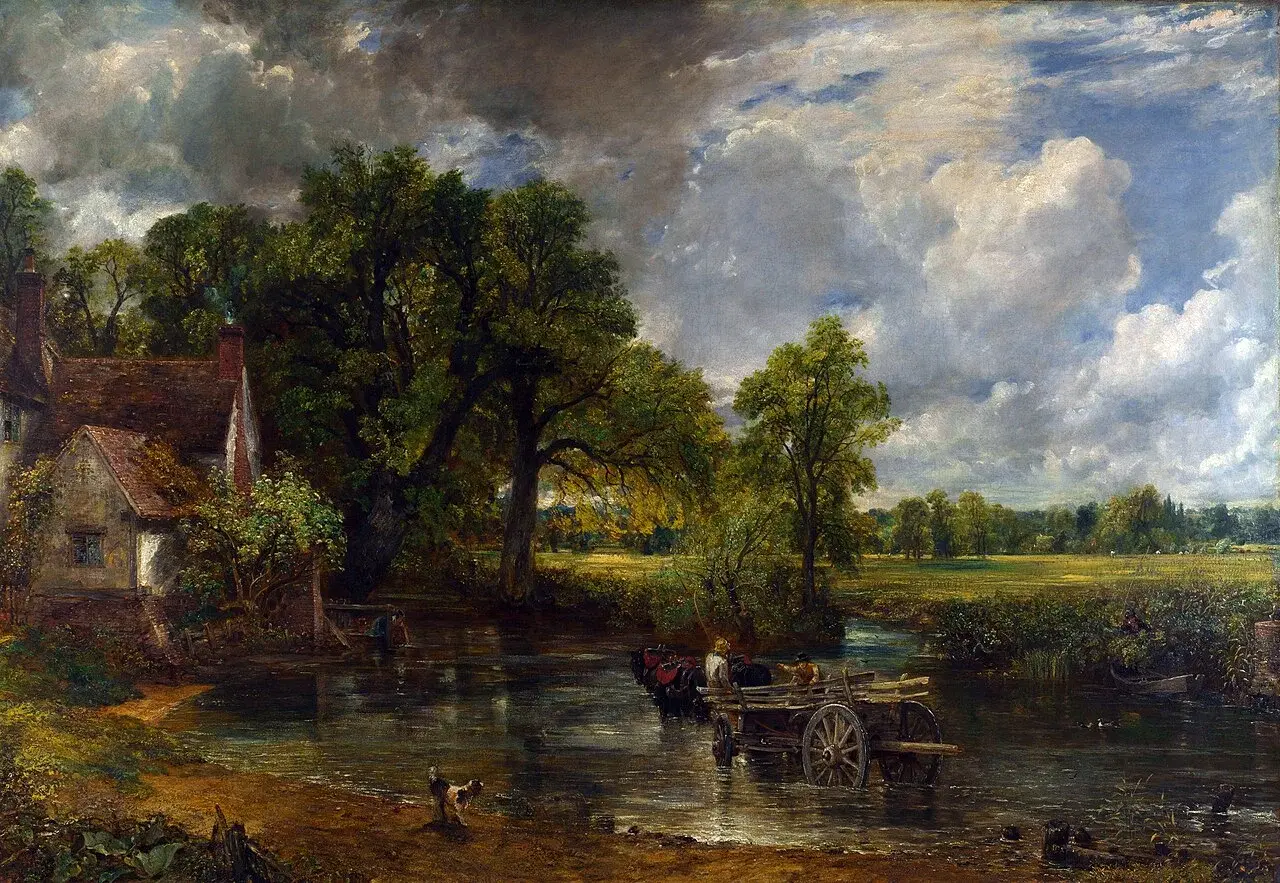
John Constable was an English landscape painter whose close, passionate observation of the Suffolk countryside transformed the tradition of landscape painting and exerted a lasting influence on art in both Britain and France. Born in East Bergholt, Suffolk, in 1776, the son of a prosperous miller, Constable grew up surrounded by the rivers, mills, and meadows that would become the defining imagery of his art. He studied at the Royal Academy Schools in London but found his true subject matter in the landscapes of his native region, an area he famously called 'my careless boyhood.'\n\nConstable rejected the classical, idealized landscapes fashionable in his day, insisting instead on direct observation of nature and meteorological truth. His large-scale 'six-footers,' including The Hay Wain (1821) and The Leaping Horse (1825), combined meticulous study with bold, vibrant brushwork that captured the transient effects of light, cloud, and moisture in a way unprecedented in British painting. He made hundreds of oil sketches outdoors — a practice then considered preparatory at best — that are now recognized as some of the most modern-feeling works of his century.\n\nConstable was never fully appreciated by the British establishment during his lifetime; he was not elected a full Royal Academician until 1829, at the age of fifty-three. In France, however, his work created a sensation when exhibited at the Paris Salon in 1824, directly inspiring the Barbizon painters and, through them, the Impressionists. He died in London in 1837, leaving a legacy that would reshape European landscape painting for generations.
Did you know?
John Constable revolutionized landscape painting by insisting on the truth of direct observation, capturing the shifting skies and green meadows of his native Suffolk with a freshness and vitality that inspired generations of painters across Europe.
Don’t stop here
More to explore by John Constable