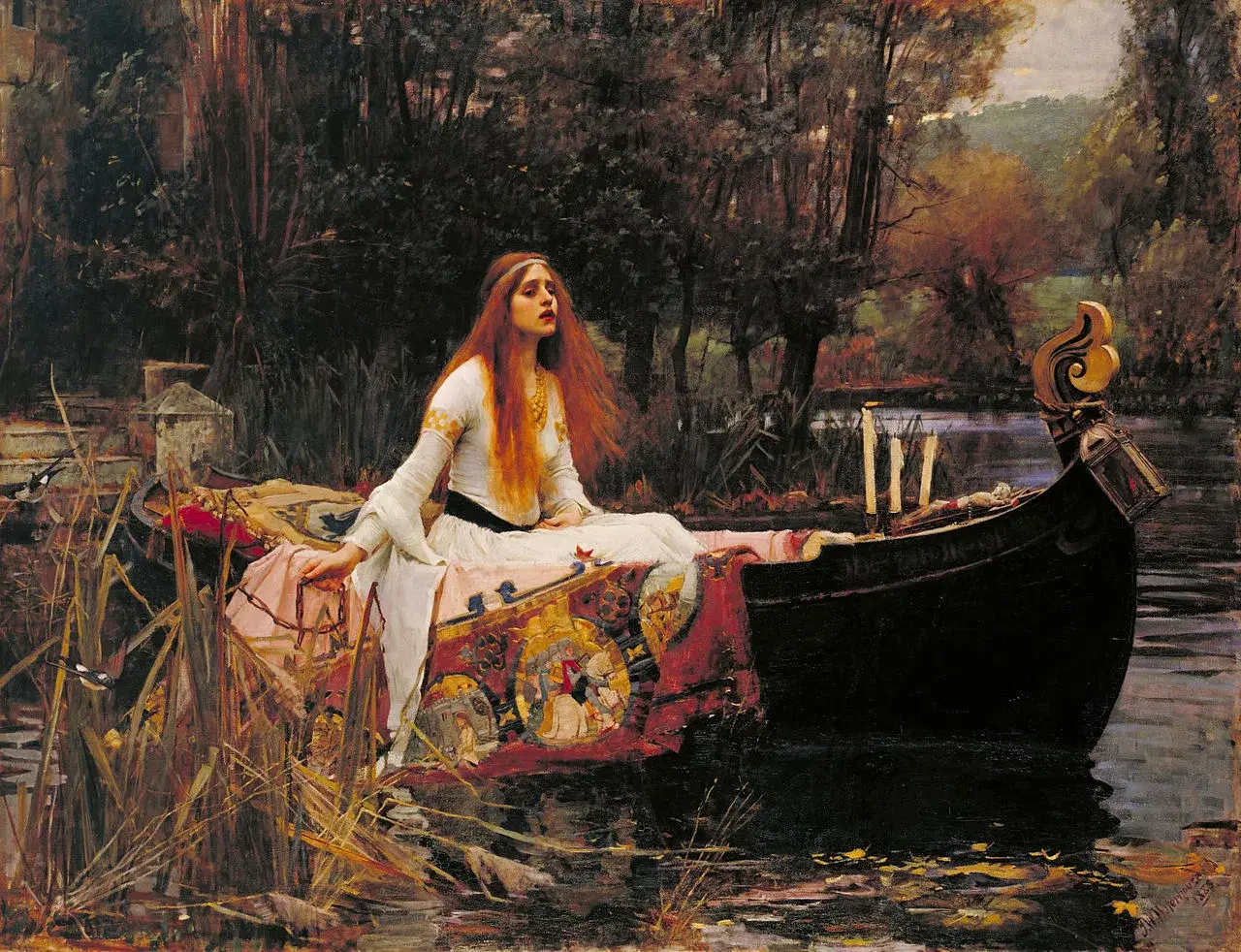
John William Waterhouse
- 1849 – 1917
- British
- Pre-Raphaelite
A brief story
John William Waterhouse was born in Rome in 1849 to English artist parents, and spent his formative years surrounded by classical antiquity before the family returned to London. He trained at the Royal Academy Schools and initially worked in the Greco-Roman classical tradition, painting scenes from ancient myth and history with archaeological care. In the 1880s he encountered the work of the Pre-Raphaelite Brotherhood, whose emphasis on intense color, literary subject matter, and the idealization of feminine beauty profoundly shaped his mature style.\n\nWaterhouse became celebrated above all for his paintings of women drawn from mythology, Arthurian legend, and classical literature — Ophelia, Circe, the Lady of Shalott, Psyche, Hylas and the Nymphs — depicted in landscapes of lyrical, jewel-toned intensity. He was elected a full member of the Royal Academy in 1895, achieving institutional recognition even as his romantic, pre-modern sensibility placed him outside the mainstream of avant-garde development. Waterhouse continued painting in his distinctive mode well into the twentieth century, seemingly indifferent to the radical changes transforming European art around him. His popularity experienced a dramatic revival in the late twentieth century, and his images have become some of the most widely reproduced in Western art.
Did you know?
John William Waterhouse merged classical mythology with Pre-Raphaelite sensibility to create some of the most enchanting and enduring images of feminine beauty and ancient legend in Victorian painting.
Don’t stop here