Théodore Géricault
- 1791 – 1824
- French
- Romanticism
A brief story
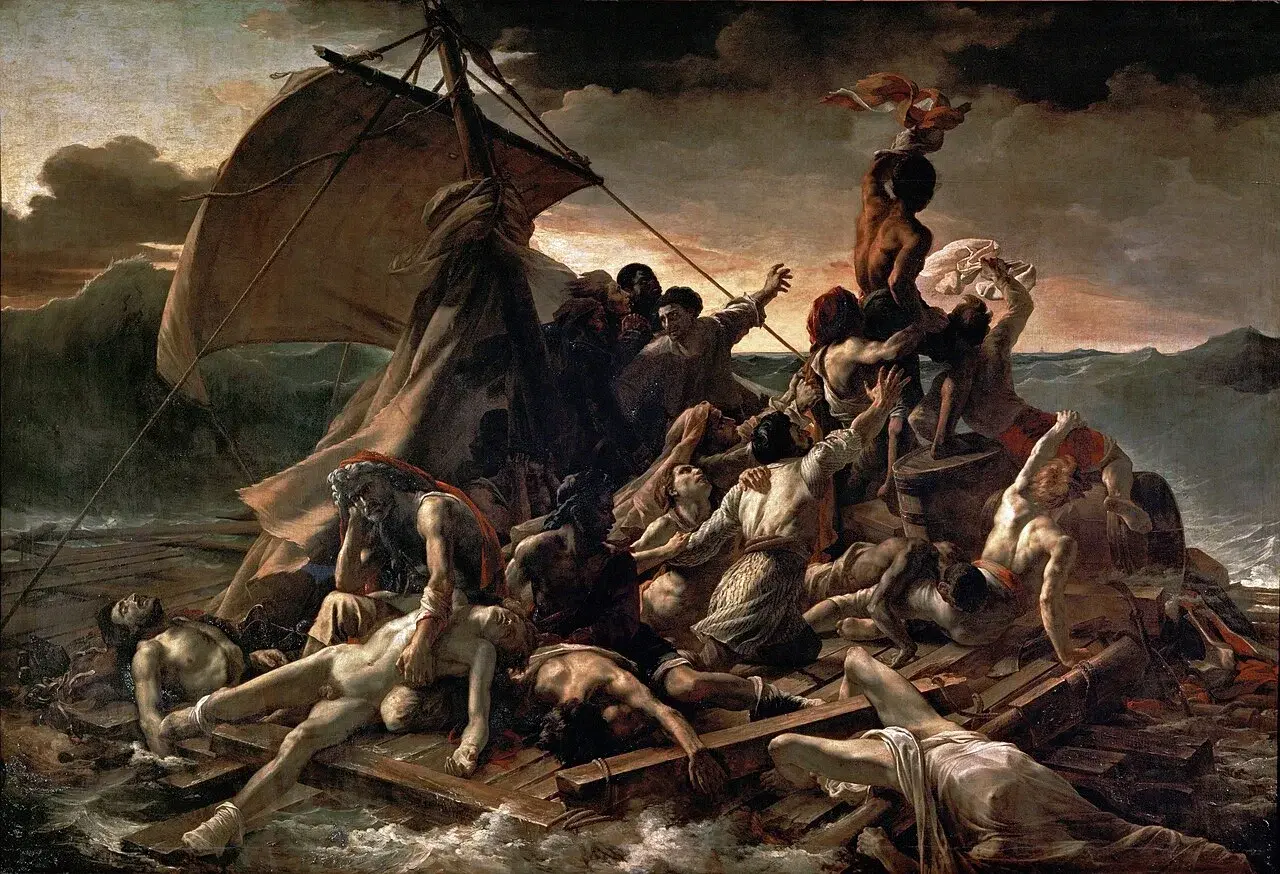
Théodore Géricault was a French painter whose brief career — he died at thirty-two — produced one of the most powerful and original works in the history of French art. Born in Rouen in 1791 to a wealthy family, he studied under Carle Vernet and then Pierre-Narcisse Guérin before effectively teaching himself through sustained study of Rubens, Michelangelo, and the great Baroque masters in Paris and then in Rome, where he spent two years between 1816 and 1817.\n\nGericault's masterpiece, The Raft of the Medusa (1818–19), was a scandalous and monumental work measuring nearly five by seven meters. It depicted the survivors of a notorious 1816 shipwreck in which more than a hundred people died on an improvised raft after being abandoned by their officers — a disaster widely blamed on the incompetent political appointee who commanded the vessel. Géricault interviewed survivors, studied cadavers in hospital morgues, and built a working model of the raft to achieve the painting's devastating realism. Exhibited at the Salon of 1819, the work was a political and artistic lightning rod that heralded the full arrival of Romantic painting in France.\n\nBeyond The Raft, Géricault produced extraordinary portraits of the mentally ill — a series of ten paintings commissioned by the psychiatrist Étienne-Jean Georget that are among the most penetrating psychological studies in Western painting — as well as scenes of horses, cavalry charges, and military life that reflect his lifelong passion for equine subjects. He died in Paris in 1824 following injuries sustained in a riding accident, leaving his younger colleague Eugène Delacroix to carry forward the Romantic movement he had helped to found.
Did you know?
Théodore Géricault shocked Paris with The Raft of the Medusa, a colossal painting of shipwreck and survival that transformed French art and announced the age of Romanticism in a single, unforgettable image.
Don’t stop here
More to explore by Théodore Géricault