Thomas Cole
- 1801 – 1848
- American
- Romanticism
A brief story
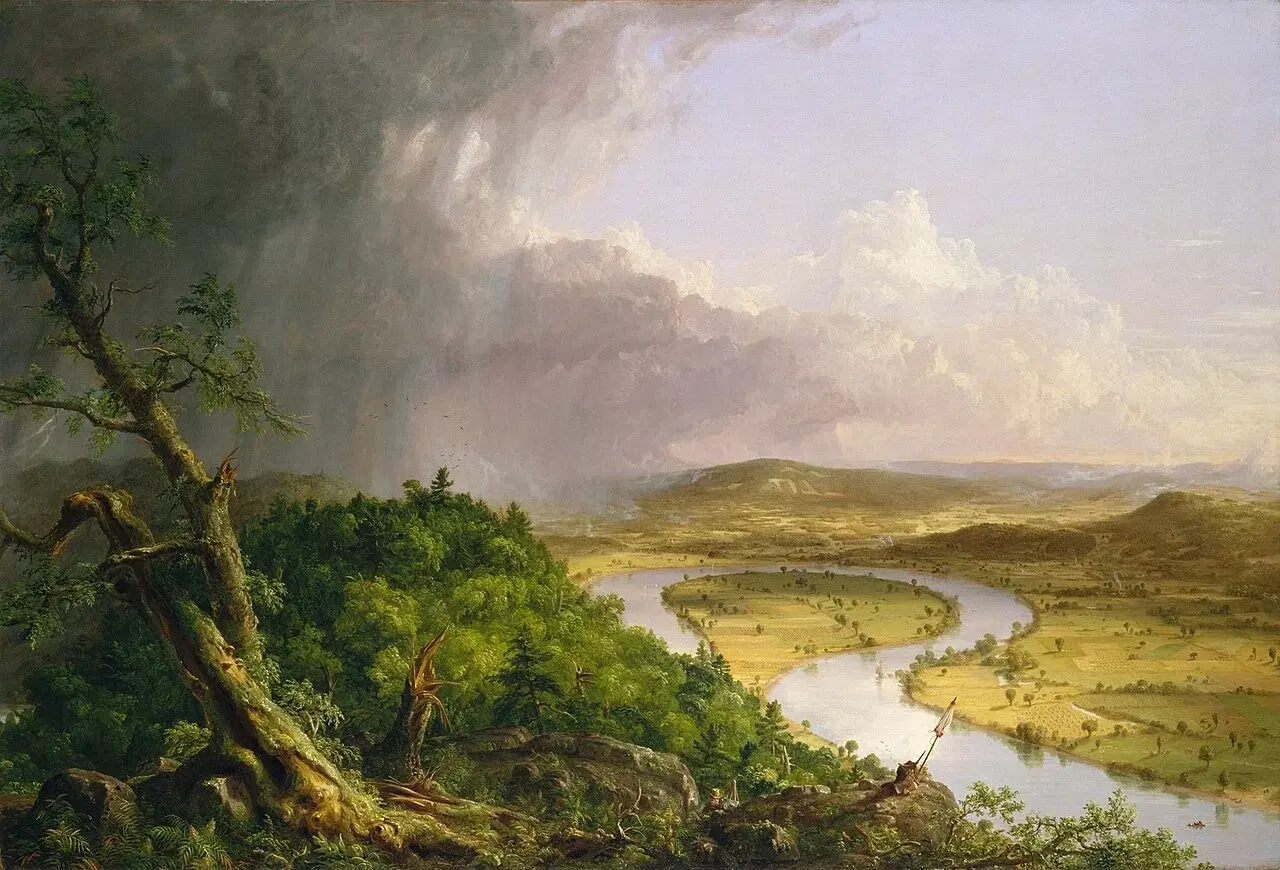
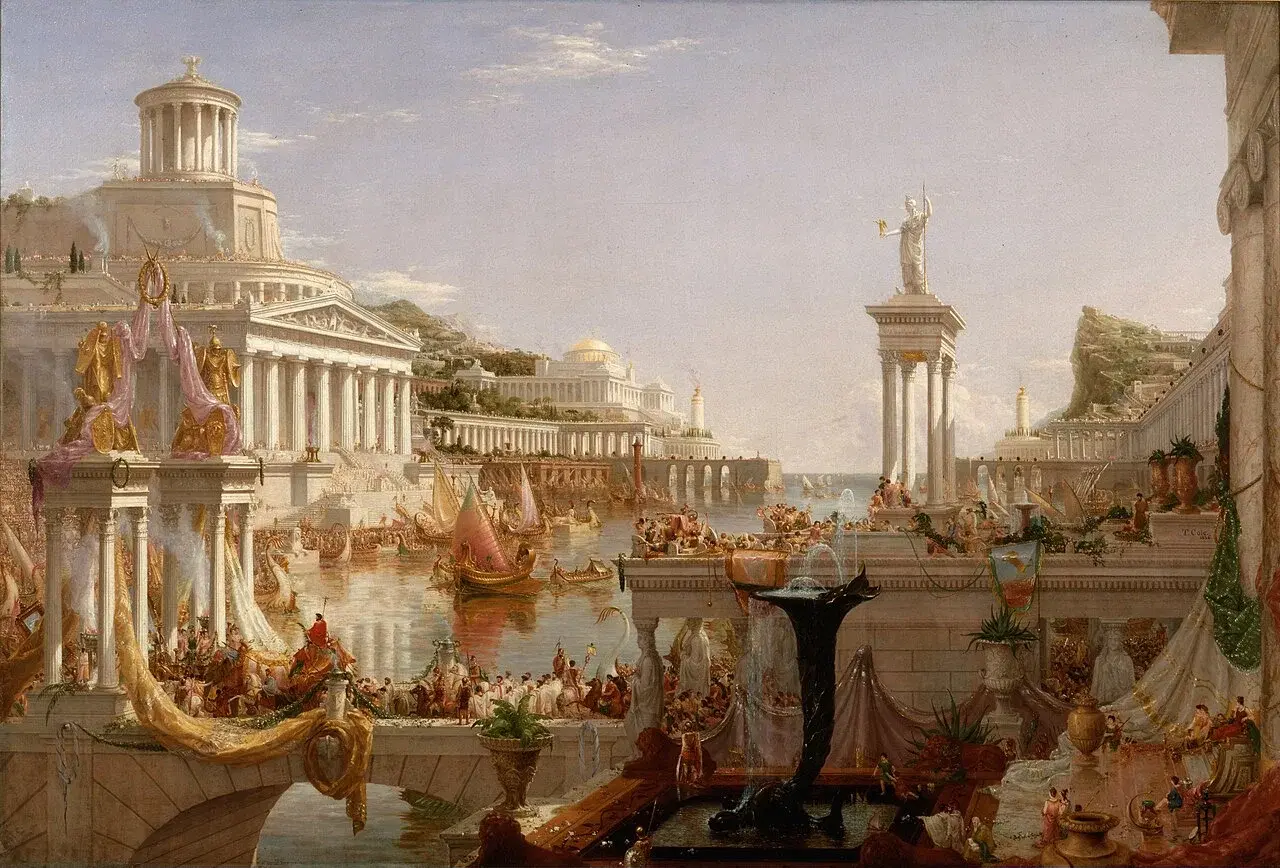
Thomas Cole was born in Bolton-le-Moors, Lancashire, England, in 1801, and emigrated with his family to the United States as a teenager. He taught himself to paint largely through self-study and the influence of European landscape tradition before discovering the Hudson River Valley in the mid-1820s — a revelation that launched one of the most consequential careers in American art history. His dramatic, large-scale canvases of the Catskill Mountains and the surrounding wilderness helped create the Hudson River School, the first distinctly American movement in painting.\n\nCole was equally drawn to allegorical and historical themes, producing ambitious multi-canvas series such as The Course of Empire (1833–36) and The Voyage of Life (1840), which used landscape as the vehicle for meditations on civilization, mortality, and divine providence. Deeply religious and an ardent conservationist before that term existed, Cole lamented the destruction of American wilderness by industrial expansion and expressed that anxiety in his essays as well as his art. His influence on subsequent generations of American landscape painters — including Frederic Church, who was his student — proved enormous, and his work remains central to any understanding of American Romanticism.
Did you know?
Thomas Cole founded America's first major painting movement by revealing the moral and spiritual grandeur of the American wilderness at a moment when that wilderness was already under threat.
Don’t stop here