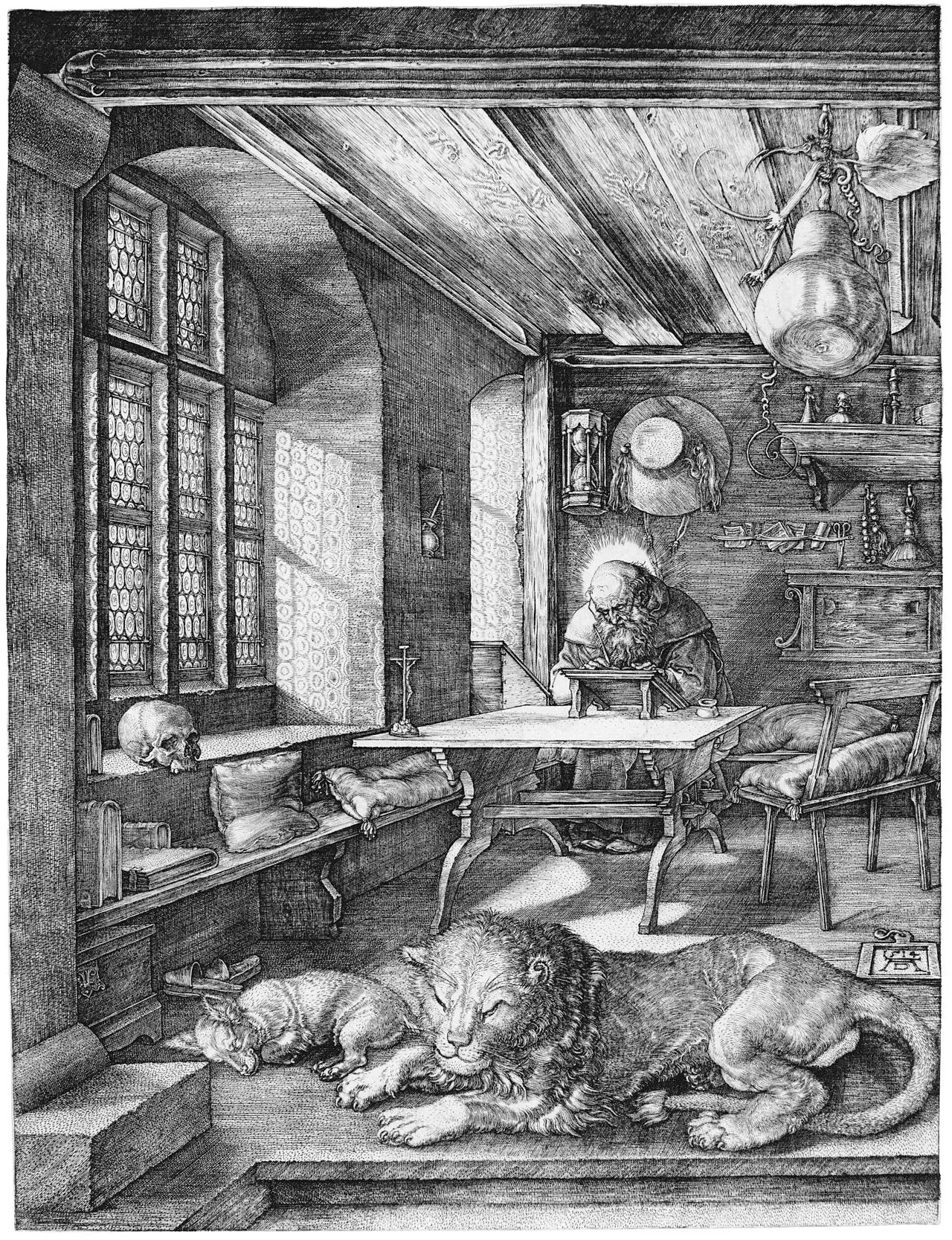
Albrecht Dürer
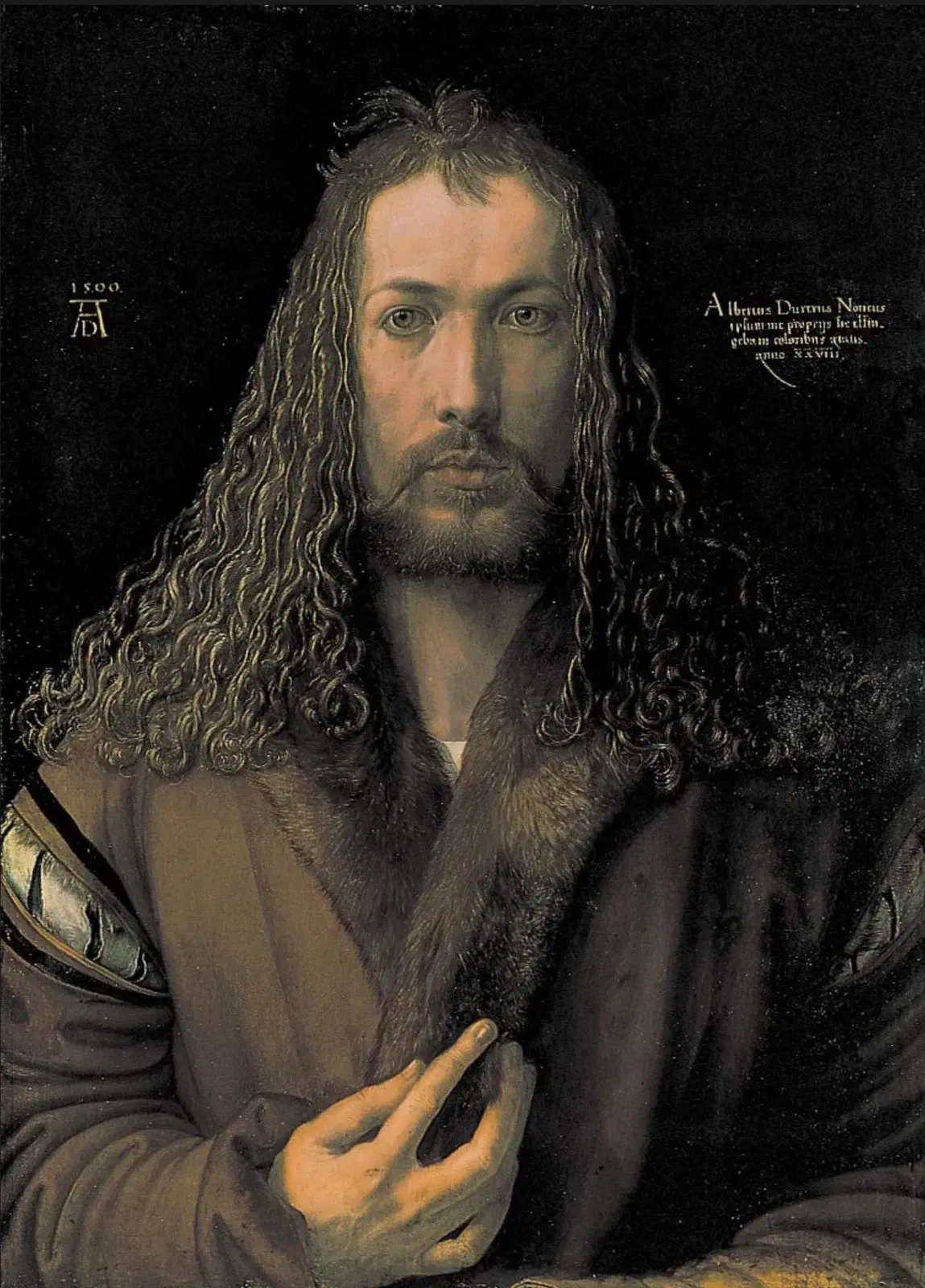
- 1471 – 1528
- German
- Northern Renaissance
A brief story
Albrecht Dürer was born in Nuremberg in 1471, the son of a goldsmith who recognized his son's exceptional talent and apprenticed him to the painter and printmaker Michael Wolgemut. Two journeys to Italy exposed Dürer to the mathematical and humanist principles of Italian Renaissance art, which he absorbed and synthesized with the intricate northern European tradition in which he had been trained. The result was a body of work of extraordinary range: altarpieces, portraits, watercolors, theoretical writings, and, above all, an unsurpassed achievement in printmaking.\n\nDürer's woodcuts and engravings — including Melencolia I, Knight, Death and the Devil, and the Apocalypse series — elevated printmaking from a reproductive craft to a fully independent fine art form. His technical virtuosity, combined with an intellectual depth and symbolic complexity, made him one of the most celebrated artists in Europe during his own lifetime. He corresponded with leading humanists and reformers, and his self-portraits, in which he presents himself with a dignity previously reserved for Christ, signal a new conception of the artist as a creative genius rather than a mere craftsman.
Did you know?
Albrecht Dürer elevated printmaking to a fine art while uniting the mathematical rigor of the Italian Renaissance with the intricate symbolism of northern Europe, becoming the defining master of the Northern Renaissance.
Don’t stop here
More to explore by Albrecht Dürer