Artemisia Gentileschi
- 1593 – 1653
- Italian
- Baroque
A brief story
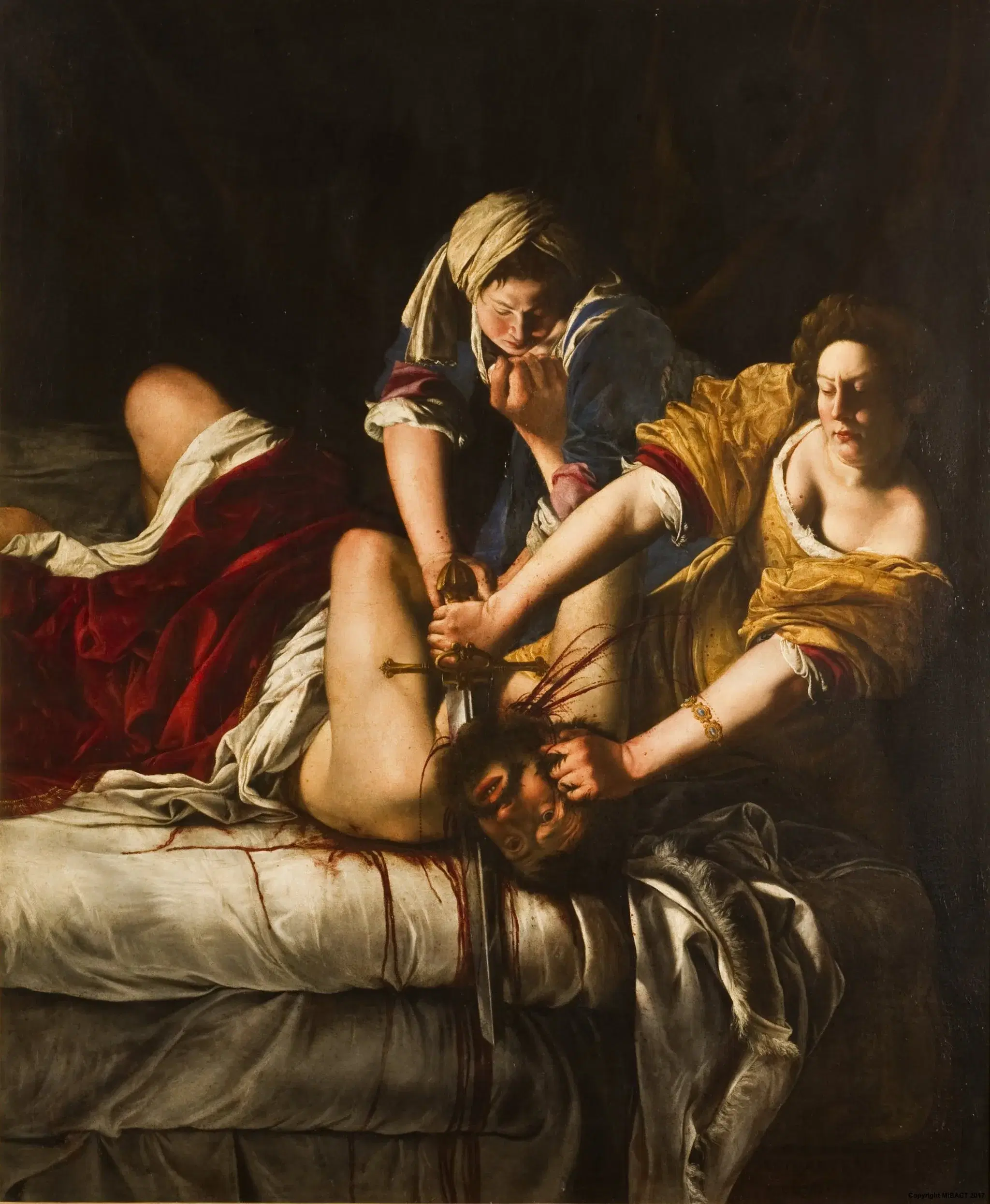
Artemisia Gentileschi was born in Rome in 1593, the eldest daughter of the Tuscan painter Orazio Gentileschi, himself a leading Caravaggist. She showed exceptional talent from childhood and was trained in her father's workshop at a time when women had virtually no access to formal artistic education. In 1611 she was raped by the painter Agostino Tassi, whom Orazio had employed as her tutor; the subsequent trial, in which Artemisia was subjected to torture to verify her testimony, is one of the most documented episodes of gender-based violence in art history.\n\nGentileschi's response was to paint with a power and psychological directness unprecedented among her contemporaries of any gender. Her several versions of Judith Slaying Holofernes — particularly the first, painted around 1614–20 — depict the act with unflinching physicality: Judith is no passive ideal but a determined woman actively engaged in killing. Her mastery of Caravaggesque chiaroscuro, the drama of light carved from darkness, was complete and personal, not merely inherited. She worked across Rome, Florence (where she became the first woman admitted to the Accademia delle Arti del Disegno), Venice, Naples, and London, receiving prestigious commissions from the Medici, Philip IV of Spain, and King Charles I of England.\n\nGentileschi spent her most productive mature years in Naples, where she ran a successful studio. She died there around 1656. Long overshadowed by her father and by the limitations imposed on women artists in historical writing, she was decisively rediscovered during the feminist art movement of the 1970s and is now recognized as one of the most important Baroque painters and one of the canonical figures in the history of women in art.
Did you know?
The formidable Baroque painter who turned trauma into art, producing some of the most viscerally powerful images of female strength in the history of painting.
Don’t stop here
More to explore by Artemisia Gentileschi