Duccio di Buoninsegna
- 1255 – 1319
- Italian
- Early Renaissance, Gothic Art
A brief story
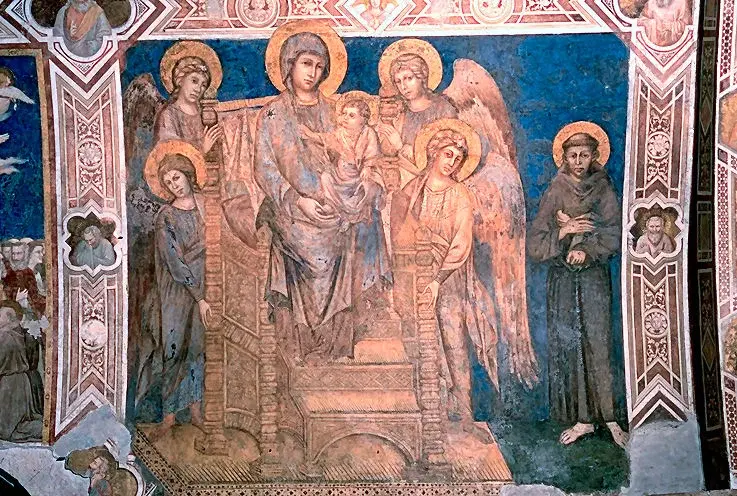
Duccio di Buoninsegna was a Sienese painter active in the late thirteenth and early fourteenth centuries who is widely regarded as the founder of the Sienese school and one of the most important artists in the transition from the Byzantine tradition to the new naturalism that would flower in the Renaissance. Little is known of his life beyond documentary records; he was born around 1255, possibly in Siena, and his career is traceable through a series of civic and ecclesiastical commissions that place him at the very center of Sienese cultural life.\n\nDuccio's supreme achievement was the Maestà, a monumental double-sided altarpiece commissioned in 1308 for the high altar of Siena Cathedral and completed in 1311. The procession that carried it from his workshop to the cathedral was reportedly celebrated by the entire city as a civic and religious festival. The Maestà depicts the Virgin enthroned in majesty on the front, surrounded by saints and angels, while the reverse contains an extensive narrative cycle of scenes from the Passion of Christ — among the most complex and emotionally nuanced pictorial narratives produced in medieval Europe.\n\nWhile Duccio's work remains rooted in the gold grounds and hieratic conventions of Byzantine art, it shows a new tenderness and humanity in the portrayal of faces and gestures that distinguishes it sharply from the formal severity of earlier medieval painting. His influence on subsequent Sienese artists — above all Simone Martini and the Lorenzetti brothers — was profound, and his Maestà remains one of the masterpieces of European medieval painting, now partially preserved in the Museo dell'Opera del Duomo in Siena.
Did you know?
Duccio di Buoninsegna founded the great Sienese tradition of painting with works of Byzantine splendor and new human warmth, above all his monumental Maestà altarpiece, a civic treasure that the whole city of Siena turned out to celebrate.
Don’t stop here
More to explore by Duccio di Buoninsegna