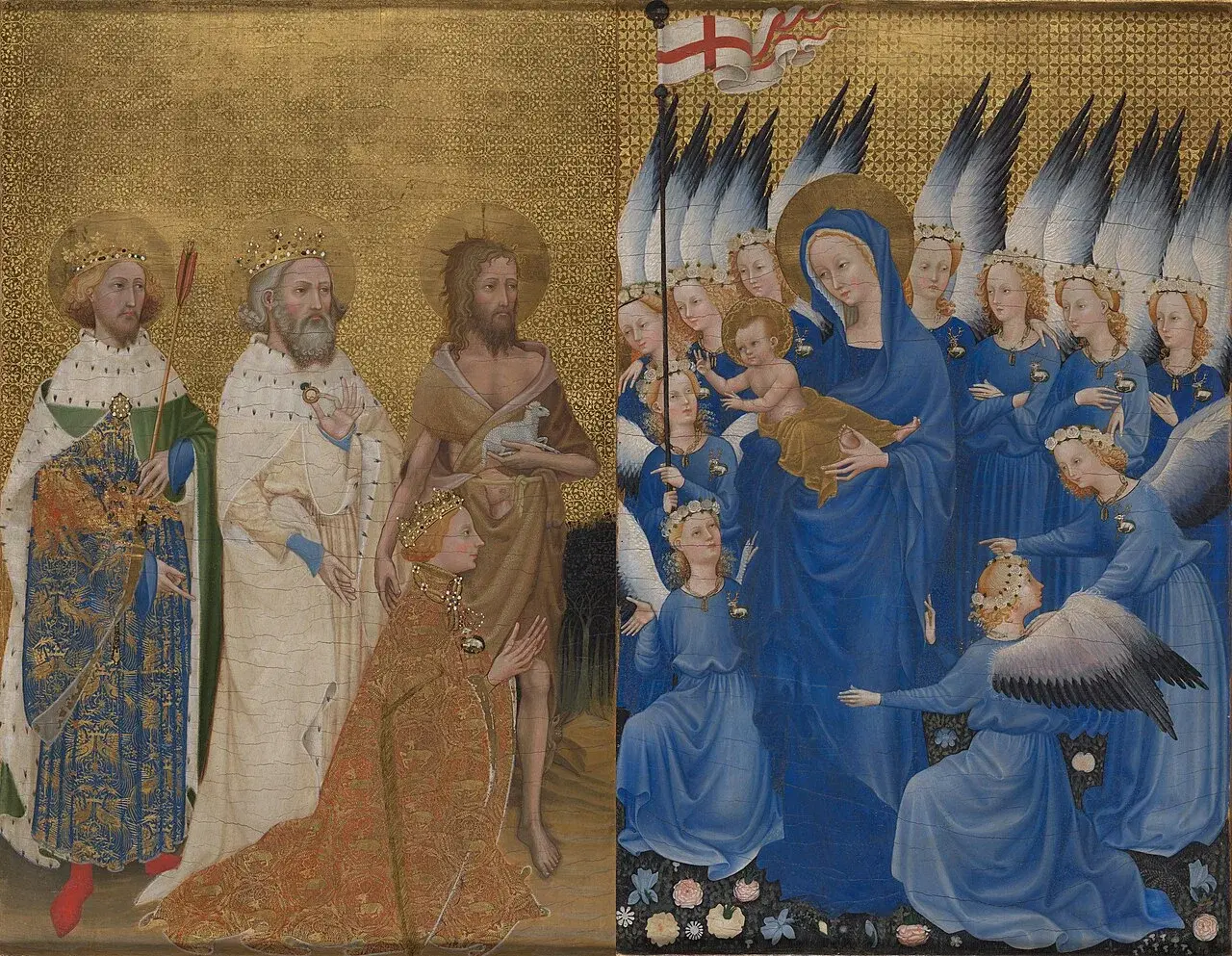
Wilton Diptych
1395
65% match
1308–1311
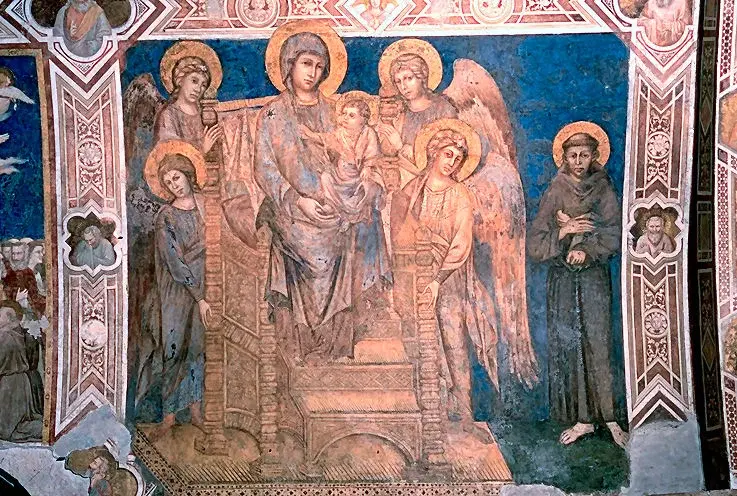
Duccio di Buoninsegna's "Maestà" (meaning Majesty) is a pivotal masterpiece of early Italian painting, originally created for the high altar of Siena Cathedral. This grand altarpiece depicts the Virgin Mary enthroned as Queen of Heaven, surrounded by saints, angels, and apostles. The central panel showcases Mary holding the Christ Child, radiating a sense of divine authority and maternal tenderness. The reverse side of the altarpiece, now separated into individual panels, illustrates scenes from the life of Christ. The "Maestà" is more than just a religious icon; it's a complex narrative and a profound statement of faith that dominated the artistic landscape of Siena for centuries.
The historical significance of the "Maestà" lies in its groundbreaking approach to depicting space, emotion, and narrative. Duccio broke away from the rigid Byzantine style that had previously dominated Italian art, introducing a greater sense of naturalism and humanism to his figures. He employed a more refined use of light and shadow, creating a sense of depth and volume that was unprecedented at the time. The altarpiece also represents a significant moment in the development of Sienese painting, establishing a distinctive style characterized by its elegance, grace, and spiritual intensity.
Duccio's artistic techniques in the "Maestà" are remarkable. He meticulously layered paint to achieve luminous colors and subtle gradations of tone. The use of gold leaf adds to the altarpiece's splendor and reinforces the divine nature of the subjects. The carefully arranged compositions and the expressive gestures of the figures create a compelling visual narrative that invites viewers to contemplate the mysteries of faith. Today, the surviving panels of the "Maestà," displayed in the Museo dell'Opera del Duomo in Siena, offer a glimpse into the artistic genius of Duccio and his enduring legacy.
Same feeling, different artists