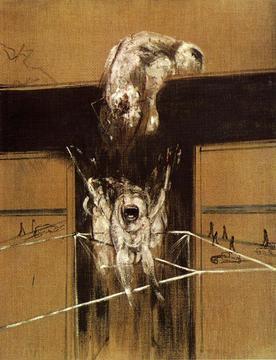
Francis Bacon
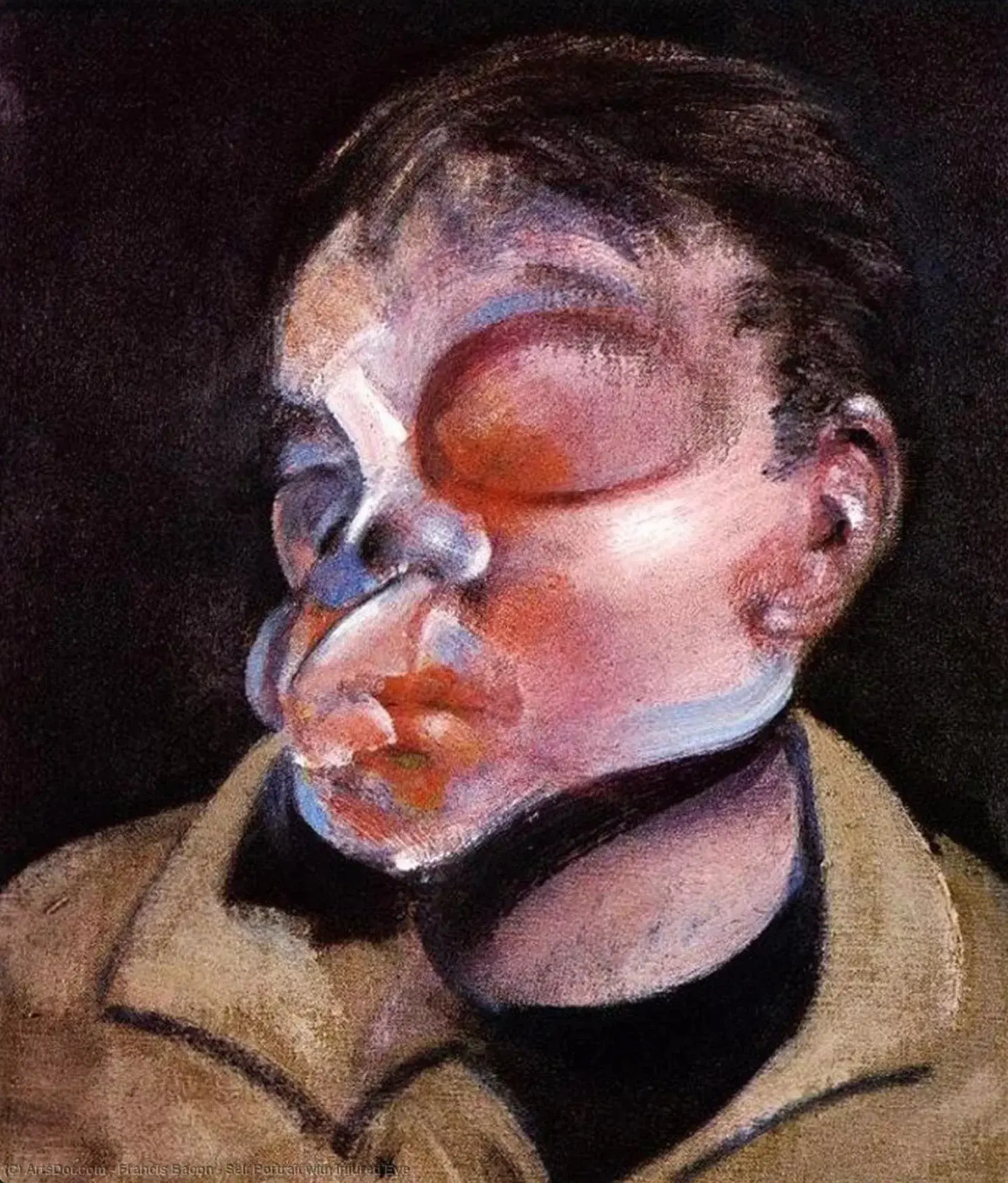
Self-Portrait with Injured Eye © Private collection
- 1909 – 1992
- British, Irish
- Expressionism, Figurative Expressionism
A brief story
Meet Francis Bacon, one of the most unforgettable and powerful painters of the 20th century. Born in Dublin and finding his creative home in London, Bacon had a unique way of showing what it truly feels like to be human—even the messy, difficult parts.
He is best known for his haunting, distorted figures that seem to capture raw emotion on canvas. Whether they are trapped in cage-like boxes or caught in a scream, these figures explore deep feelings like anxiety, loneliness, and passion. You’ll see iconic masterpieces like his "screaming Popes" and his groundbreaking Three Studies for Figures at the Base of a Crucifixion, which remain some of the most influential images in modern art.
While Bacon was inspired by classic masters like Velázquez and Rembrandt, he also drew from the fast-paced worlds of photography and film. By blending these influences, he proved that painting people was still the most powerful way to tell a story after the Second World War—provided you were willing to be brutally honest about the human experience.
Did you know?
One of the most exciting parts of his story is where he worked. Bacon famously lived and painted in total chaos. After his death, his London studio—complete with thousands of paint tubes, slashed photos, and paint-splattered walls—was carefully moved and reconstructed in Dublin. Today, you can step into this "raw laboratory" and see exactly where his intense mind came to life, preserved just as he left it.
Don’t stop here
More to explore by Francis Bacon