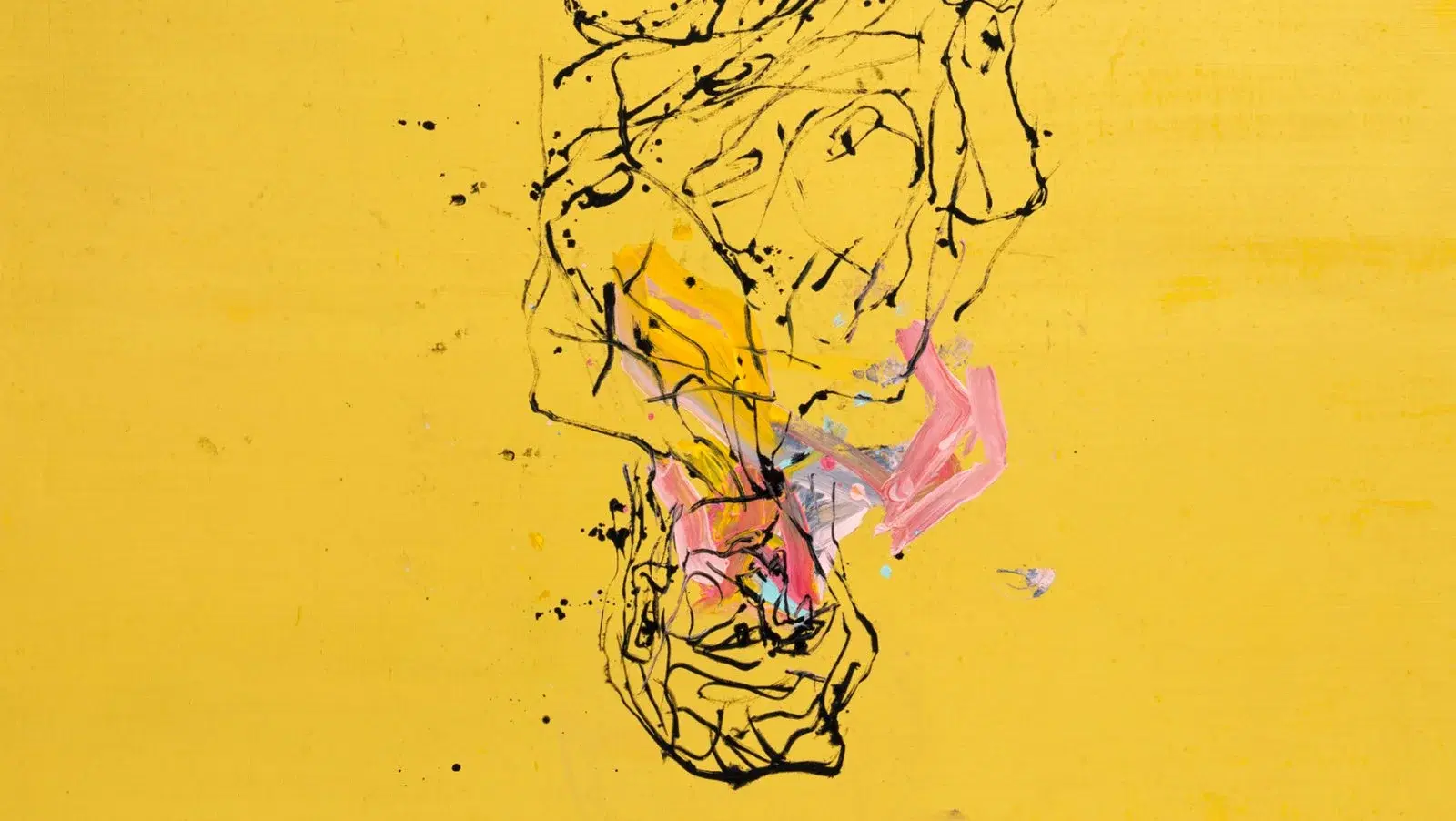
Georg Baselitz. Eroi d’Oro
Venice, Italy
Painting from the wheelchair
In his most recent phase, Baselitz has continued painting while working from a wheelchair — and instead of slowing down, his work has become even more direct, stripped, and personal.
These late paintings often revisit his own past:
earlier motifs
self-portraits
fragments of memory
But now they feel different — more fragile, raw, and immediate.
Why it matters
This stage isn’t about innovation in the traditional sense.
It’s about something more rare: what painting becomes at the end of a life.
Baselitz turns limitation into language.
The wheelchair isn’t a barrier — it becomes part of the work’s intensity.
These paintings feel quieter — but also more honest.
They don’t try to impress you.
They just exist.
👉 And that’s exactly why, if you see one in a museum, it can hit harder than his earlier, louder works.
Georg Baselitz is a German painter, sculptor, and graphic artist who emerged as a prominent figure in the post-war art world. Born Hans-Georg Kern in 1938 in Deutschbaselitz, Saxony, he later adopted his birthplace as his professional name. He is best known for his 'inverted' paintings, where subjects are depicted upside down to challenge the viewer's perception and focus attention on the formal and structural elements of the painting rather than its representational content.
Baselitz's work is often associated with the Neo-Expressionist movement, characterized by raw, gestural brushwork and provocative themes. He studied art in both East and West Berlin, an experience that heavily influenced his explorations of German identity and the socio-political landscape of the 20th century. Over his long career, he has also produced significant works in sculpture and printmaking, maintaining a reputation as one of the most influential and controversial artists of his generation.
⚡ Why Baselitz is important
He redefined painting in post-war Europe
He rejected beauty in favor of raw expression
His upside-down works changed how we look at images
A key figure of Neo-Expressionism
Plan your visit — these exhibitions are on view now.