Gian Lorenzo Bernini
- 1598 – 1680
- Italian
- Baroque
A brief story
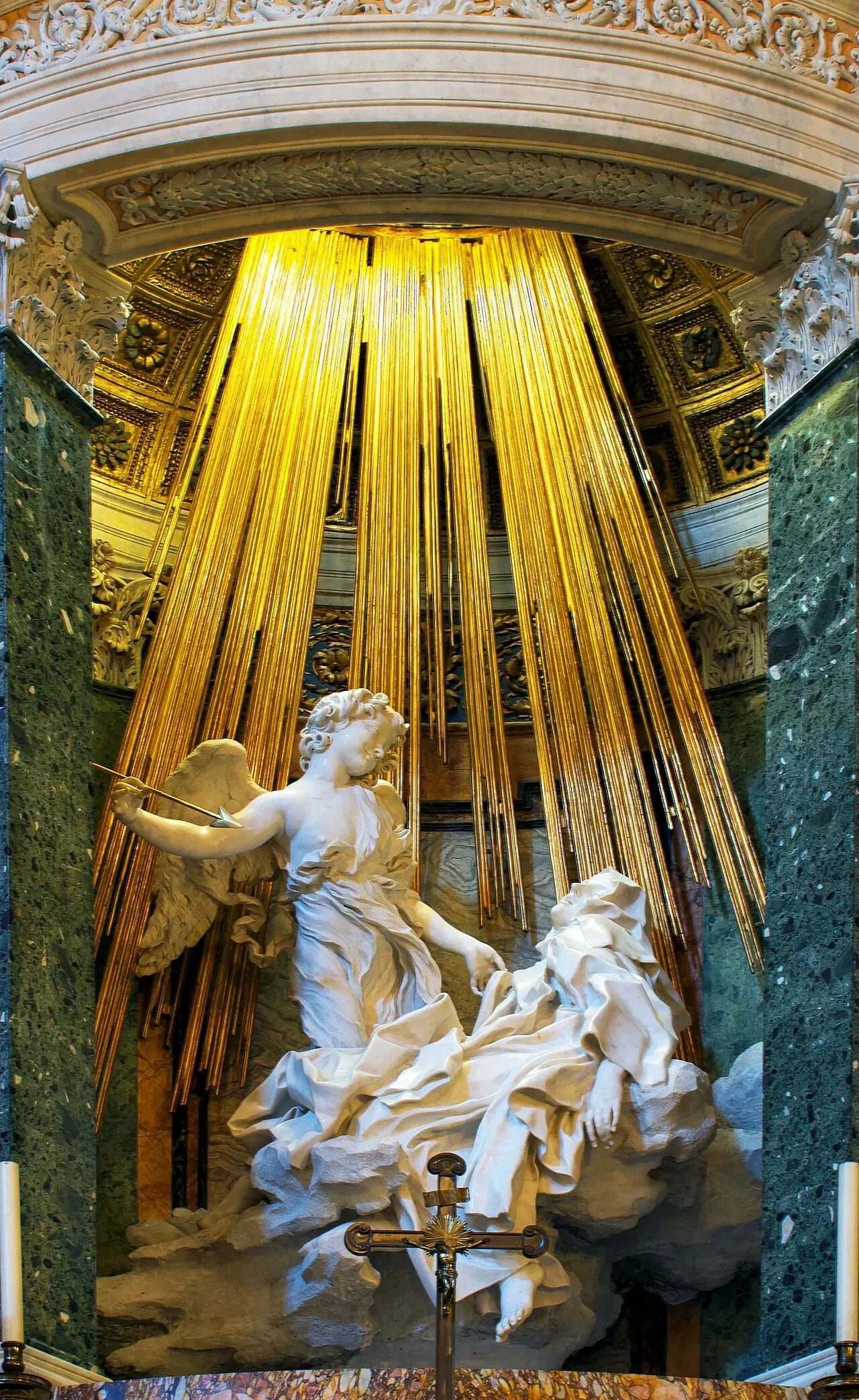
Gian Lorenzo Bernini was born in Naples in 1598 to a Florentine sculptor father, Pietro Bernini, who recognized and cultivated his son's extraordinary gifts from infancy. By his teens he had already produced marble sculptures of a quality that astounded Roman patrons, and under the patronage of Cardinal Scipione Borghese he created his early masterpieces — Aeneas, Anchises, and Ascanius; Pluto and Proserpina; Apollo and Daphne; and David — all before the age of thirty. These works shattered the static conventions of Renaissance sculpture, capturing bodies and faces at the peak of physical and emotional intensity.\n\nBernini's career encompassed sculpture, architecture, urban design, painting, and theatrical design, making him the dominant artistic personality of seventeenth-century Rome. As virtual artistic director of the Vatican under a succession of popes — most decisively Urban VIII, Innocent X, and Alexander VII — he transformed the city: the baldachin over the high altar of St. Peter's Basilica, the colonnade of St. Peter's Square, the Fountain of the Four Rivers in Piazza Navona, and countless portrait busts and tomb monuments are among his works. His Ecstasy of Saint Teresa (1647–52) in Santa Maria della Vittoria exemplifies his mature synthesis of sculpture, architecture, and theatrical lighting into a single overwhelming devotional experience.\n\nBernini died in Rome in 1680 at the age of eighty-one, having worked with undiminished productivity until near the end. No artist before or since has so thoroughly shaped the physical fabric and spiritual atmosphere of a single great city. He defined the Baroque style in three dimensions and created a template for the relationship between art, architecture, and religious feeling that endured for a century.
Did you know?
The supreme genius of the Roman Baroque, who transformed marble into living flesh and reshaped an entire city — from St. Peter's colonnade to the Fountain of the Four Rivers.
Don’t stop here
More to explore by Gian Lorenzo Bernini