Giorgione
- 1477 – 1510
- Italian
- High Renaissance
A brief story
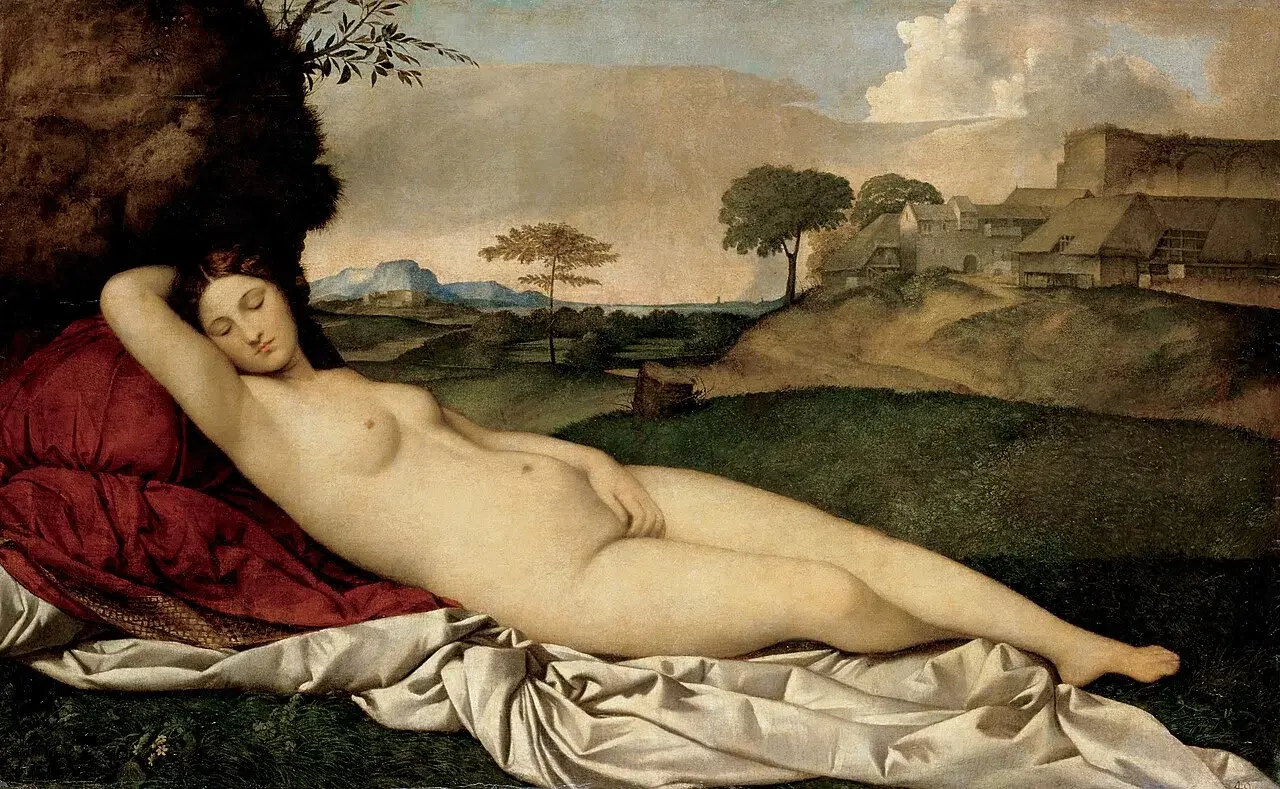
Giorgio da Castelfranco, known as Giorgione, was born around 1477 in Castelfranco Veneto in the terraferma of the Venetian Republic. Little is documented about his brief life: he trained in Venice, probably in the workshop of Giovanni Bellini, and absorbed that master's luminous use of oil glazes and sensitive rendering of light. By the early 1500s he had become a sought-after painter for Venetian patricians, completing frescoes (now largely lost) on the exterior of the Fondaco dei Tedeschi alongside a young Titian.\n\nGiorgione's surviving works are few — perhaps two dozen attributions are secure — yet their influence on the course of Venetian and Western painting is enormous. He pioneered the poesia: a new category of small-scale painting intended not to narrate a clear story but to evoke mood, atmosphere, and lyrical feeling. The Tempest, with its unnamed figures in a storm-lit landscape, and the Sleeping Venus (completed by Titian after his death) exemplify this approach, in which landscape and human figures merge into unified tonal poems. His technique of building forms through layered color rather than drawn contour, known as colorito, became the defining principle of the Venetian school for generations.\n\nGiorgione died in 1510, almost certainly of plague, at around thirty-three years of age. The brevity of his career and the ambiguity of his surviving works have made him one of the most tantalizing enigmas in art history — a painter whose ideas transformed everything while he himself remains largely in shadow.
Did you know?
The Venetian master who died at thirty-three yet invented an entirely new kind of painting — the atmospheric, mood-driven poesia that would define the Renaissance in Venice.
Don’t stop here