Gustave Caillebotte
- 1848 – 1894
- French
- Impressionism, Realism
A brief story
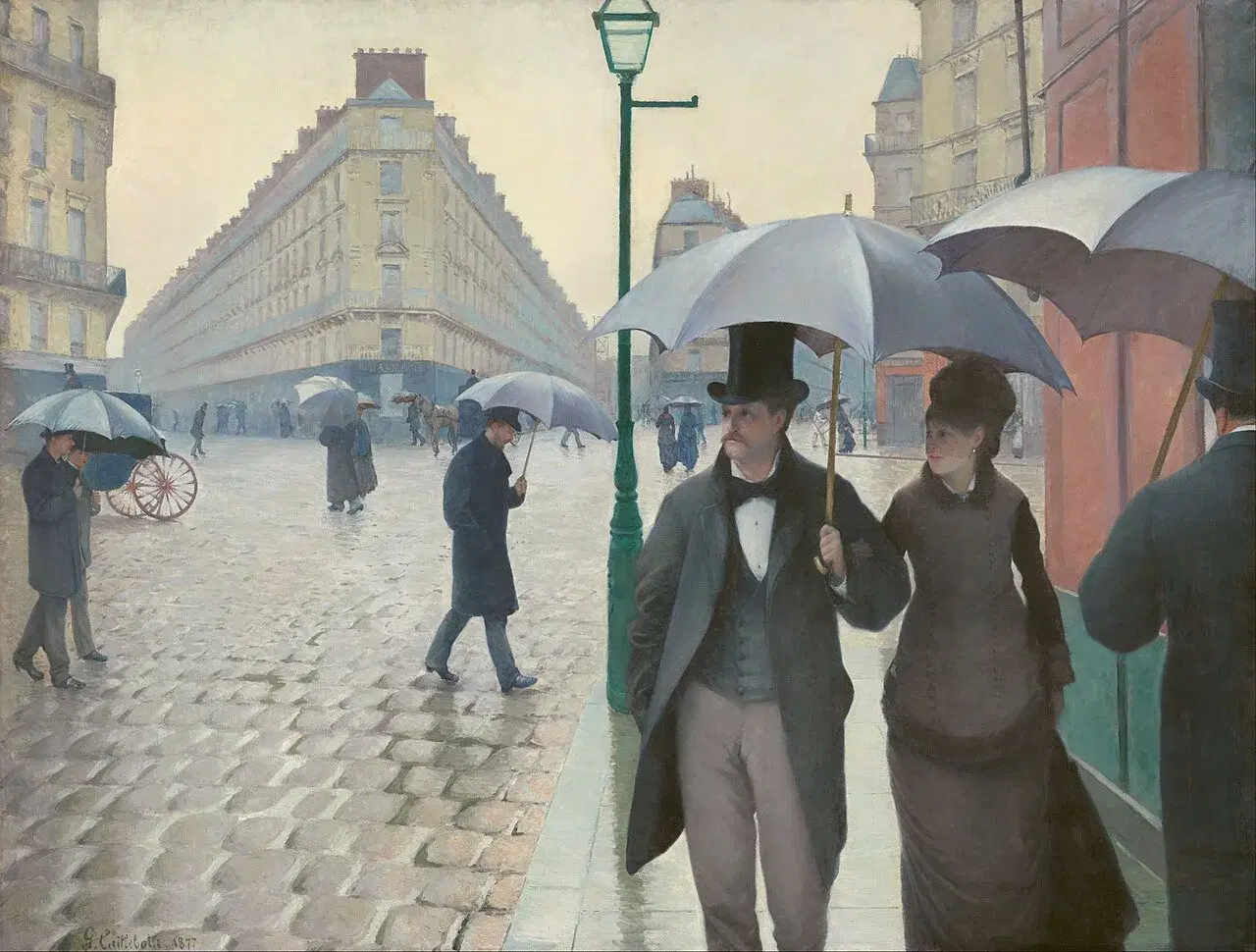
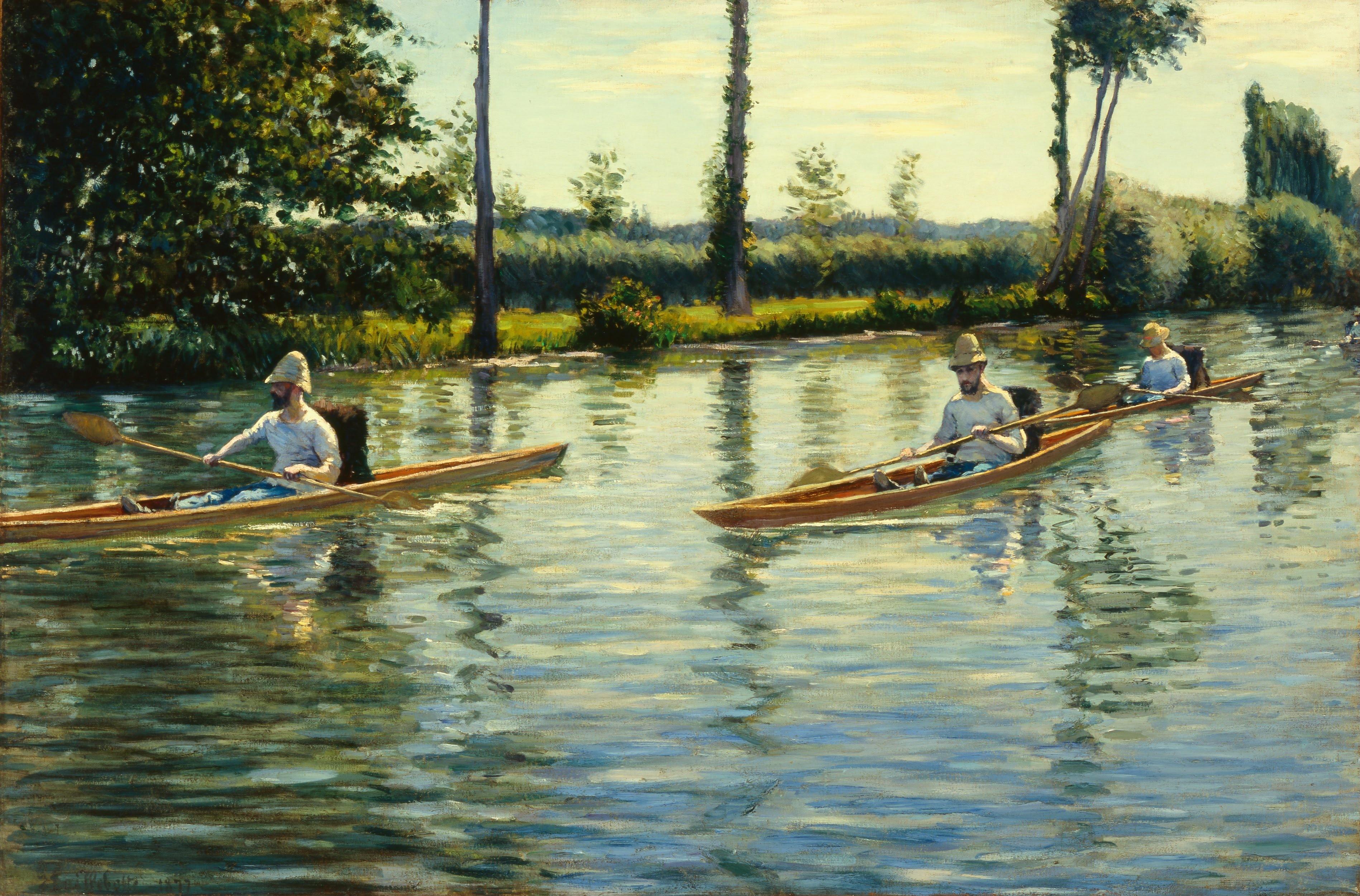
Gustave Caillebotte was born in Paris in 1848 into a wealthy industrial family whose fortune derived from the military textile trade. Financial independence freed him from the commercial pressures that constrained most of his peers, and he used it generously — both as a painter pursuing an intensely personal vision and as the principal financial patron and organizer of the Impressionist exhibitions. He studied briefly at the École des Beaux-Arts and with Léon Bonnat before finding his own path.\n\nCaillebotte's paintings combine Impressionist color and paint handling with a strikingly non-Impressionist commitment to urban structure and vertiginous perspective. Paris Street; Rainy Day (1877), his most celebrated work, depicts the newly Haussmannized boulevards of Paris with a photography-influenced geometry that pulls the viewer into the picture with almost cinematic force. His series of interior scenes — men scraping floors, men at windows overlooking Paris — are marked by a voyeuristic detachment and formal boldness that feel more akin to Degas or even to twentieth-century realism than to Monet or Renoir.\n\nEqually important, Caillebotte assembled one of the finest collections of Impressionist painting in existence, acquiring major works by Monet, Renoir, Pissarro, Degas, Sisley, and Cézanne. When he died unexpectedly in 1894, he bequeathed this collection to the French state — a transaction that was bitterly contested by the Académie des Beaux-Arts but ultimately resulted in the Impressionists entering the national collections. For much of the twentieth century he was remembered primarily as a patron; a vigorous scholarly reassessment since the 1970s has restored him to his rightful place as a major painter in his own right.
Did you know?
The wealthy Parisian who both painted the modern city with vertiginous geometric daring and bankrolled the Impressionist movement, then gave France its greatest collection of their work.
Don’t stop here