Jean-Auguste-Dominique Ingres
- 1780 – 1867
- French
- Neoclassicism
A brief story
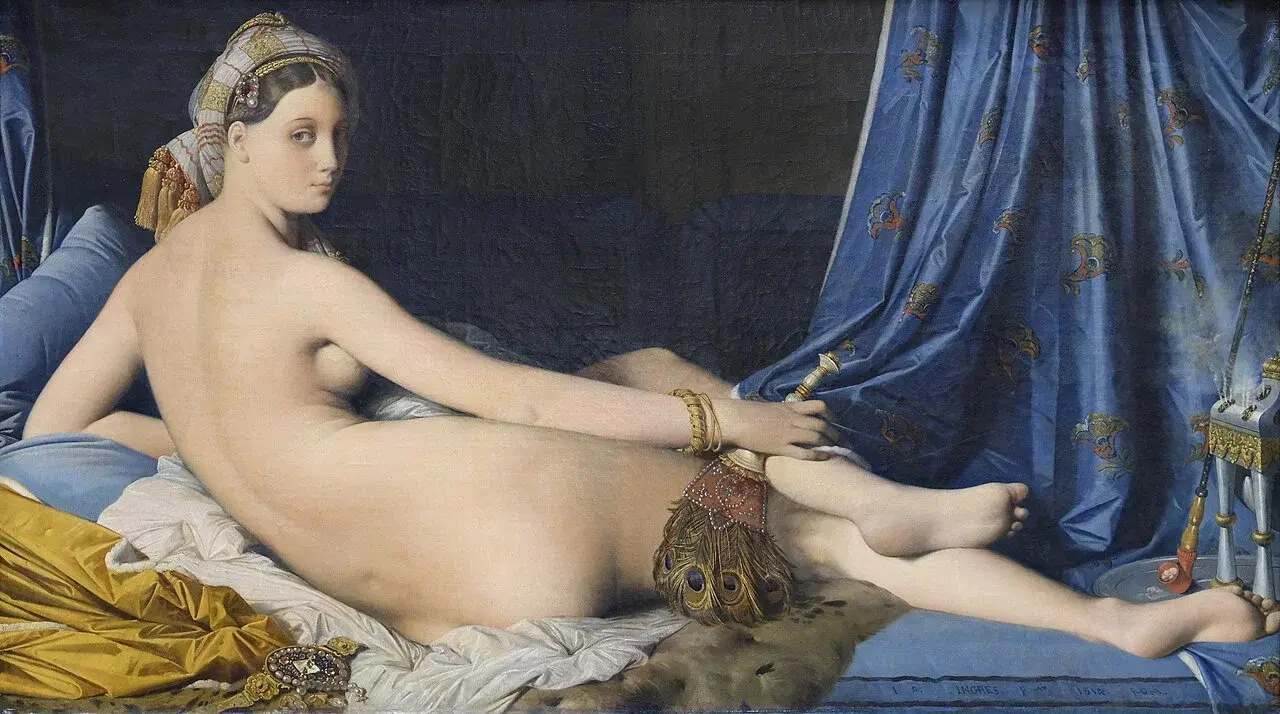
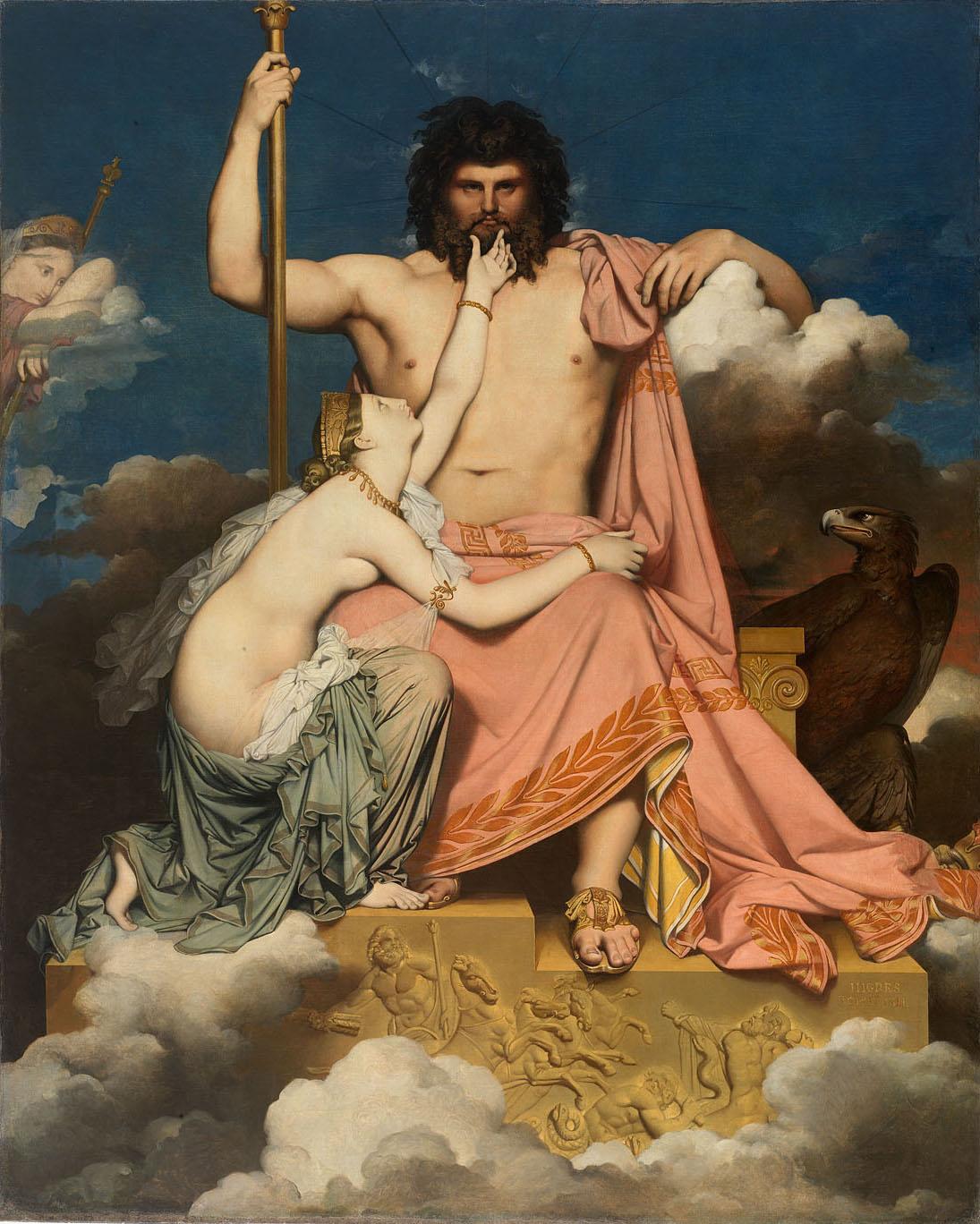
Jean-Auguste-Dominique Ingres was born in Montauban in 1780 into an artistic family — his father was a minor painter and sculptor. He entered Jacques-Louis David's studio in Paris at seventeen and won the Prix de Rome in 1801, though the Napoleonic wars delayed his Italian residence until 1806. He remained in Italy for eighteen years, during which time his immersion in Raphael, antiquity, and early Renaissance painting shaped an aesthetic increasingly at odds with the Neoclassical severity of David.\n\nIngres became the standard-bearer of the French academic tradition and the sworn enemy of Delacroix and the Romantics. He championed line above all — 'Drawing is the probity of art,' he famously declared — and his draftsmanship was of a preternatural precision and sensuality. His great official compositions, from The Apotheosis of Homer (1827) to the portrait of Monsieur Bertin (1832), established him as the presiding authority of the École des Beaux-Arts. Equally celebrated were his Orientalist odalisques, particularly La Grande Odalisque (1814) and the Turkish Bath (1862), in which the academic nude was stretched and distorted into an almost surreal elongation that sits oddly alongside his stated classicism.\n\nAs director of the French Academy in Rome (1834–41) and a figure of immense institutional power in French art, Ingres shaped the taste of several generations of painters. He died in Paris in 1867, aged eighty-six. Posterity has recognized the strange tension in his work between rigid doctrine and sensuous distortion — a tension that drew the admiration of Degas, Picasso, and Matisse, all of whom claimed him as an ancestor.
Did you know?
The imperious champion of classical line in nineteenth-century France, whose silky draftsmanship and provocative odalisques made him both the era's greatest authority and its most sensual paradox.
Don’t stop here