Piet Mondrian
- 1872 – 1944
- Dutch
- De Stijl, Modernism
A brief story
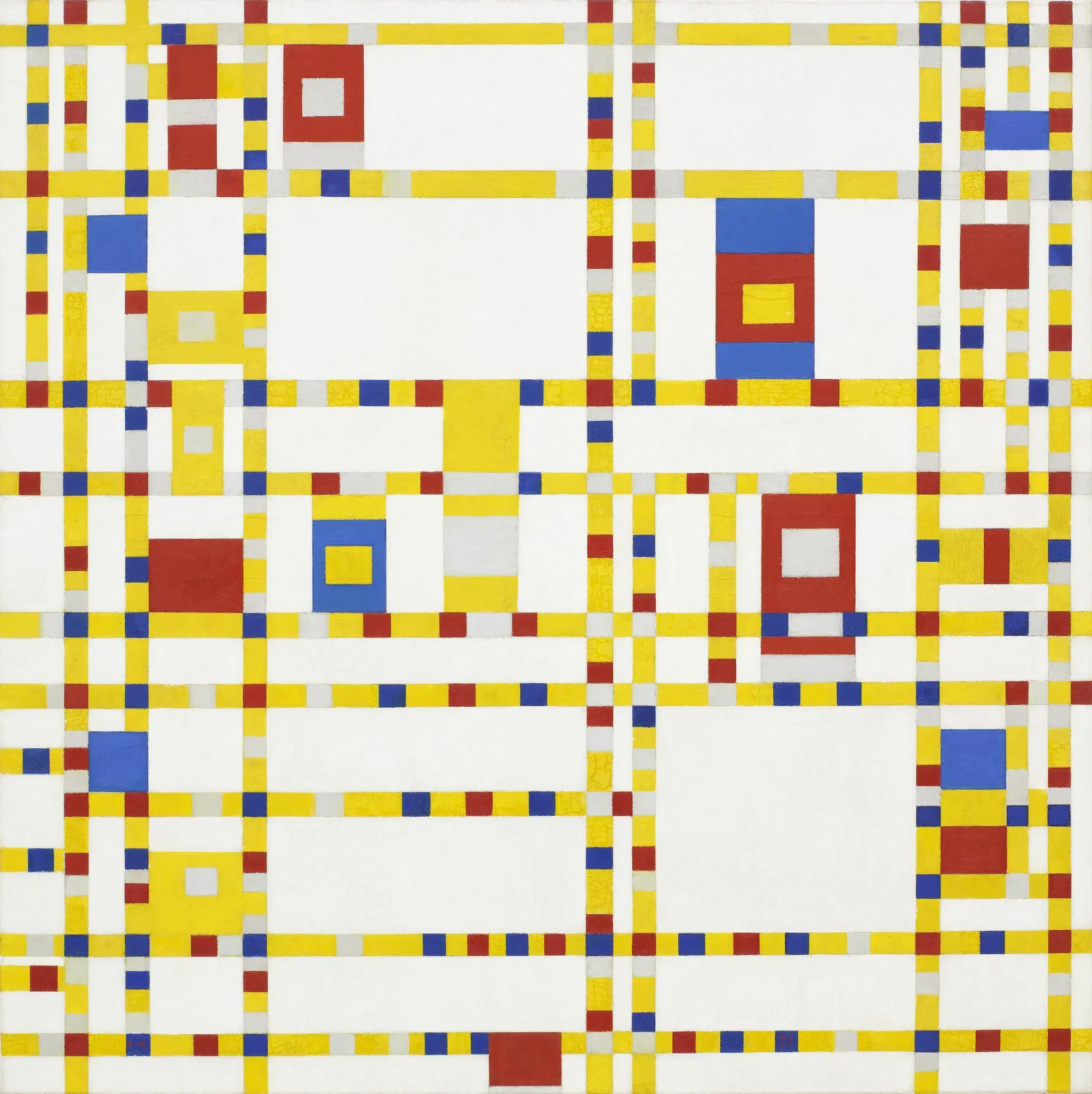
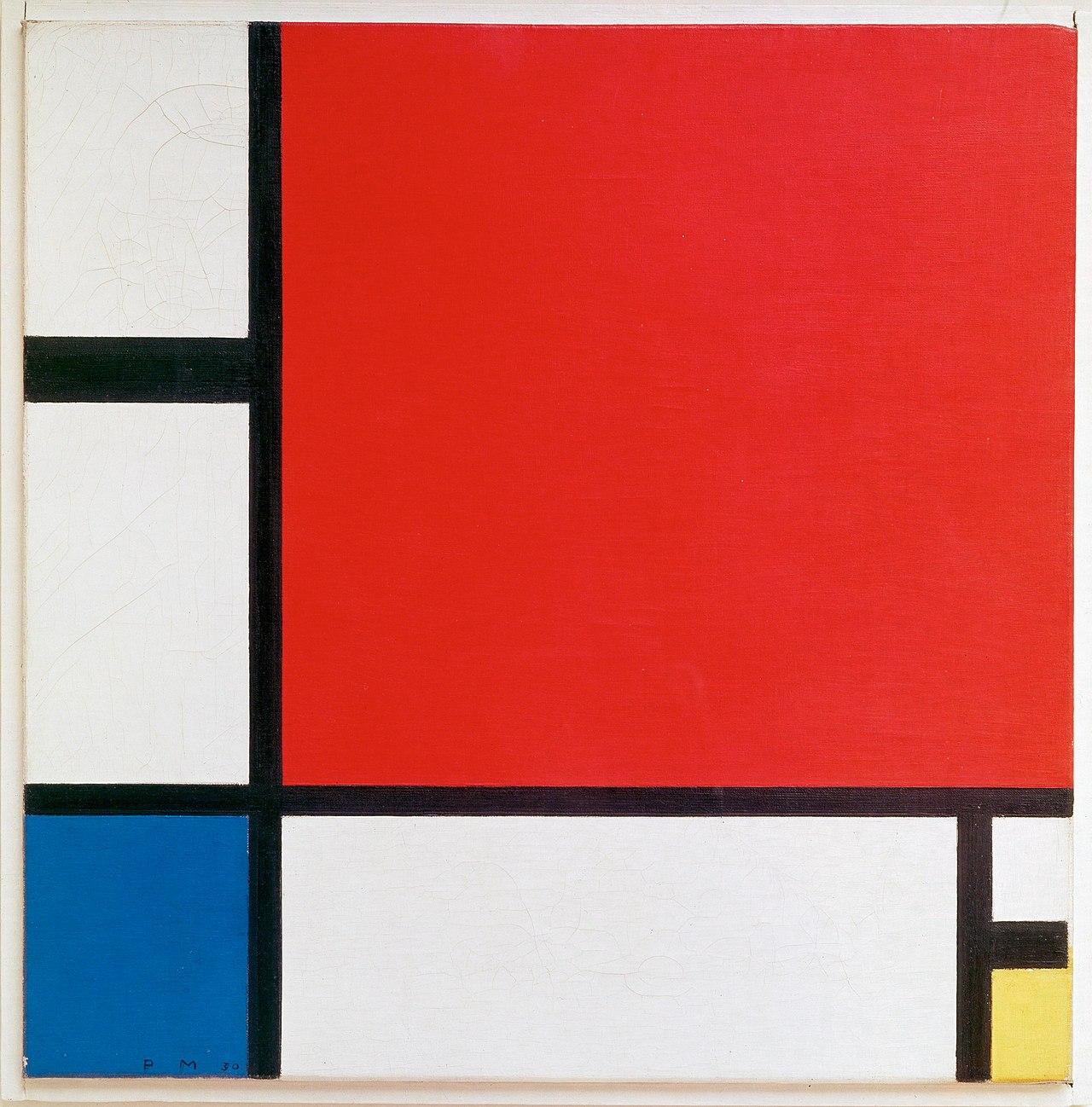
Pieter Cornelis Mondriaan was born on March 7, 1872, in Amersfoort, Netherlands. He trained at the Rijksakademie in Amsterdam and began his career as a conventional landscape painter influenced by the Dutch tradition. A pivotal encounter with Cubism during a stay in Paris between 1911 and 1914 set him on a path of radical pictorial reduction, pushing him to strip away everything accidental in visual experience and pursue what he considered universal underlying harmonies.\n\nMondrian co-founded the De Stijl movement with Theo van Doesburg in 1917 and developed his signature style — known as Neo-Plasticism — built on horizontal and vertical black lines forming a grid, with planes of pure primary colour (red, blue, yellow) and the non-colours white, black, and grey. He moved to London after the German invasion of the Netherlands and then to New York in 1940, where the energy of jazz and the city grid inspired his late, more rhythmically animated works such as Broadway Boogie-Woogie. He died of pneumonia in New York on February 1, 1944, having become one of the most influential abstract artists of the twentieth century.
Did you know?
Piet Mondrian reduced painting to its purest elements — line, primary colour, and white space — creating a visual language that continues to shape design and architecture worldwide.
Don’t stop here