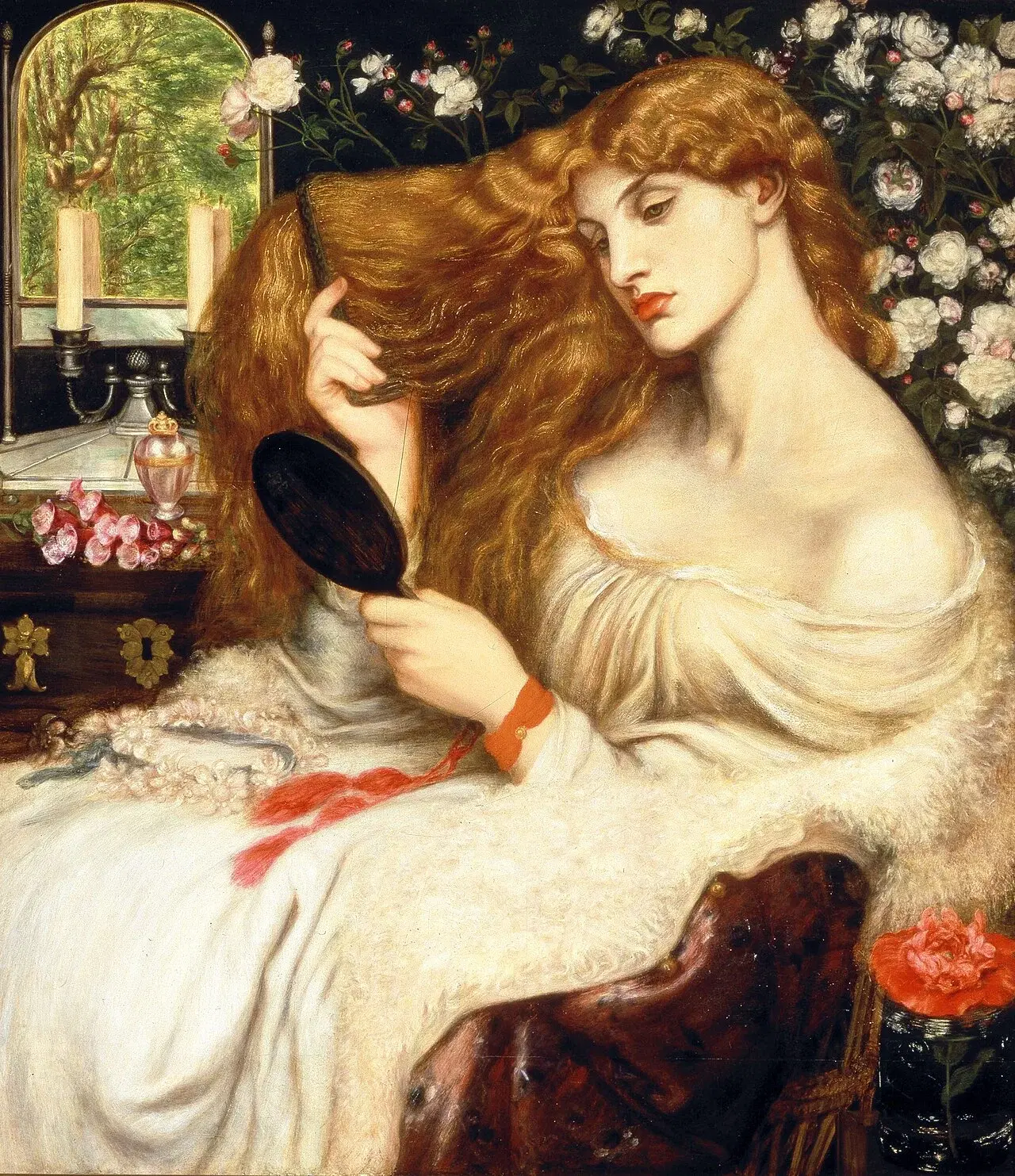
Lady Lilith
Meet the artist
DDante Gabriel Rossetti1828–1882British
Dates
1866–1868
Specifications
- Movement
- Pre-Raphaelite, Symbolism
- Medium
- Oil Painting
- Genre
- Mythological, Portrait, Symbolic Painting
About the Artwork
Lady Lilith, painted between 1866 and 1868 and later altered in 1872–73, is one of Dante Gabriel Rossetti's most haunting explorations of feminine power and mythological seduction. The subject is Lilith, the figure from ancient Jewish tradition described as Adam's first wife, expelled from Eden for refusing subservience and thereafter associated with dangerous allure and supernatural menace. Rossetti shows her not as a monster but as a self-absorbed beauty, seated before a mirror and absorbed in combing her abundant golden hair — an image of vanity that is simultaneously mesmerizing and deeply unsettling.\n\nThe painting was originally modeled by Fanny Cornforth, Rossetti's mistress, but in 1872–73 he repainted the face to depict Alexa Wilding, another of his favored models. Executed in oil on canvas and measuring approximately 39 by 34 inches, the work was commissioned by Frederick Leyland and eventually acquired by Samuel Bancroft, whose estate donated it to the Delaware Art Museum in 1935. A companion painting by Rossetti, Body's Beauty, was intended to be hung alongside it, with Lady Lilith representing the older, more worldly form of temptation. Today it remains a cornerstone of Pre-Raphaelite art, celebrated for its lush detail, symbolic richness, and its subversive recasting of a mythological figure.
Same feeling, different artists