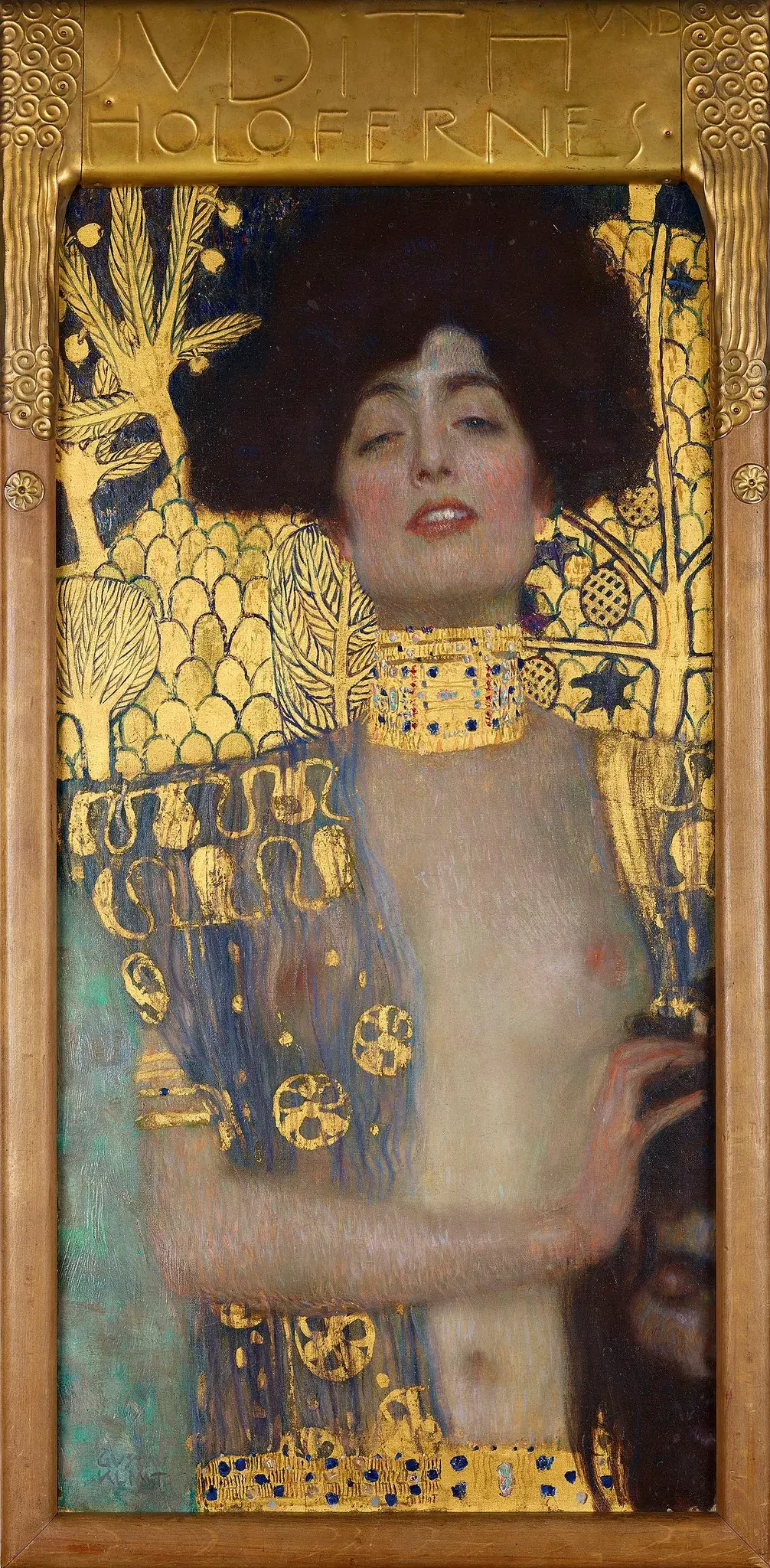
Judith and the Head of Holofernes
Meet the artist
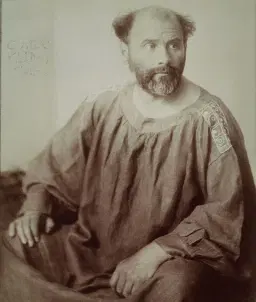
Gustav Klimt1862–1918Austrian
Dates
1901
Specifications
- Movement
- Art Nouveau, Symbolism
- Medium
- Oil Painting
- Genre
- Mythological, Symbolic Painting
About the Artwork
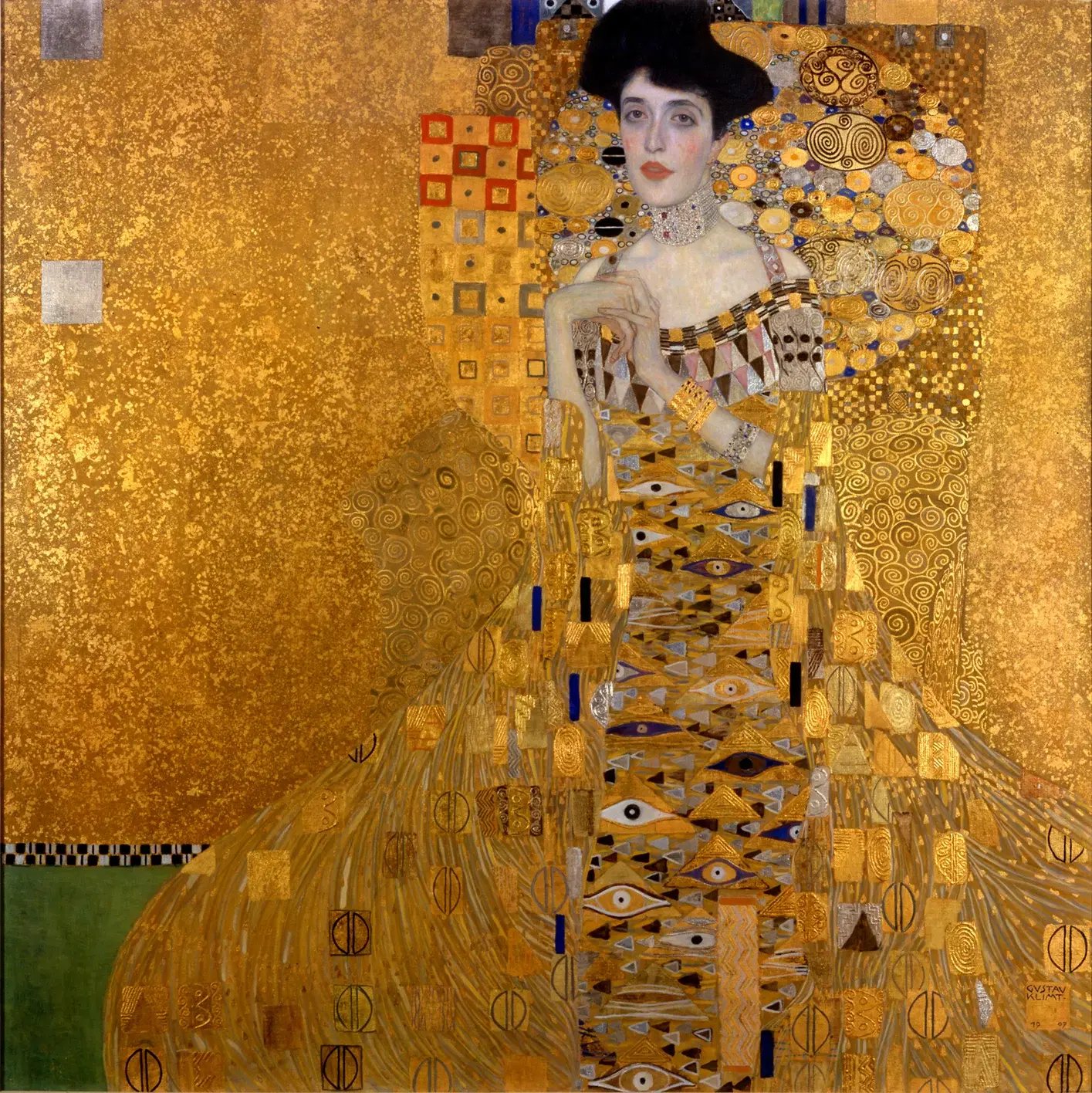
Completed in 1901, Judith and the Head of Holofernes — also known as Judith I — is one of Gustav Klimt's most electrifying works and a defining masterpiece of the Viennese Secession. The painting retells the biblical story of Judith, the Israelite widow who seduced and beheaded the Assyrian general Holofernes to save her people, yet Klimt's interpretation strips the narrative of its heroic religiosity and replaces it with an overtly sensual charge. Judith is shown half-naked, her expression one of detached ecstasy rather than righteous triumph, her fingers loosely grasping the severed head pushed to the very edge of the gilded frame.\n\nMeasuring 84 by 42 centimeters and painted in oil on canvas with gold leaf accents, the work marks the opening of Klimt's celebrated Golden Period, in which he incorporated real gilding as a visual and symbolic material. The model is believed to have been Adele Bloch-Bauer, a Viennese socialite and close friend of the artist. Klimt's Judith embodies the archetype of the femme fatale that permeated fin-de-siècle European culture: beautiful, dangerous, and utterly self-possessed. The painting is housed in the Österreichische Galerie Belvedere in Vienna, where it remains one of the most discussed and debated images in modern art history.
Don’t stop here
More to explore by Gustav Klimt
Same feeling, different artists
Similar Works by Other Artists



Keep exploring