Matisse’s Jazz: Rhythms in Color
Chicago, United States
1 / 2
Image credit
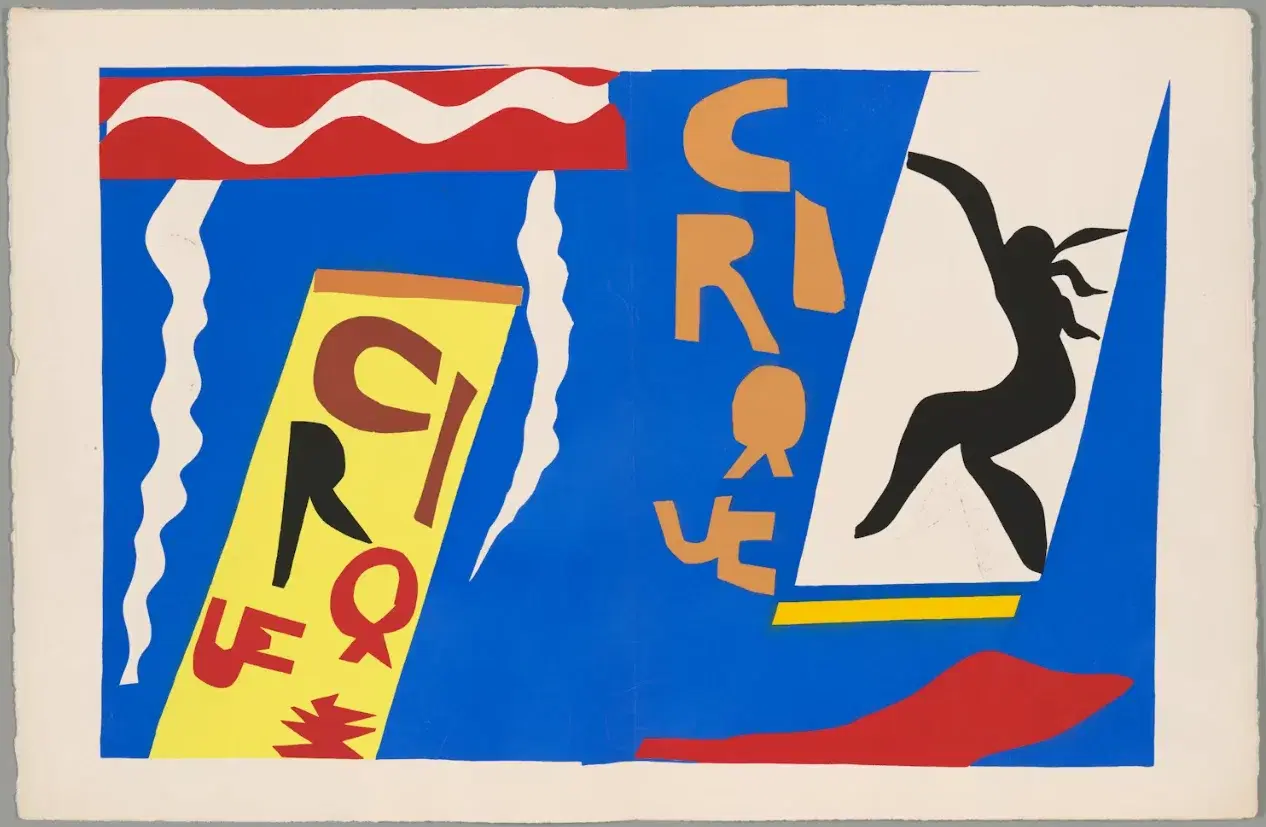
Henri Matisse,The Circus, 1947. Printed by Edmond Vairel, published by Tériade for Éditions Verve. The Art Institute of Chicago, Simeon B. Williams Fund. © 2026 Succession H. Matisse / Artists Rights Society (ARS), New York
Meet the artist
Exhibition Highlights - What you’ll see
In the early 1940s, after a long and celebrated career as a painter, Henri Matisse decided to try something completely new: working with cut paper.
This creative shift was born from a need to keep making art. Following a difficult surgery that left him confined to his bed, Matisse found that scissors and paper allowed him to stay active and inspired even when he could no longer stand at an easel. With encouragement from his friend and publisher, Tériade, he began exploring this fresh technique. He drew from a lifetime of memories—the energy of Parisian music halls, the magic of the circus, his travels to Tahiti, and classic folktales—to create a stunning series of 20 paper designs.
“The paper cutouts allow me to draw with color. For me, it is a simplification. Instead of drawing an outline and then filling in with color—with one modifying the other—I draw directly in color… . It is not a starting point, it is a completion.”
—Henri Matisse, 1951
Keep exploring