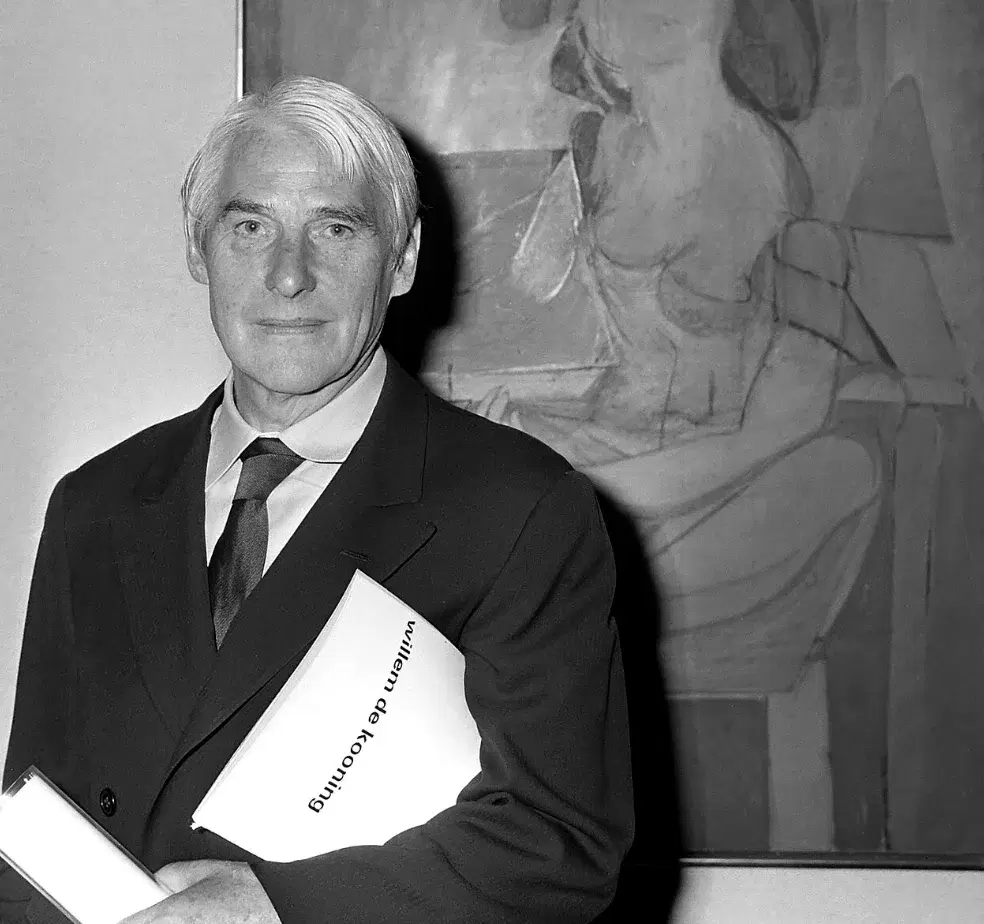
Willem de Kooning at work
Amsterdam, Netherlands
Willem de Kooning was a Dutch-American painter and one of the central figures of Abstract Expressionism.
Born in Rotterdam, he emigrated to the United States in 1926 and became a key member of the New York School.
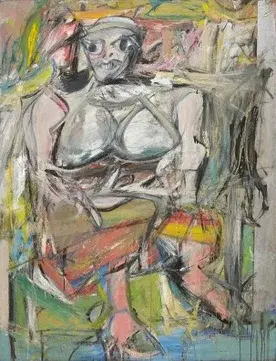
De Kooning is best known for his dynamic and gestural brushwork and his ability to transition between abstraction and figuration.
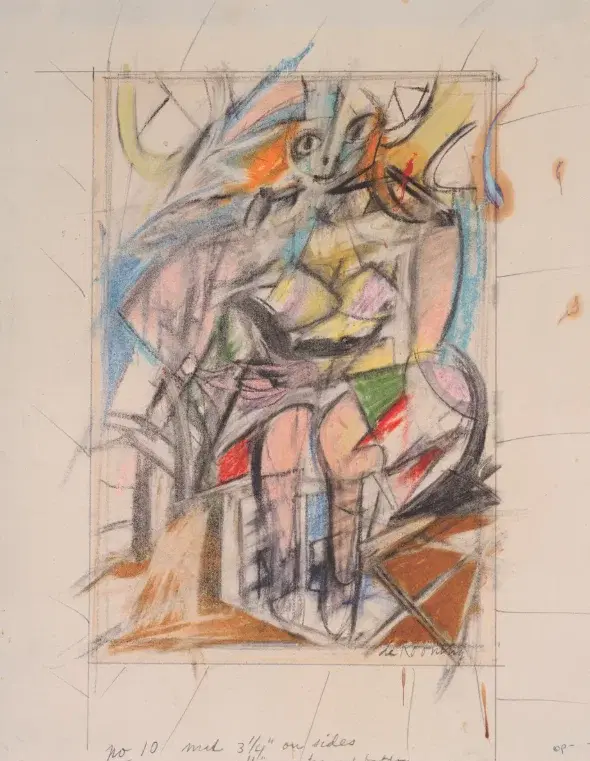
His famous Woman series, especially Woman I (1950–52), shocked the public with its aggressive energy and distorted female forms.
Unlike some of his contemporaries, de Kooning never completely abandoned the human figure, constantly oscillating between landscape, the body, and abstraction.
His paintings are characterized by layered surfaces, scrapings, repaintings, and a sense of movement and tension.
Throughout his long career, he maintained his commitment to experimentation, making him one of the most influential and complex painters of the 20th century.
One of his paintings, Interchange (1955), was reportedly sold privately in 2015 for around $300 million, making it one of the most expensive artworks ever sold at the time. The buyer was hedge fund billionaire Ken Griffin — a sale that reignited conversations about Abstract Expressionism as a blue-chip investment category.
Plan your visit — these exhibitions are on view now.
Don’t stop here