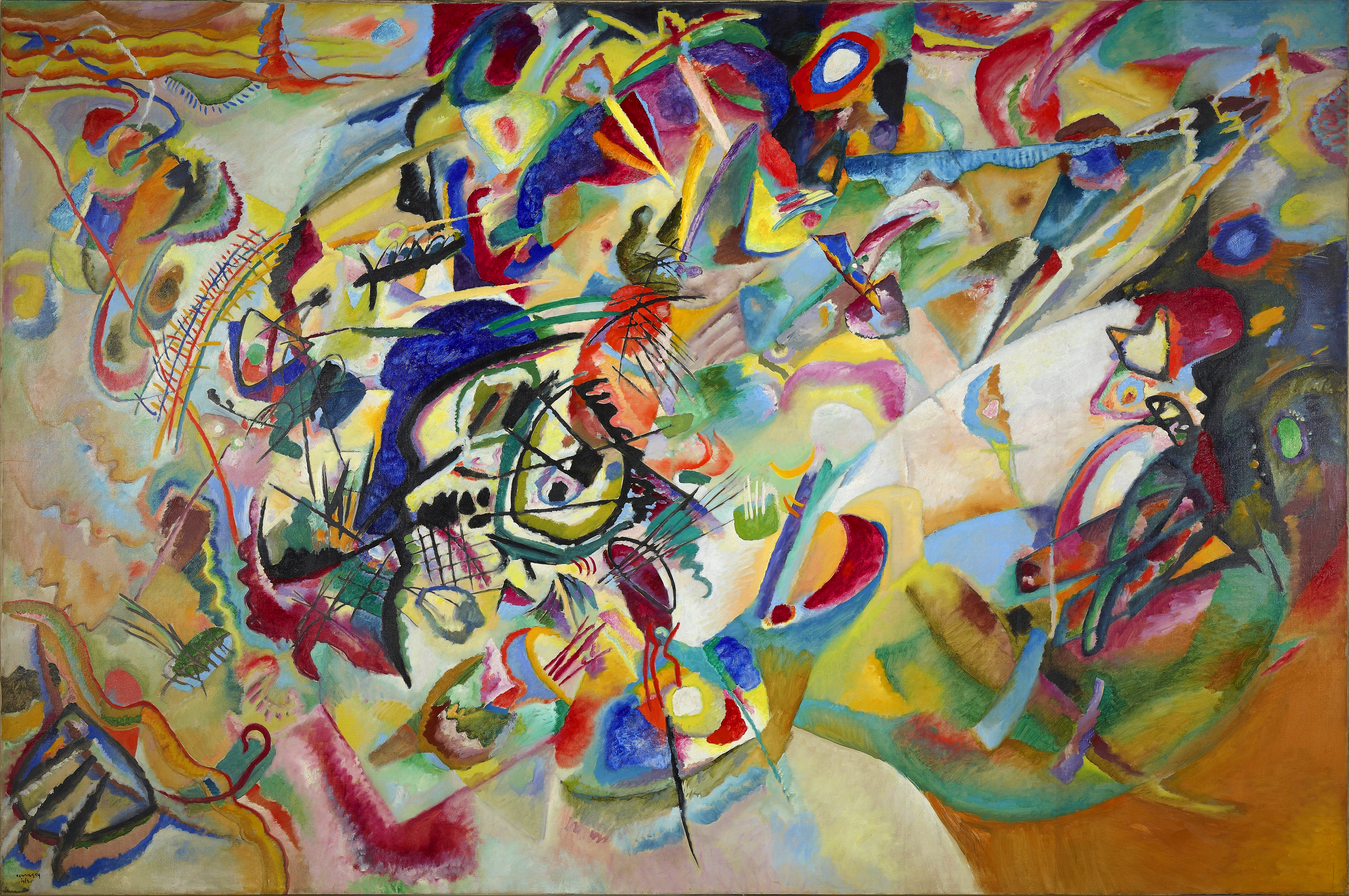
Composition VII
Kompozitsiya VII
Artwork Specifications
- Dimensions
- 200.6 × 302.2 cm
Meet the artist
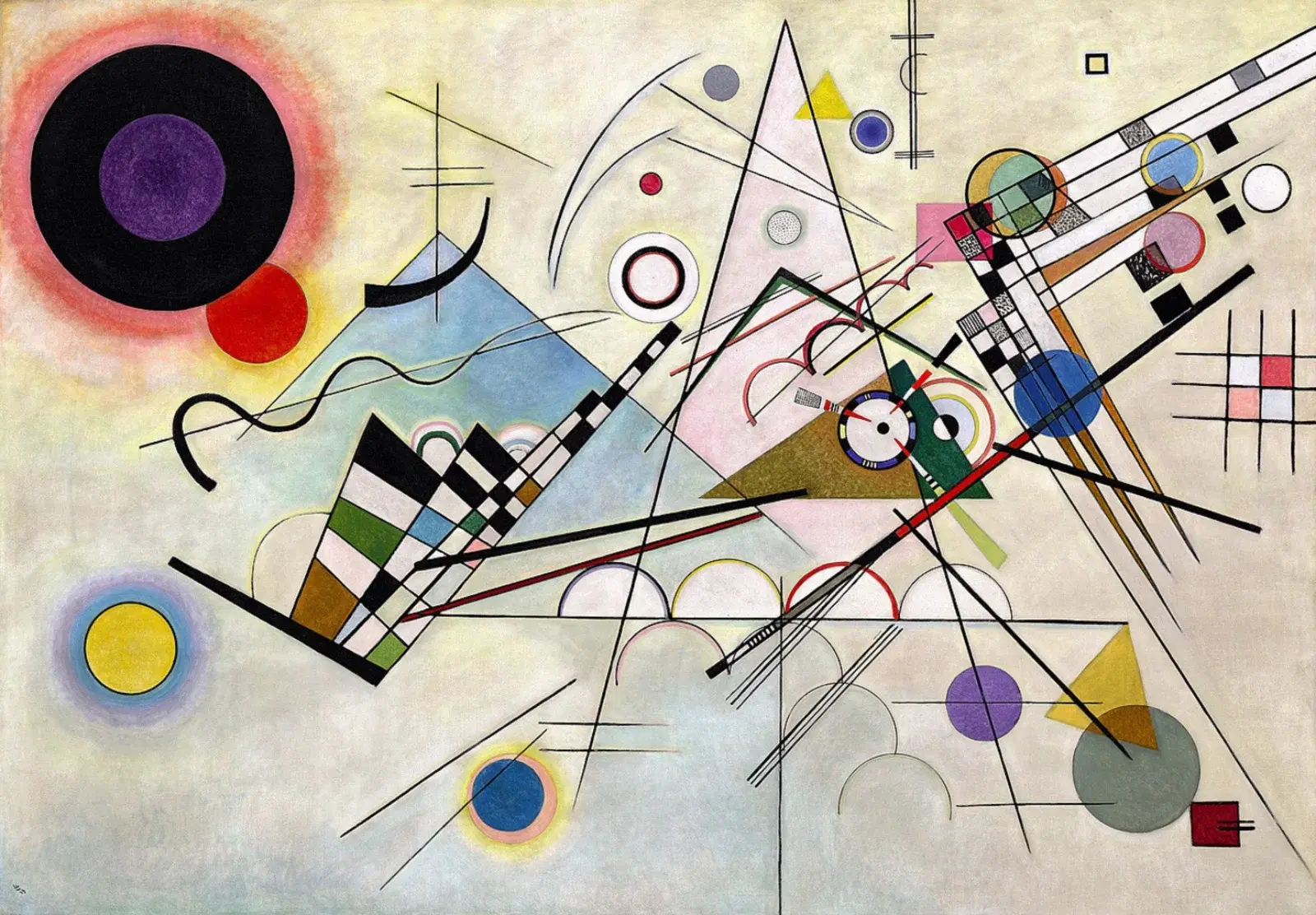
Widely regarded as Wassily Kandinsky's most complex and ambitious painting, Composition VII is a monumental eruption of color, line, and form that art historians have interpreted as weaving together themes of Resurrection, Judgment Day, the Flood, and the Garden of Eden. At over two by three meters, the canvas engulfs the viewer in a swirling cosmos of shapes that hover on the threshold between representation and pure abstraction.
The painting emerged during Kandinsky's Blue Rider period, a time of intense theoretical exploration when he was formulating the ideas published in Concerning the Spiritual in Art. He prepared for this work with an extraordinary number of preliminary studies, sketches, and watercolors, yet executed the final canvas in a concentrated burst of energy. The preliminary watercolor study is itself considered one of the first purely abstract works in the Western European tradition, completely abandoning references to recognizable forms.
Kandinsky's breakthrough was part of a broader moment in early twentieth-century art when multiple artists, including Robert Delaunay, Piet Mondrian, and Hilma af Klint, were independently pushing toward abstraction. Yet Composition VII stands apart for its sheer scale and ambition, aiming to create a visual equivalent of a symphonic score where color, rhythm, and movement replace melody, harmony, and counterpoint.