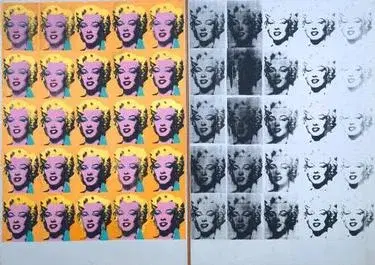
Marilyn Diptych
Andy Warhol
1962
Wikimedia Commons

Marcel Duchamp's "Fountain" isn't your typical decorative water feature. Instead, it's a porcelain urinal, purchased from a plumbing supply company, turned on its back, signed "R. Mutt 1917," and submitted to the Society of Independent Artists exhibition. This act, while seemingly simple, sent shockwaves through the art world. Duchamp challenged the very definition of art, asking whether art resided in the object itself or in the artist's selection and presentation of it. He was exploring the concept of the 'readymade,' where everyday manufactured objects are elevated to art status through the artist's declaration.
Its historical significance lies in its pivotal role in the development of conceptual art. "Fountain" rejected traditional notions of artistic skill and aesthetic beauty. It pushed the boundaries of what could be considered art, sparking debates about originality, intention, and the role of the artist. While the original "Fountain" was lost, its impact reverberates through modern and contemporary art, influencing generations of artists to question the status quo and explore new avenues of artistic expression.
Although the artwork is simply a found object, its artistic technique lies in the act of selection and presentation. By placing a urinal in an art context, Duchamp transformed its meaning and function. It's not about technical mastery in the traditional sense, but rather the conceptual leap of redefining an object as art. "Fountain" matters because it challenged the foundations of art, prompting a re-evaluation of what art is and how it is valued. It continues to provoke and inspire, reminding us that art can be found in unexpected places and that the artist's idea can be as important as the object itself.