Man at the Crossroads
Meet the artist
Diego Rivera1886–1957Mexican
Dates
1933–1934
Specifications
- Movement
- Mexican Muralism, Social Realism
- Medium
- Fresco
- Genre
- Allegory, Historical Painting
About the Artwork
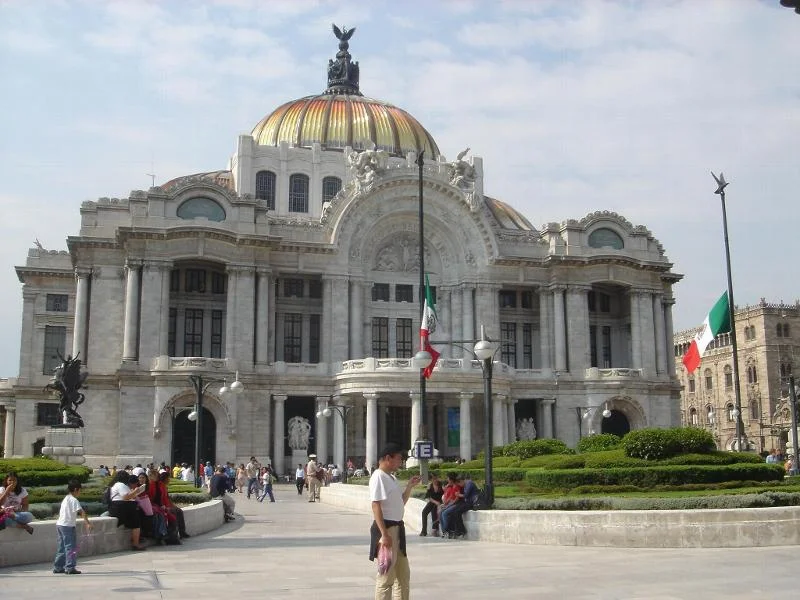
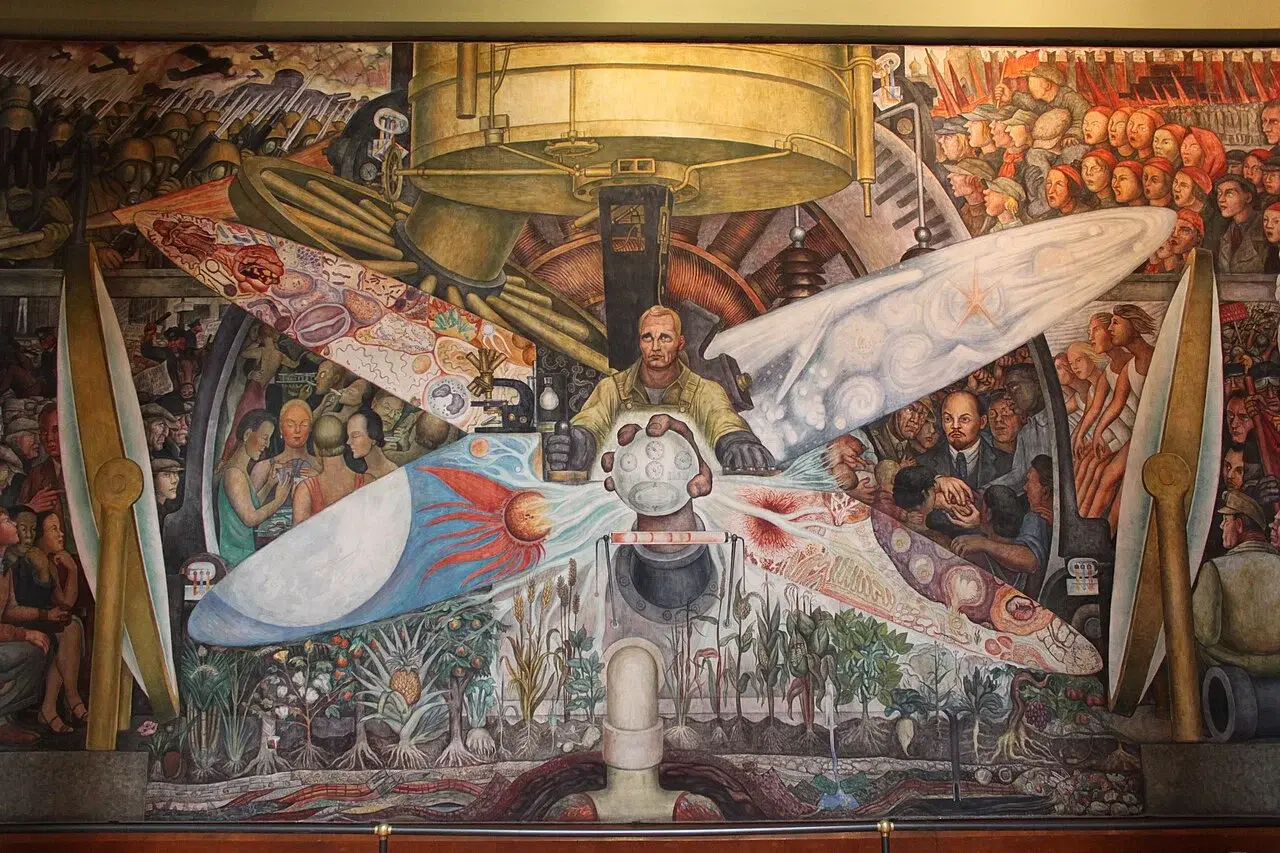
Diego Rivera's Man at the Crossroads represents one of the most dramatic collisions between art and politics in twentieth-century cultural history. Commissioned in 1932 by Nelson Rockefeller to adorn the lobby of the newly constructed Rockefeller Center in New York, Rivera conceived a sweeping fresco depicting a central figure controlling the machinery of the universe, flanked by competing visions of capitalism and socialism. When Rivera refused to remove a portrait of Vladimir Lenin from the composition after Rockefeller's personal request, he was paid in full and dismissed from the project. The unfinished fresco was plastered over in May 1933 and chiseled off entirely in 1934.\n\nBefore its destruction, Lucienne Bloch secretly photographed the mural in detail at Rivera's instruction. Using these photographs as reference, Rivera recreated the composition at the Palacio de Bellas Artes in Mexico City in 1934, renaming it Man, Controller of the Universe. In this version he added further political commentary, including a portrait of John D. Rockefeller surrounded by socialites and a venereal disease slide, as a pointed response to the censorship he had suffered. The Mexico City recreation remains on permanent display and stands as a monument to artistic defiance, ensuring that a work intended to be erased became instead one of the most discussed murals of the modern era.
Don’t stop here
More to explore by Diego Rivera
Same feeling, different artists