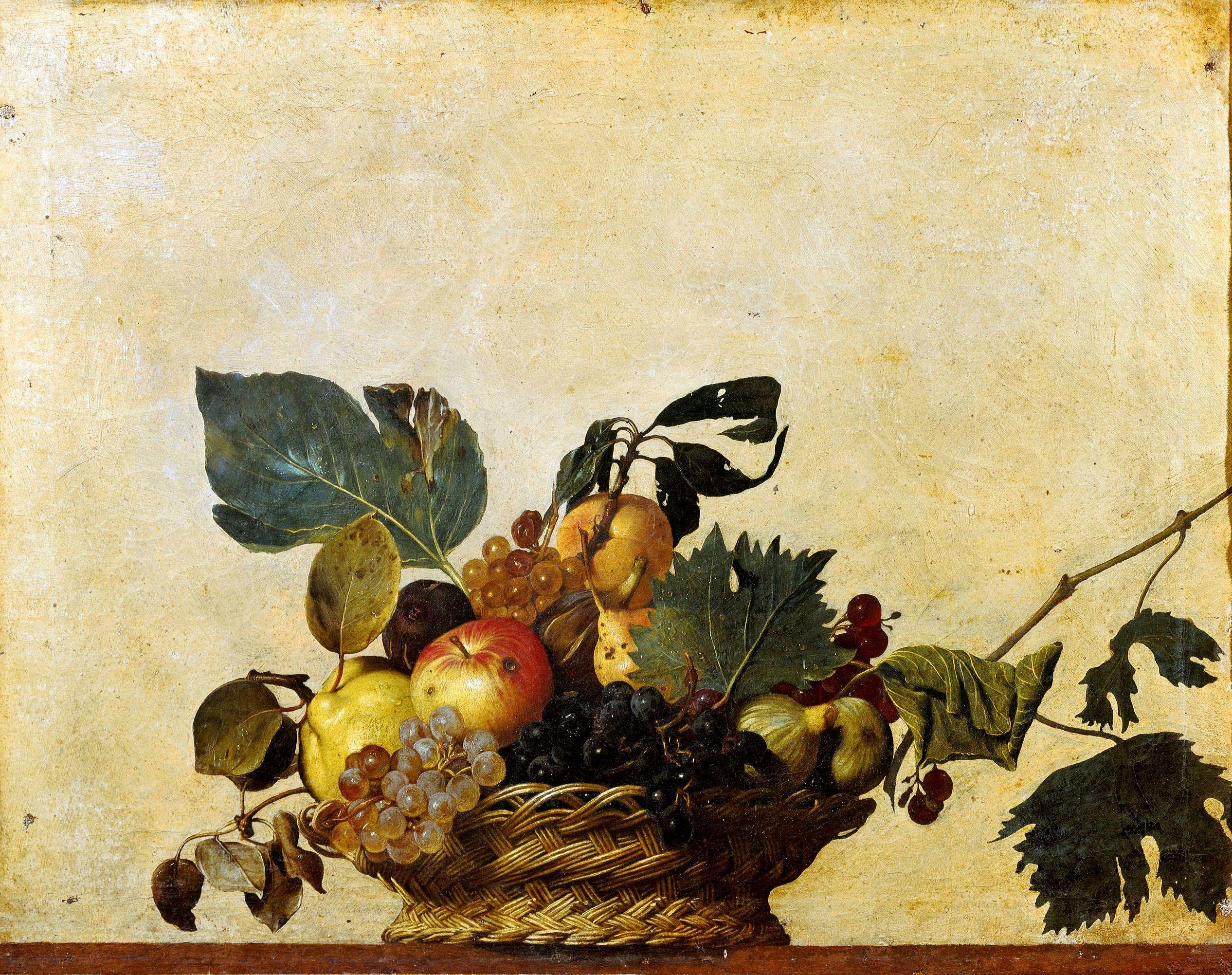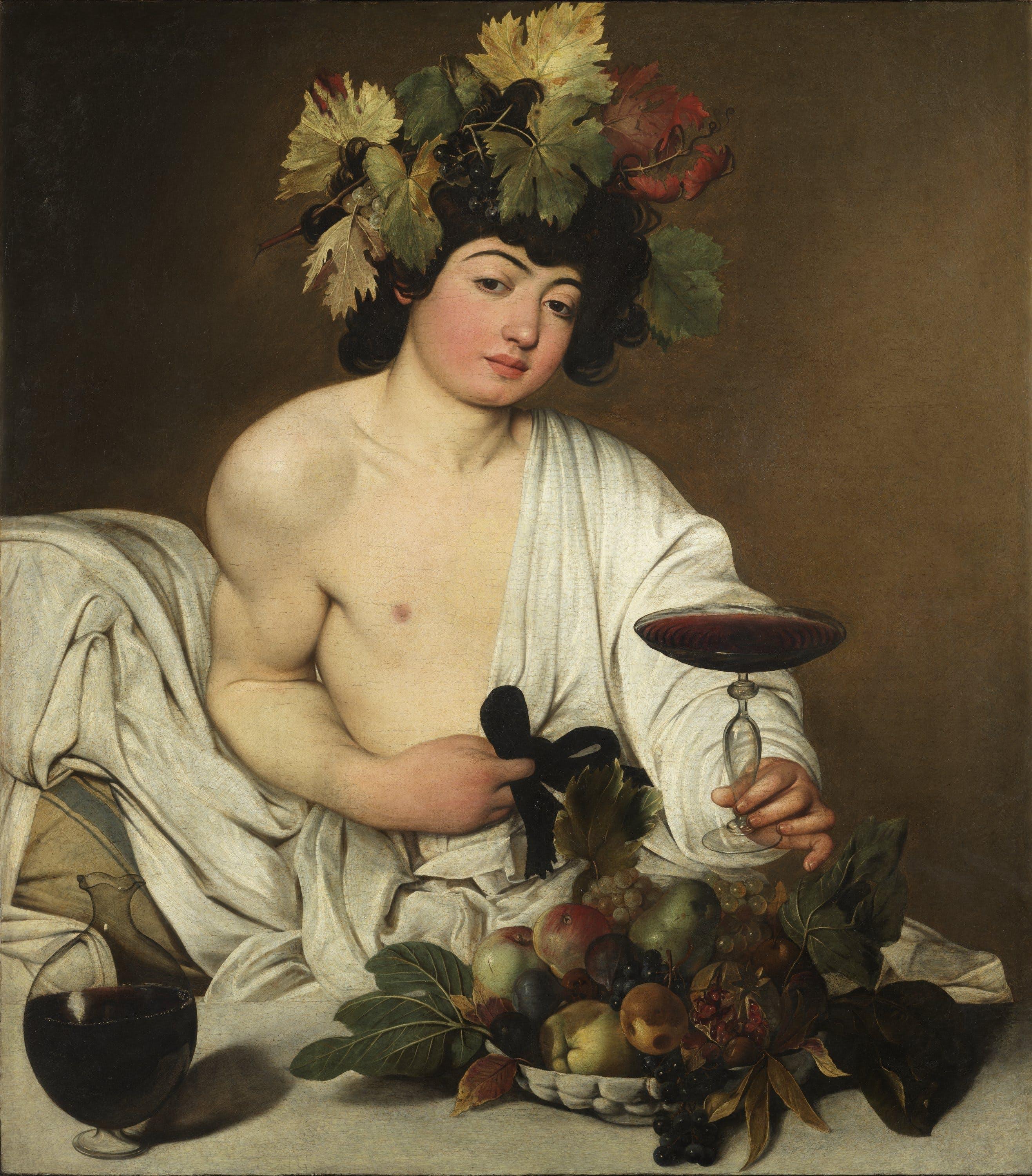
Caravaggio's Bacchus presents the Roman god of wine as a fleshy, heavy-lidded youth draped in a white toga, extending a shallow goblet of wine directly toward the viewer. Vine leaves and dark grapes crown his head, and a still-life arrangement of overripe fruit and a large carafe of red wine sits on the stone ledge before him. The figure's slightly flushed cheeks and languid posture suggest the pleasurable torpor of intoxication.
Commissioned by Cardinal Francesco Maria del Monte around 1596, the painting reflects the humanist and hedonistic tastes of the cardinal's intellectual circle. Caravaggio brought an unprecedented naturalism to the mythological subject: the model's fingernails are visibly dirty, the fruit is bruised and beginning to decay, and the wine in the glass subtly ripples. This grounding of the divine in the physical would become a hallmark of Caravaggio's revolutionary approach. The identity of the model remains debated, with candidates including the artist's studio assistant Mario Minniti and possibly Caravaggio himself.