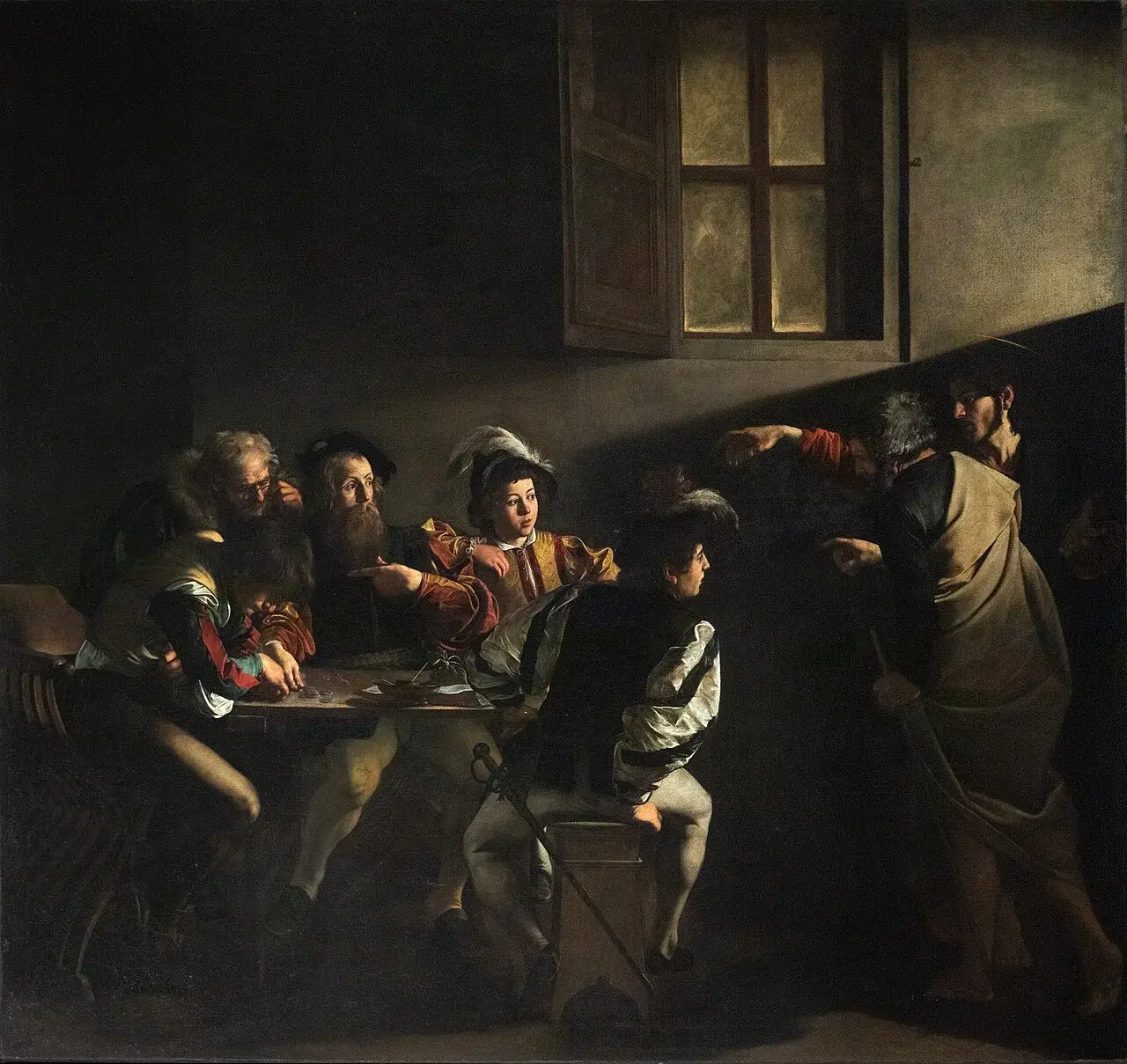
The Calling of Saint Matthew
#38
Meet the artist
CCaravaggio1571–1610Italian
Dates
1599–1600
Specifications
- Original title
- Vocazione di San Matteo
- Dimensions
- 322 × 340 cm
Wikimedia Commons
About the Artwork
Caravaggio's "The Calling of Saint Matthew," painted between 1599 and 1600, is a pivotal work in the Baroque era and a cornerstone of Western art. Housed in the Contarelli Chapel of San Luigi dei Francesi in Rome, this painting captures the dramatic moment when Jesus Christ calls Matthew, the tax collector, to follow him. This scene from the Gospel of Matthew (9:9) is not merely a historical depiction but a powerful exploration of spiritual awakening. Caravaggio's innovative approach to storytelling, coupled with his mastery of light and shadow, transformed religious art and influenced generations of artists. The painting marked Caravaggio's first major church commission, securing his reputation as a revolutionary force in the art world.
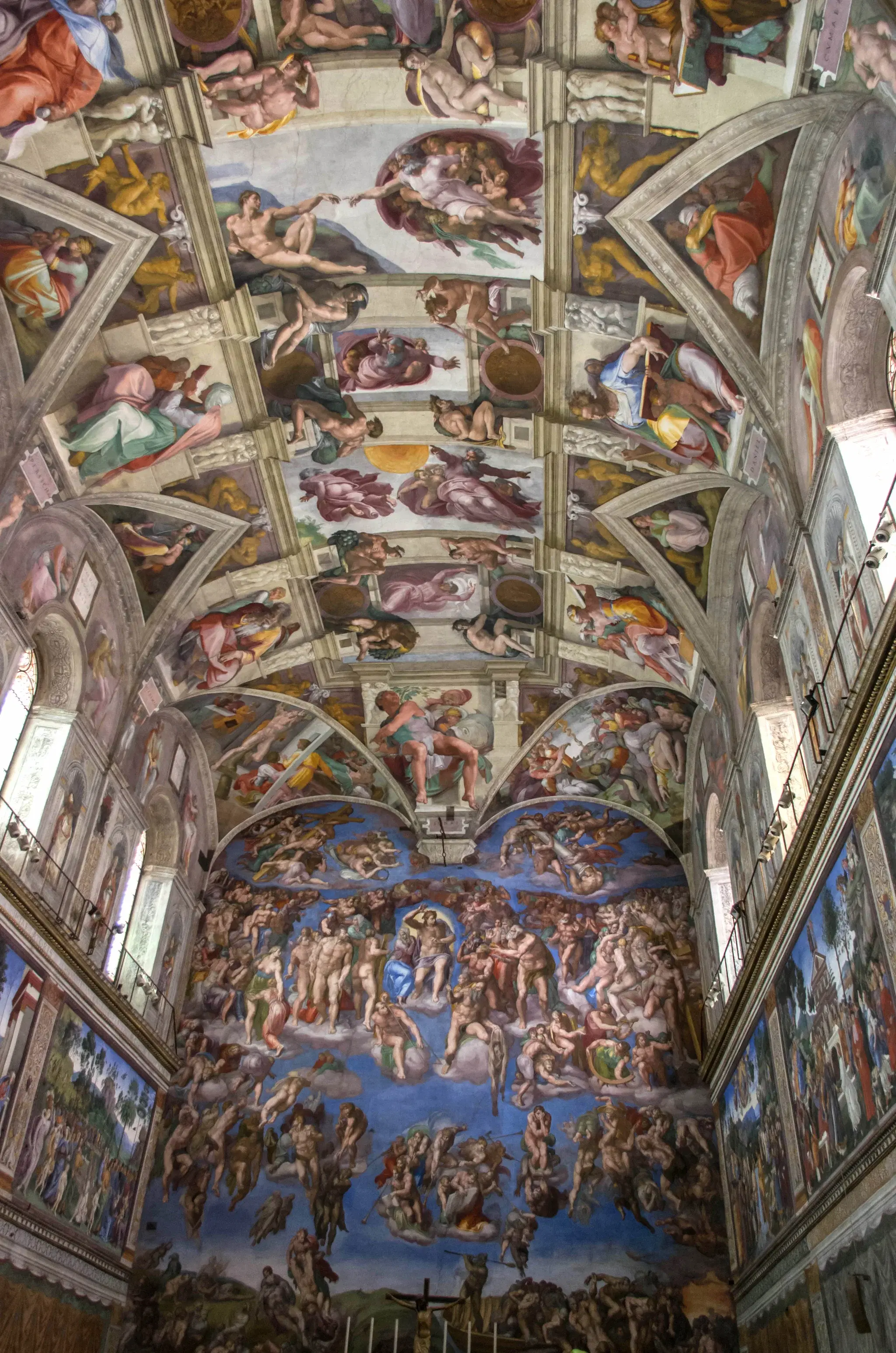
The painting's significance lies in its groundbreaking use of tenebrism, a technique characterized by stark contrasts between intense light and deep shadow. This dramatic lighting not only emphasizes the central figures of Jesus and Matthew but also draws the viewer's eye to the pivotal moment of recognition. Christ's outstretched hand, reminiscent of Michelangelo's Adam in the Sistine Chapel, further underscores the theological weight of the scene, suggesting Christ as the "Second Adam" calling Matthew to a new life. The ambiguity surrounding which figure is actually Matthew adds another layer of intrigue, inviting viewers to contemplate the nature of faith and divine calling. Is it the bearded man pointing to himself in surprise, or the young man with a bowed head about to receive his calling?
Beyond its technical brilliance, "The Calling of Saint Matthew" resonates because it presents a relatable, human interpretation of a sacred event. Caravaggio eschews idealized figures in favor of realistic, even ordinary, individuals placed in a contemporary setting. This naturalistic approach, coupled with the painting's dramatic composition and emotional intensity, makes the scene immediate and accessible. The painting is not just about a historical event; it is about the universal human experience of being called, transformed, and given a new purpose. It continues to inspire and challenge viewers to consider their own spiritual journeys.
How to experience it
wait for the beam of light to read the picture’s drama
Don’t stop here
More to explore by Caravaggio
Same feeling, different artists