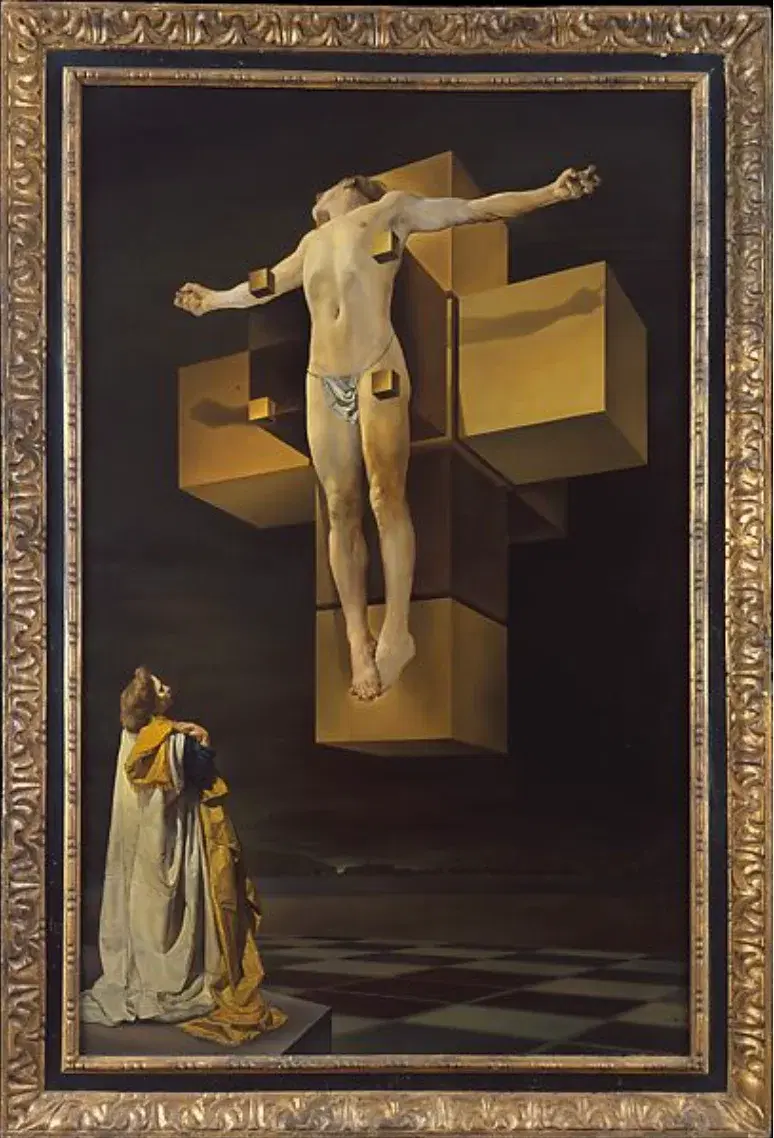
Crucifixion (Corpus Hypercubus)
Meet the artist

Salvador Dali1904–1989Spanish
Dates
1954
Specifications
- Movement
- Surrealism
- Medium
- Oil Painting
- Genre
- Religious Painting
About the Artwork
A crucifixion suspended in space, unfolding across a fourth dimension.
Salvador Dalí's Crucifixion (Corpus Hypercubus), completed in 1954, is one of the most intellectually audacious religious paintings of the 20th century. The large oil on canvas — 194 by 124 centimetres — depicts Christ crucified not on a conventional cross but on the unfolded three-dimensional surface of a four-dimensional hypercube, or tesseract. Dalí developed the concept through what he termed nuclear mysticism, an attempt to reconcile Catholic spirituality with contemporary mathematics and physics in the wake of the atomic age. Christ's body is athletic and uninjured, bearing no crown of thorns, no nails, no wounds — a vision of transcendence over physical suffering rather than an image of martyrdom. The figure of Gala, the artist's wife and lifelong muse, stands below in the role of devotional witness, gazing upward. The vast, chequered ground beneath gives the composition an otherworldly spatial ambiguity. The Metropolitan Museum of Art in New York acquired the painting in 1955 following its first exhibition in Rome, where it provoked both admiration and controversy. It remains one of Dalí's most visited and discussed works, poised at the intersection of surrealist imagination, religious iconography, and mathematical philosophy.
Don’t stop here
More to explore by Salvador Dali
Keep exploring

Ends soon
Frieze New York 2026
13 May – 17 May 2026
The Shed New York
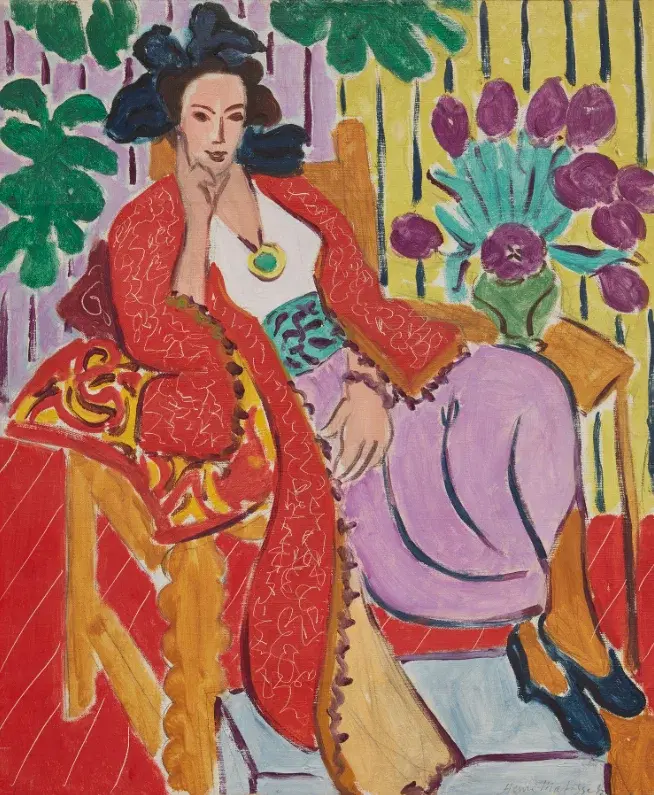
Matisse. The Pursuit of Harmony
9 Apr – 22 May 2026
Acquavella Galleries
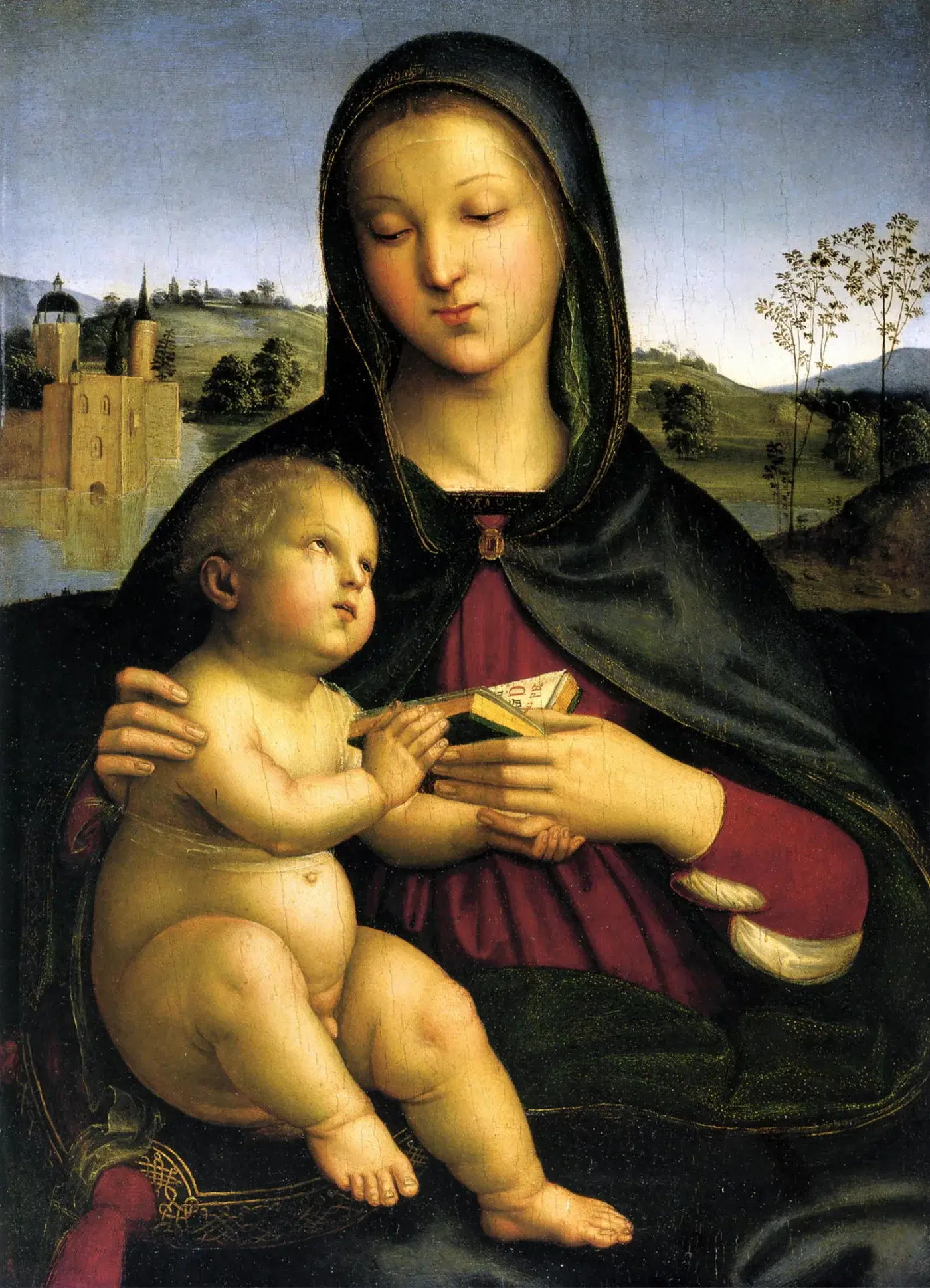
Raphael: Sublime Poetry
29 Mar – 28 Jun 2026
Metropolitan Museum of Art
Marcel Duchamp
13 Apr – 22 Aug 2026
MoMA The Museum of Modern Art

Whitney Biennial 2026
8 Mar – 23 Aug 2026
Whitney Museum of American Art

Frida and Diego. The Last Dream.
1 Apr – 12 Sep 2026
MoMA The Museum of Modern Art
Noguchi’s New York
4 Feb – 13 Sep 2026
The Noguchi Museum
Roy Lichtenstein
1 Oct 2026 – 1 Jan 2027
Whitney Museum of American Art
Guggenheim Pop
5 Jun 2026 – 10 Jan 2027
Solomon R. Guggenheim Museum
Moma Permanent Collection
MoMA The Museum of Modern Art