Loading map...
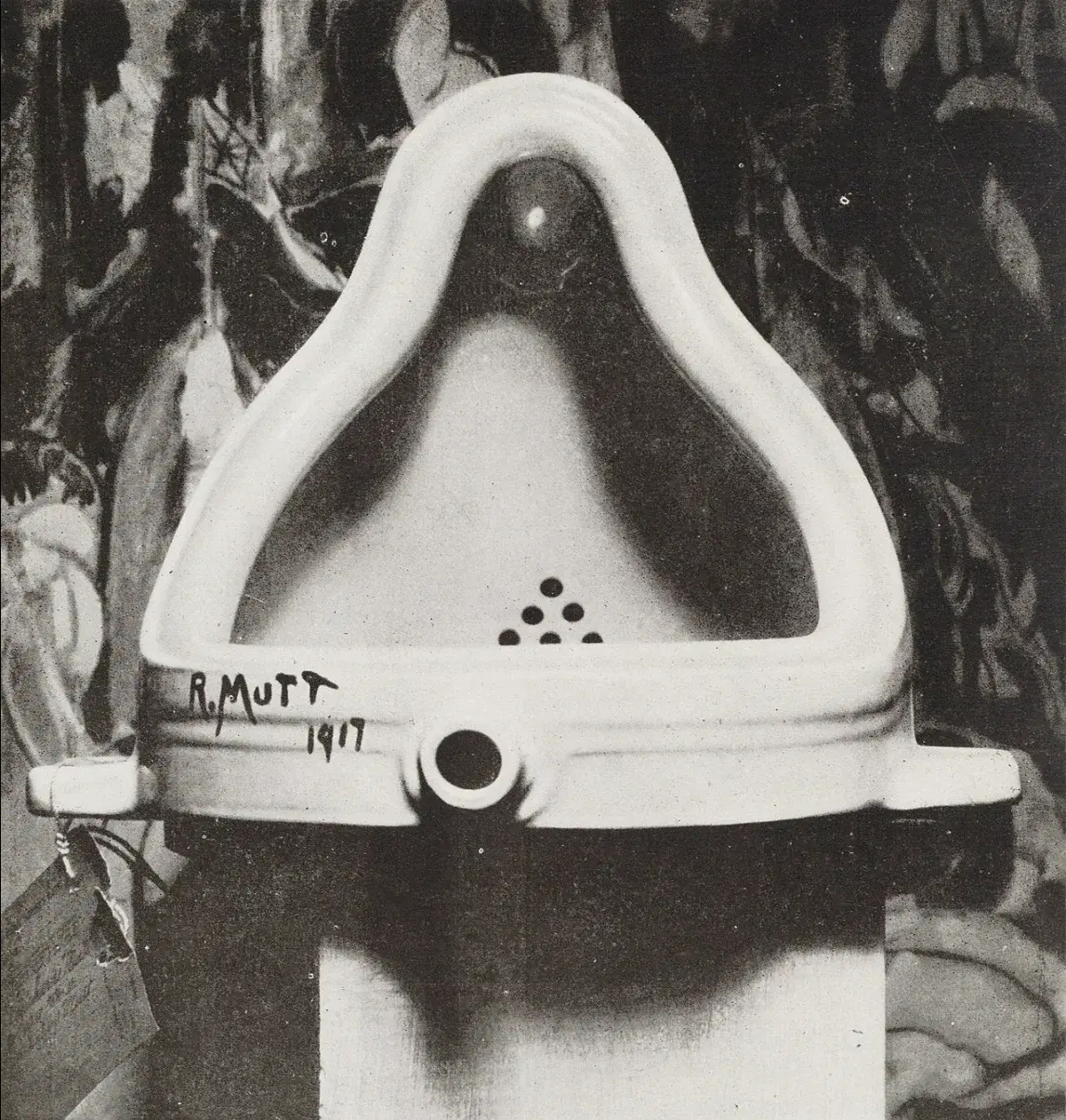
1917
Let’s talk about Marcel Duchamp’s "Fountain." It’s definitely not your typical garden ornament. In 1917, Duchamp bought a standard porcelain urinal from a plumbing store, flipped it on its back, and signed it with the pseudonym "R. Mutt." When he submitted it to the Society of Independent Artists exhibition, he wasn’t just playing a prank—he was starting a revolution.
Duchamp wanted us to ask a big question: does art have to be something handmade and beautiful, or can it simply be an object an artist chooses and presents in a new way? This was the birth of the 'readymade,' where everyday items are promoted to art status just because an artist says so.e call art.
Why it’s important
Fountain is one of the most radical artworks in history. Duchamp took an ordinary, mass-produced object—a urinal—turned it on its side, signed it, and presented it as art. With this gesture, he fundamentally questioned:
What defines art? Is it the object itself, or the artist’s choice?
The role of the artist: From maker to selector
The authority of institutions: The work was rejected despite an “open” exhibition policy
This piece introduced the concept of the readymade, shifting art away from craftsmanship toward ideas and context. It paved the way for conceptual art, influencing generations from Andy Warhol to contemporary practices today.
The original 1917 urinal submitted by Marcel Duchamp is lost. However, several authorized replicas (from the 1950s–60s) exist—and these are what you see in museums today.
Where to see it - Main places to see Fountain
Tate Modern
Centre Pompidou
Philadelphia Museum of Art
Museum of Modern Art (MoMA)
Good to know
These replicas were approved by Duchamp himself, so they are considered authentic manifestations of the work.
The fact that the original is lost actually reinforces the idea behind Fountain: the concept matters more than the object.