Le Bonheur de Vivre
Le Bonheur de vivre
Artwork Specifications
- Dimensions
- 176.5 × 240.7 cm
Meet the artist

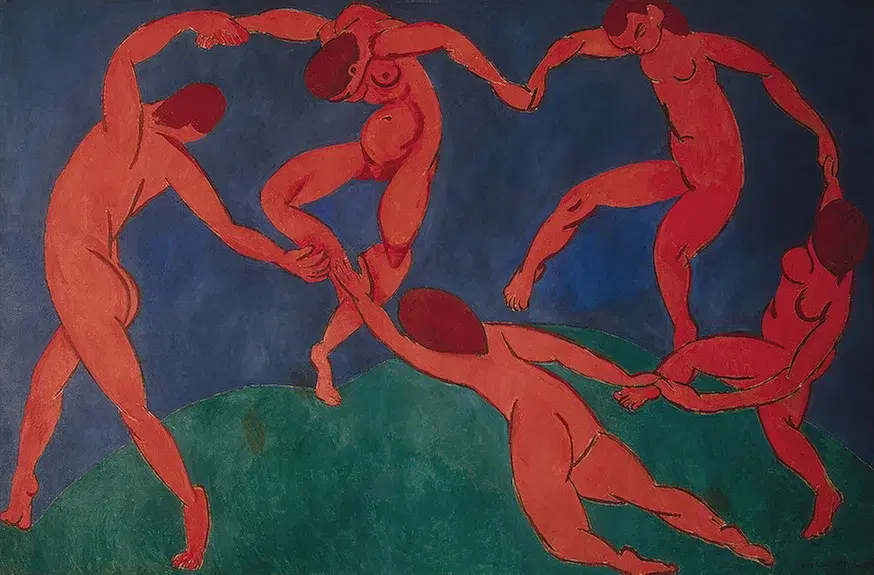
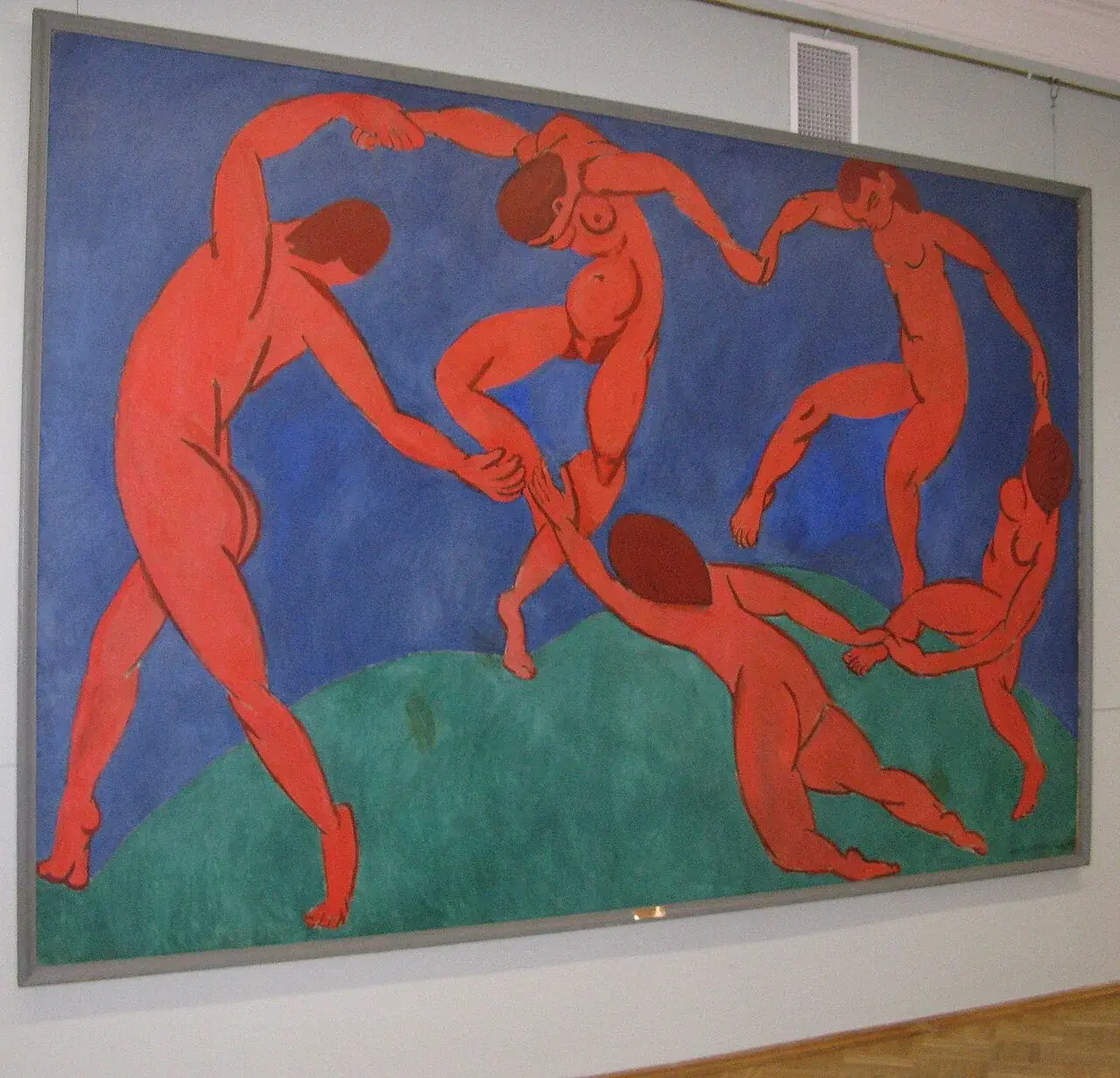
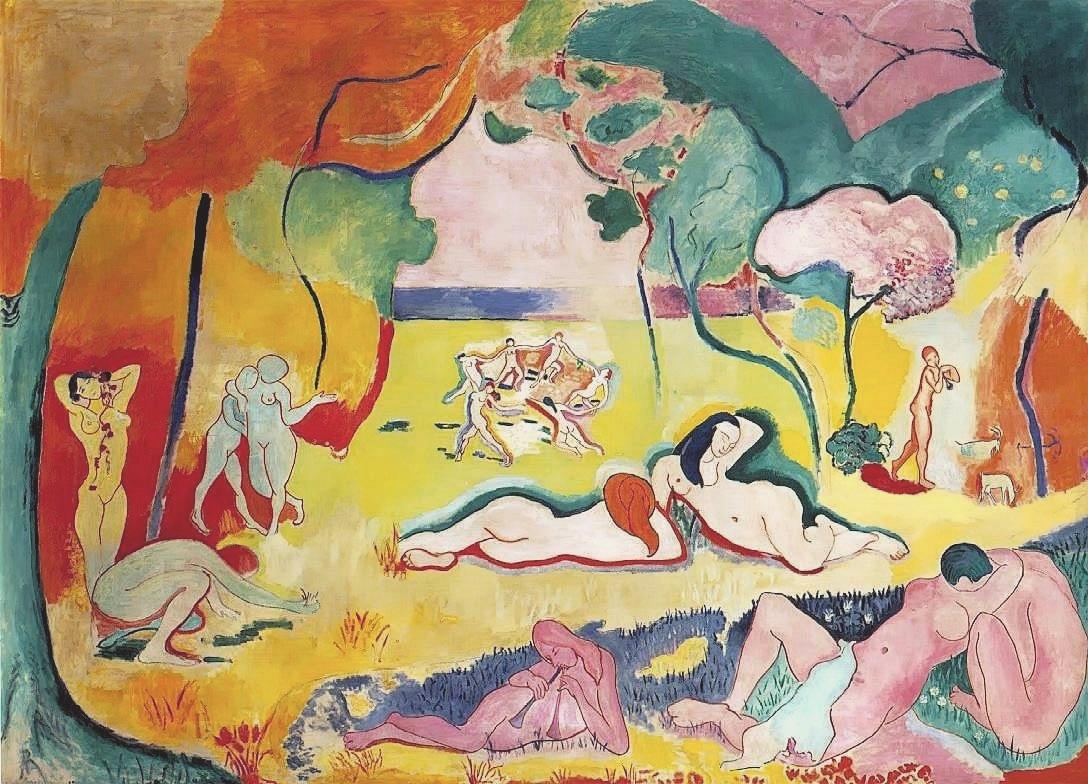
Nude figures recline, embrace, dance, and play music in a landscape saturated with vivid, unnatural color. The scene unfolds across a broad, gently undulating terrain framed by curving trees, with a ring of dancers visible in the central background — a motif Matisse would later develop into his iconic painting The Dance. The bodies are rendered with fluid, simplified outlines that owe more to decorative pattern than to anatomical study.
Matisse worked on this monumental canvas from October 1905 to March 1906, in the immediate aftermath of the explosive debut of Fauvism at the Salon d'Automne. The cadmium colors and spatial distortions provoked outrage when the painting was exhibited at the Salon des Independants in 1906. Even the Pointillist Paul Signac, himself no stranger to bold color, wrote that Matisse had "gone to the dogs." Yet by the 1920s the painting was accepted as a foundational work of modern art.
Art historians have traced the composition to sixteenth-century sources, particularly an engraving by Agostino Carracci, as well as to the pastoral tradition stretching back to Titian and Giorgione. The painting stands alongside Picasso's Les Demoiselles d'Avignon as one of the twin pillars of early modernism. It now resides at the Barnes Foundation in Philadelphia, where conservation efforts continue to address the degradation of its cadmium-based pigments.