Little Dancer Aged Fourteen
#97
Meet the artist
EEdgar Degas1834–1917French
Dates
1881
Specifications
- Original title
- Petite danseuse de quatorze ans
- Dimensions
- 98 × ? cm
Wikimedia Commons
About the Artwork
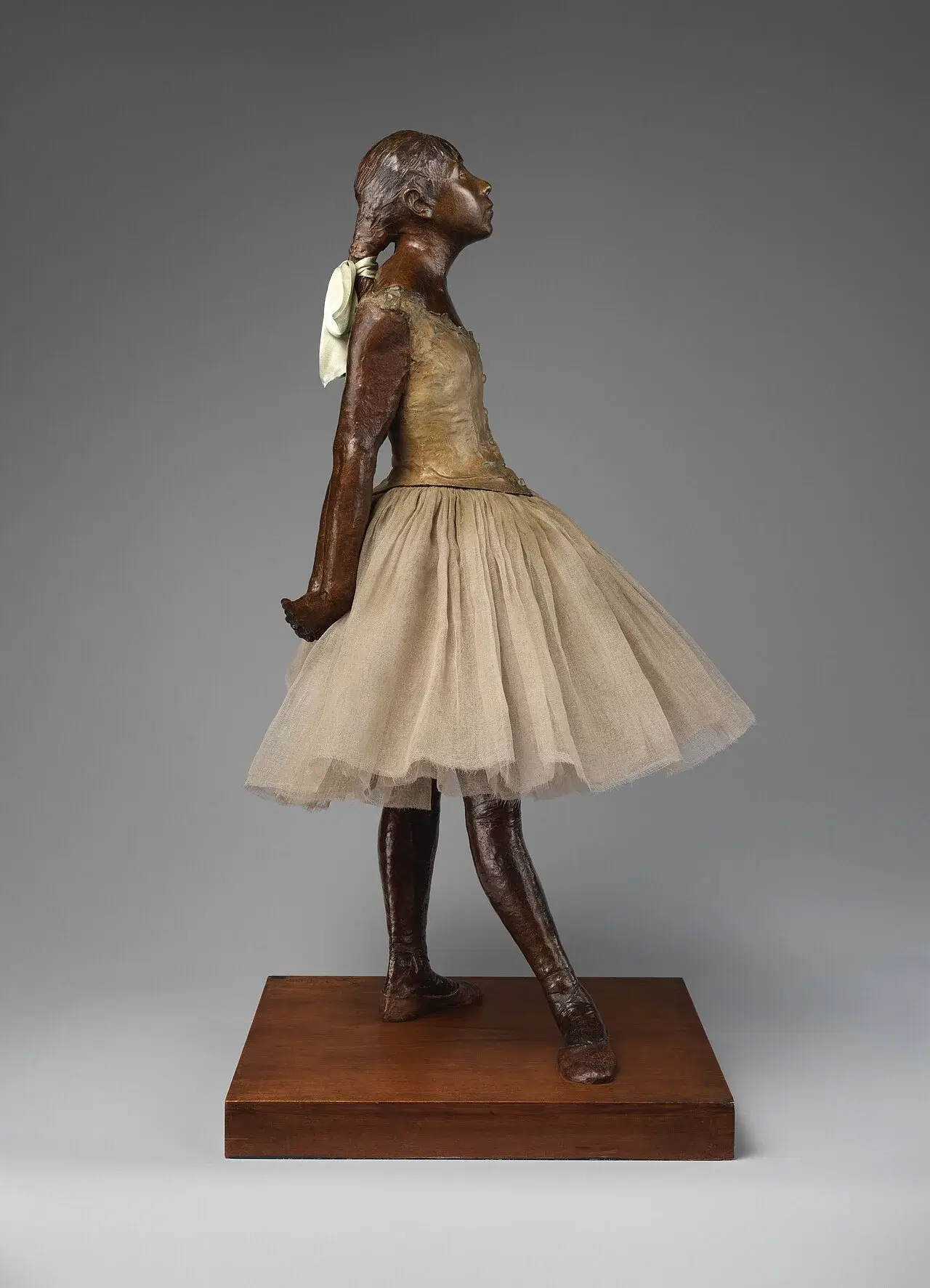
Edgar Degas's "Little Dancer Aged Fourteen" (French: *La Petite Danseuse de Quatorze Ans*) is a groundbreaking sculpture depicting Marie van Goethem, a young student at the Paris Opera Ballet dance school, begun around 1880. This two-thirds life-size sculpture defied convention upon its 1881 exhibition at the Sixth Impressionist Exhibition in Paris. Degas dared to present a realistic, unidealized image of a young dancer, moving away from the traditional, idealized portrayals of ballerinas in art. The artwork offers insight into the lives of working-class girls who aspired to become dancers in late 19th-century Paris.
The sculpture's historical significance lies in its departure from academic sculpture and its embrace of Realism and Impressionism. Degas employed innovative techniques, sculpting the original in wax and dressing it with a real bodice, tutu, ballet slippers, and a wig of human hair— blurring the lines between sculpture and life. This combination of materials and the candid portrayal of the subject stirred controversy among critics, some of whom found the dancer's features unsettling and even depraved. The use of real clothing and hair also foreshadowed later developments in assemblage and mixed-media art. After Degas's death, bronze casts were made, ensuring the work's lasting legacy in museums and galleries worldwide.
"Little Dancer Aged Fourteen" matters because it challenged artistic norms and sparked conversations about representation, class, and the realities of the ballet world. It continues to fascinate viewers with its blend of realism and artifice, its poignant portrayal of adolescence, and the questions it raises about the relationship between artist and model. Its enduring appeal is further evidenced by its presence in popular culture, inspiring ballets, musicals, and literary works, which keeps the discussion about Degas's sculpture alive for new generations.
How to experience it
walk around the figure to read posture and imbalance
Don’t stop here
More to explore by Edgar Degas
Same feeling, different artists