The Anatomy Lesson of Dr Nicolaes Tulp
#43
Meet the artist
RRembrandt van Rijn1606–1669Dutch
Dates
1632
Specifications
- Original title
- De anatomische les van Dr. Nicolaes Tulp
- Dimensions
- 169.5 × 216.5 cm
Wikimedia Commons
About the Artwork
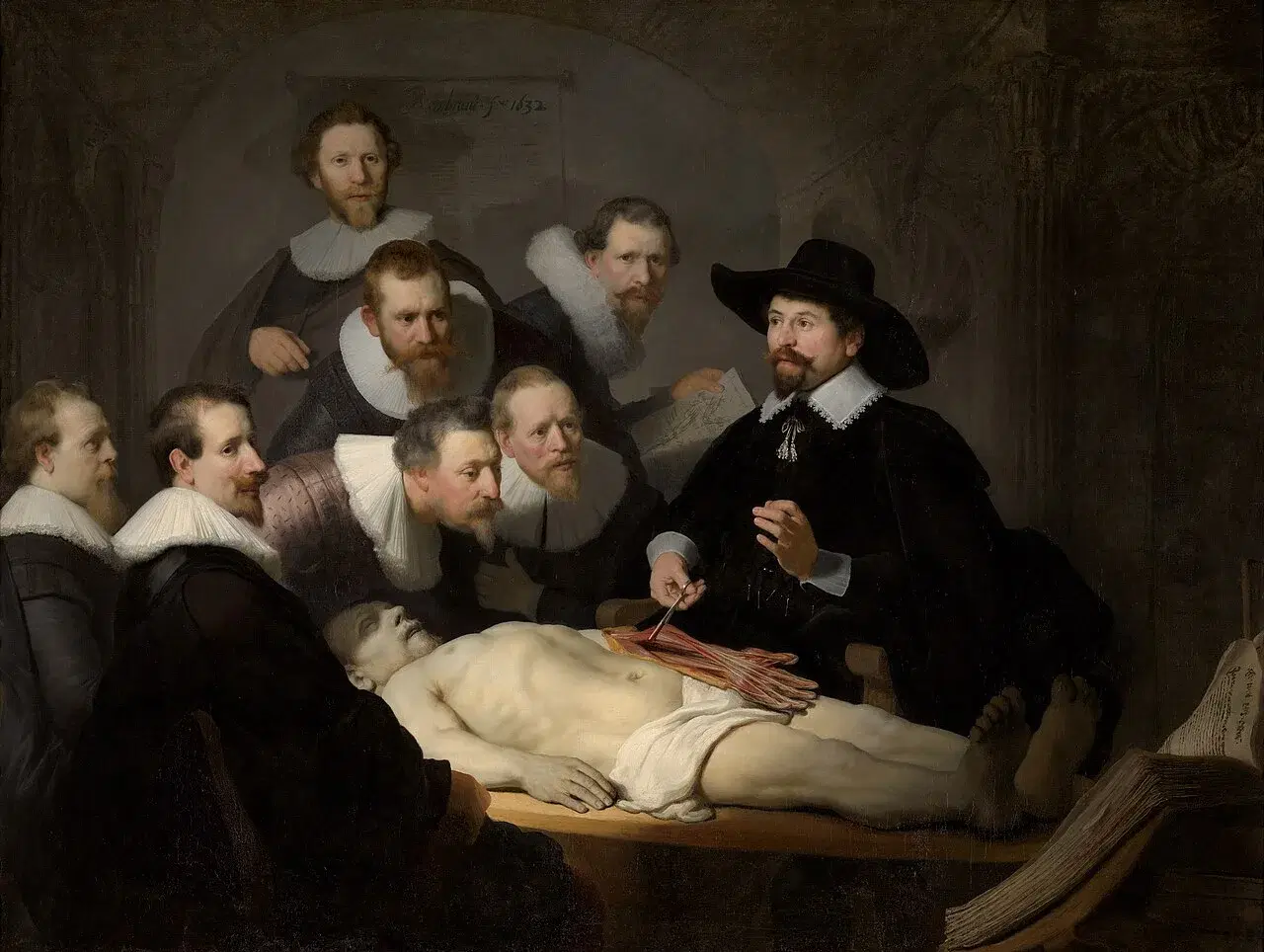
Rembrandt's "The Anatomy Lesson of Dr. Nicolaes Tulp," painted in 1632, is a fascinating window into 17th-century Amsterdam and the intersection of science, art, and society. The painting depicts Dr. Nicolaes Tulp, the city's official anatomist, demonstrating the musculature of the arm to a group of surgeons. This wasn't merely a medical demonstration; it was a social event, akin to a theatrical performance, where students, colleagues, and even the public could attend for a fee. The meticulously dressed spectators, who paid for the privilege of being included in the painting, add a layer of social commentary to the scene. The painting marked a turning point in Rembrandt's career, being his first major commission in Amsterdam and a bold step towards signing his works with his first name, a sign of burgeoning confidence.
Beyond its social context, "The Anatomy Lesson" revolutionized the genre of anatomical portraits. Instead of a static group portrait, Rembrandt created a dynamic, almost theatrical mise-en-scène. The inclusion of a full-length corpse, arranged with a hint of Christ-like iconography, was a radical departure from convention. While the accuracy of Rembrandt's anatomical depiction has been debated, with some discrepancies noted, the painting nevertheless reveals a remarkable understanding of human anatomy, whether derived from textbooks or direct observation. The shaded face of the corpse, a technique known as umbra mortis, adds a dramatic element, foreshadowing Rembrandt's later use of light and shadow.
"The Anatomy Lesson of Dr. Nicolaes Tulp" matters because it's more than just a portrait or a scientific illustration; it's a complex narrative about knowledge, power, and the human condition. It captures a pivotal moment in the history of medicine and art, reflecting the growing interest in scientific inquiry during the Dutch Golden Age. Rembrandt's innovative approach to composition, his masterful use of light and shadow, and his ability to imbue the scene with both realism and drama make this painting a true masterpiece that continues to fascinate and inspire viewers today.
How to experience it
look at the chain of attention across the faces
Don’t stop here
More to explore by Rembrandt van Rijn



Same feeling, different artists