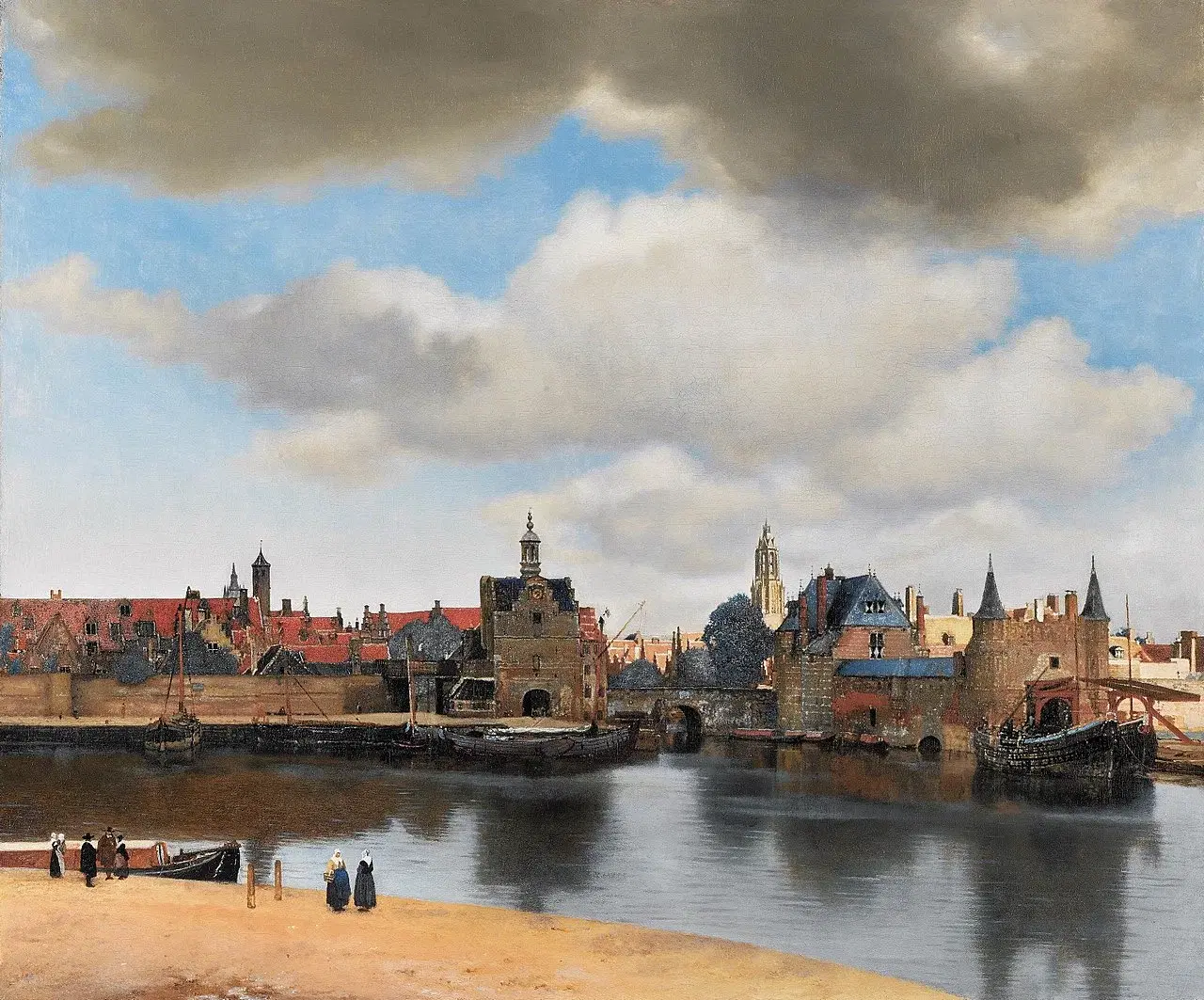
View of Delft
#42
Meet the artist

Johannes Vermeer1632–1675Dutch
Dates
c. 1660–1661
Specifications
- Original title
- Gezicht op Delft
- Dimensions
- 96.5 × 115.7 cm
Wikimedia Commons
About the Artwork
Johannes Vermeer's "View of Delft," painted around 1659-1661, is more than just a depiction of a city; it's a portrait of a moment in time, a celebration of Dutch civic pride, and a testament to Vermeer's mastery of light and composition. The painting offers a remarkably detailed panorama of Delft, focusing on the Schie river and the city's southern gates – the Rotterdam Gate and the Schiedam Gate. We see the quiet activity of daily life as people wait for a barge, and the iconic spires of the Nieuwe Kerk and Oude Kerk punctuate the skyline. "View of Delft" stands as Vermeer's only cityscape and is celebrated for its profound impact on the genre. It captures the essence of 17th-century Delft, one of the most important cities during the Dutch Golden Age.
The historical significance of "View of Delft" extends beyond its aesthetic beauty. Created during a period of political tension, some historians believe Vermeer subtly shows his support for the House of Orange through the bright illumination of the Nieuwe Kerk, a place of significant importance to the Dutch monarchy. The painting's realism and attention to detail have also fueled the debate surrounding Vermeer's potential use of a camera obscura. Regardless of the tools he employed, Vermeer's mastery of light and atmosphere is undeniable. He uses carefully applied pigments like calcite, lead white, yellow ochre, natural ultramarine, and madder lake to create a luminous and almost tangible atmosphere.
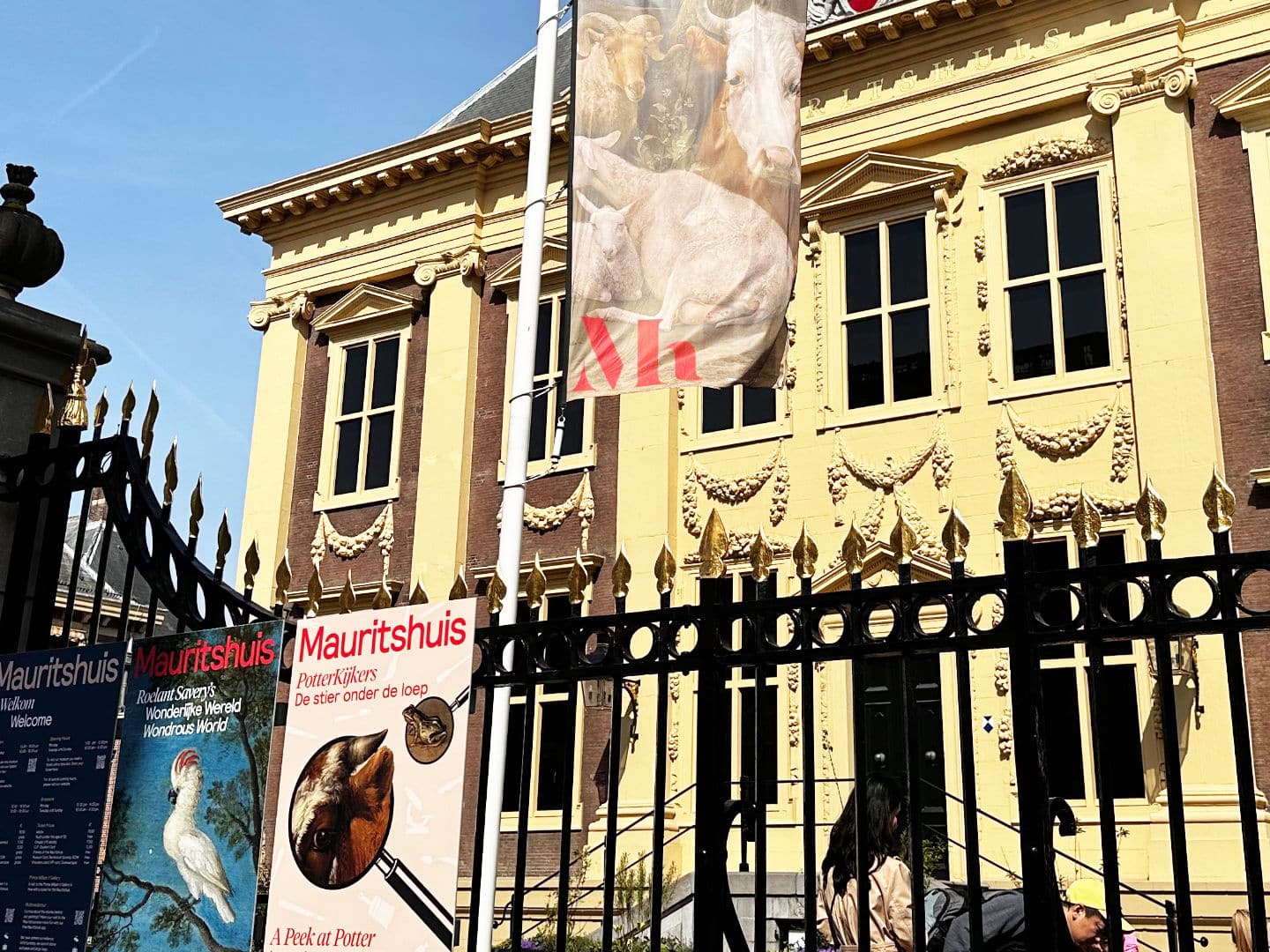
"View of Delft" matters because it transcends a simple representation of a city. It's an artwork that evokes a specific mood and time, inviting viewers to immerse themselves in the world of 17th-century Delft. The painting continues to fascinate and inspire, reminding us of the power of art to capture both the grand sweep of history and the quiet intimacy of everyday life. Its meticulous details, thoughtful composition, and evocative light make it an enduring masterpiece, securing its place as one of Vermeer's most beloved works, housed in the Mauritshuis in The Hague.
How to experience it
stand back so the sky can dominate your vision
Don’t stop here
More to explore by Johannes Vermeer
Same feeling, different artists