Still Life with a Basket of Apples
Meet the artist
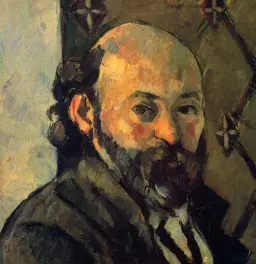
Paul Cezanne1839–1906French
Dates
1893
Specifications
- Movement
- Post-Impressionism
- Medium
- Oil Painting
- Genre
- Still Life
About the Artwork
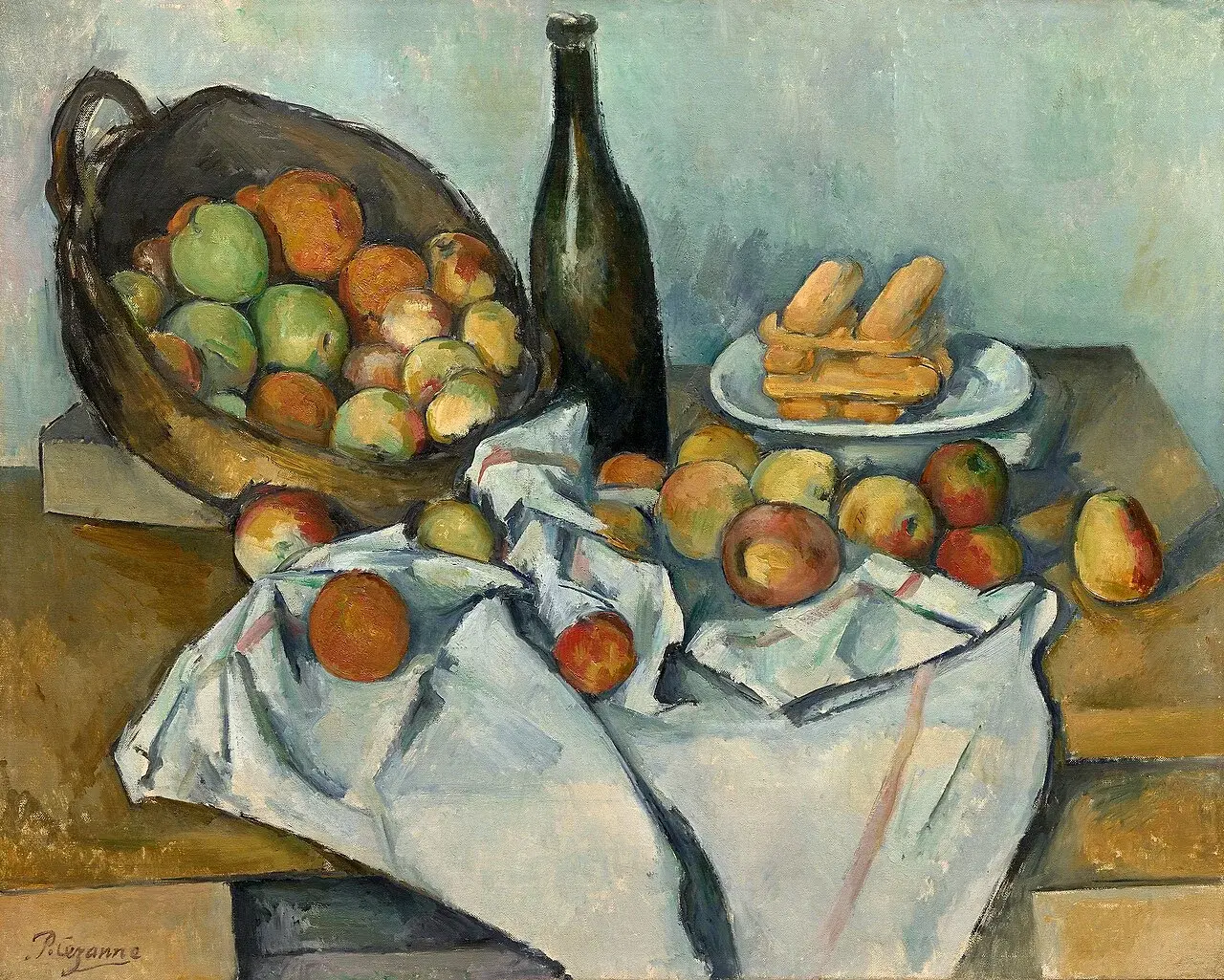
The Basket of Apples, painted around 1893, is widely considered one of Paul Cézanne's greatest still-life paintings and a pivotal work in the history of Western art. On a tilted table that defies conventional perspective—its surface offering no true right angles—a wicker basket pitches forward over its wooden support, surrounded by a rumpled tablecloth whose heavy sculptural folds rival the solidity of the fruit themselves. A wine bottle stands at the left, and a plate of biscuits occupies the right foreground, completing a composition of deliberate, almost architectural imbalance.\n\nCézanne's radical approach lies in his refusal to depict objects from a single fixed viewpoint. Each element in the painting seems seen from a slightly different angle, creating multiple simultaneous perspectives that fracture the illusion of seamless reality. The dense, directional brushstrokes model the apples into glowing spheres of warm reds and yellows, giving the composition a density and dynamism far beyond conventional still life. Exhibited at Ambroise Vollard's important 1895 Paris show, the painting is one of the rare works Cézanne chose to sign. It entered the collection of the Art Institute of Chicago in 1926 as part of the Helen Birch Bartlett Memorial Collection, where it has been recognized as a direct forerunner of both Fauvism and Cubism.
Don’t stop here
More to explore by Paul Cezanne
Same feeling, different artists
Similar Works by Other Artists
Keep exploring