Loading map...
L'Origine du monde
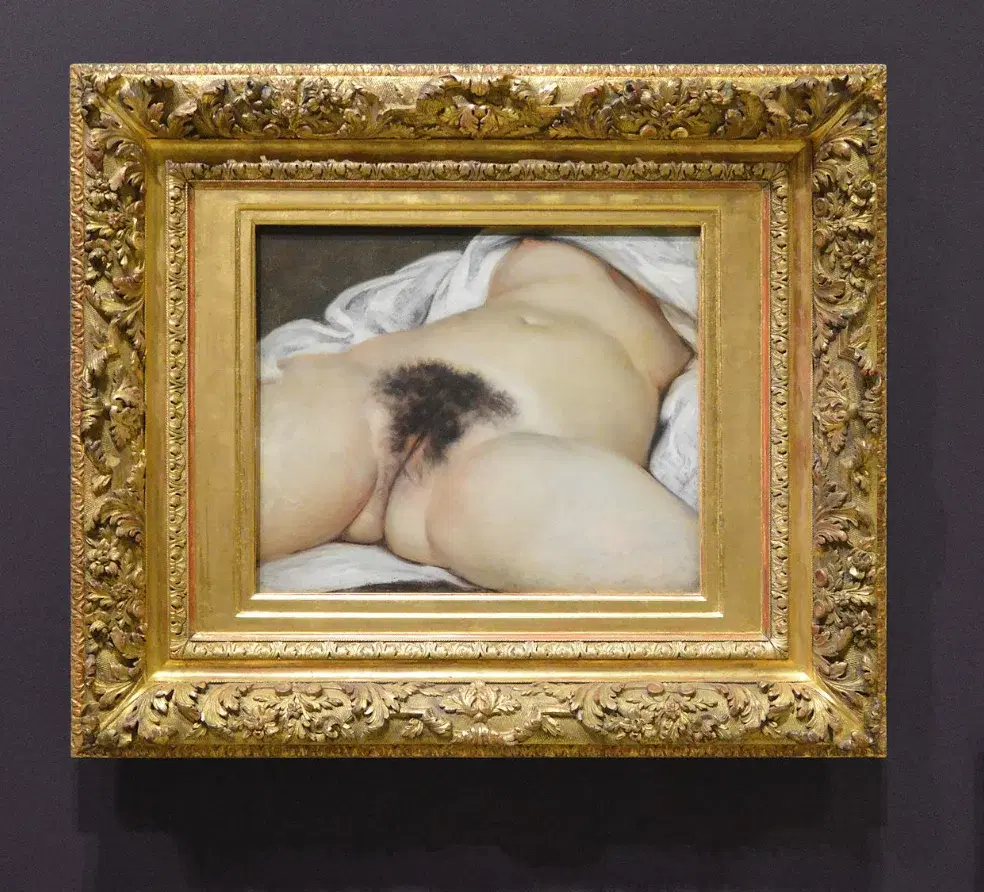

1866
Painted by Gustave Courbet in 1866, L’Origine du monde is one of the most controversial artworks in Western art history—and still feels surprisingly modern.
It’s a radically cropped, hyper-realistic depiction of a woman’s body—no face, no identity, no narrative.
It is a close-up view of the vulva and abdomen of a naked woman, lying on a bed with legs spread.
That’s what made it so shocking: Courbet stripped away every traditional justification for nudity in art.
Why it was so scandalous
In the 19th century, nudity in painting was allowed—but only if: it was mythological,
religious or “elevated” in some way
Courbet ignored all of that.
A secret life (for over 100 years)
Commissioned by an Ottoman diplomat (with a taste for erotic art)
Kept hidden in private collections
Sometimes covered by another painting (literally concealed behind a panel)
Not publicly shown until the late 20th century
Why it matters today
Now in the Musée d'Orsay, the painting is still debated:
Is it liberating realism or objectification? Is it about truth or provocation?
What’s undeniable:
Courbet pushed realism to its absolute limit
He forced art to confront what it usually hides