A Sunday Afternoon on the Island of La Grande Jatte
#29
Meet the artist
GGeorges Seurat1859–1891French
Dates
1884–1886
Specifications
- Original title
- Un dimanche après-midi à l'Île de la Grande Jatte
- Dimensions
- 207.6 × 308 cm
Wikimedia Commons
About the Artwork
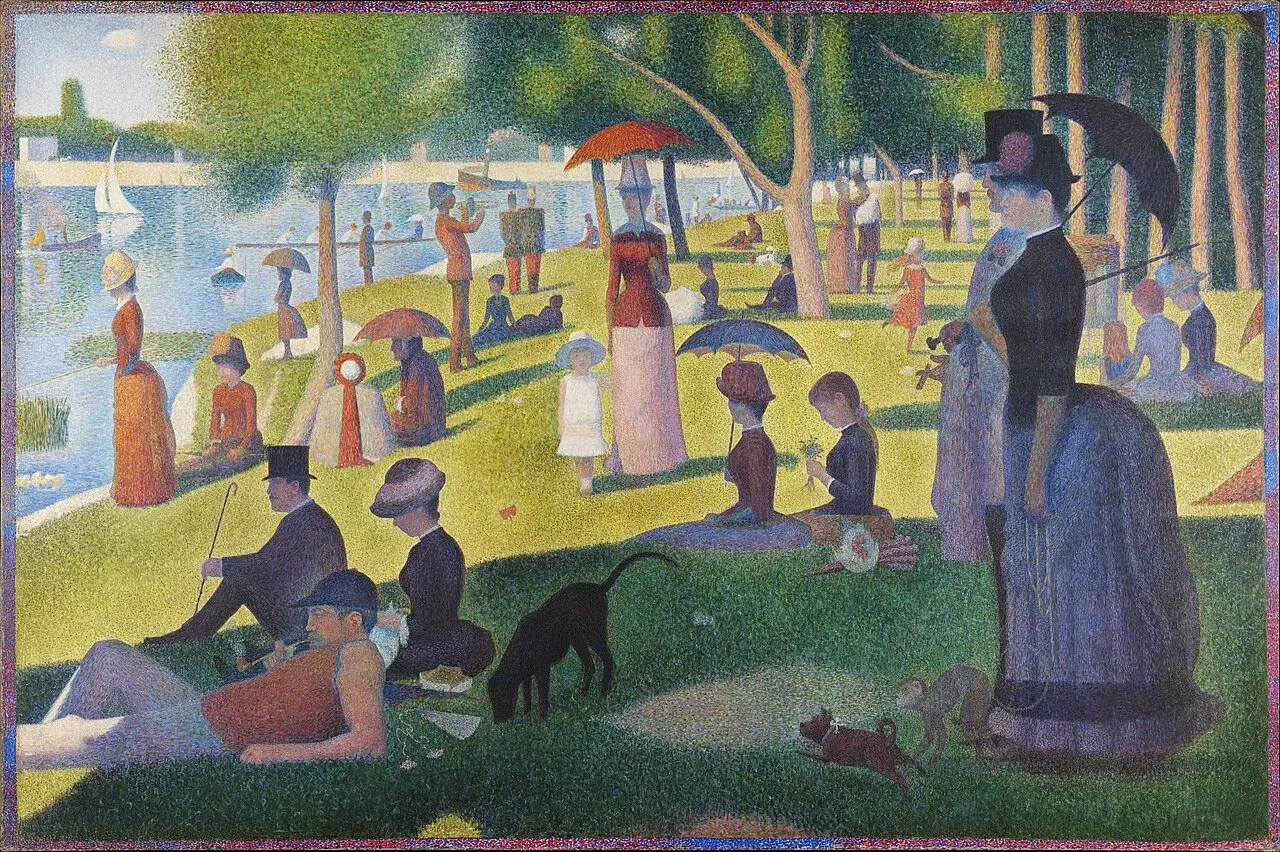
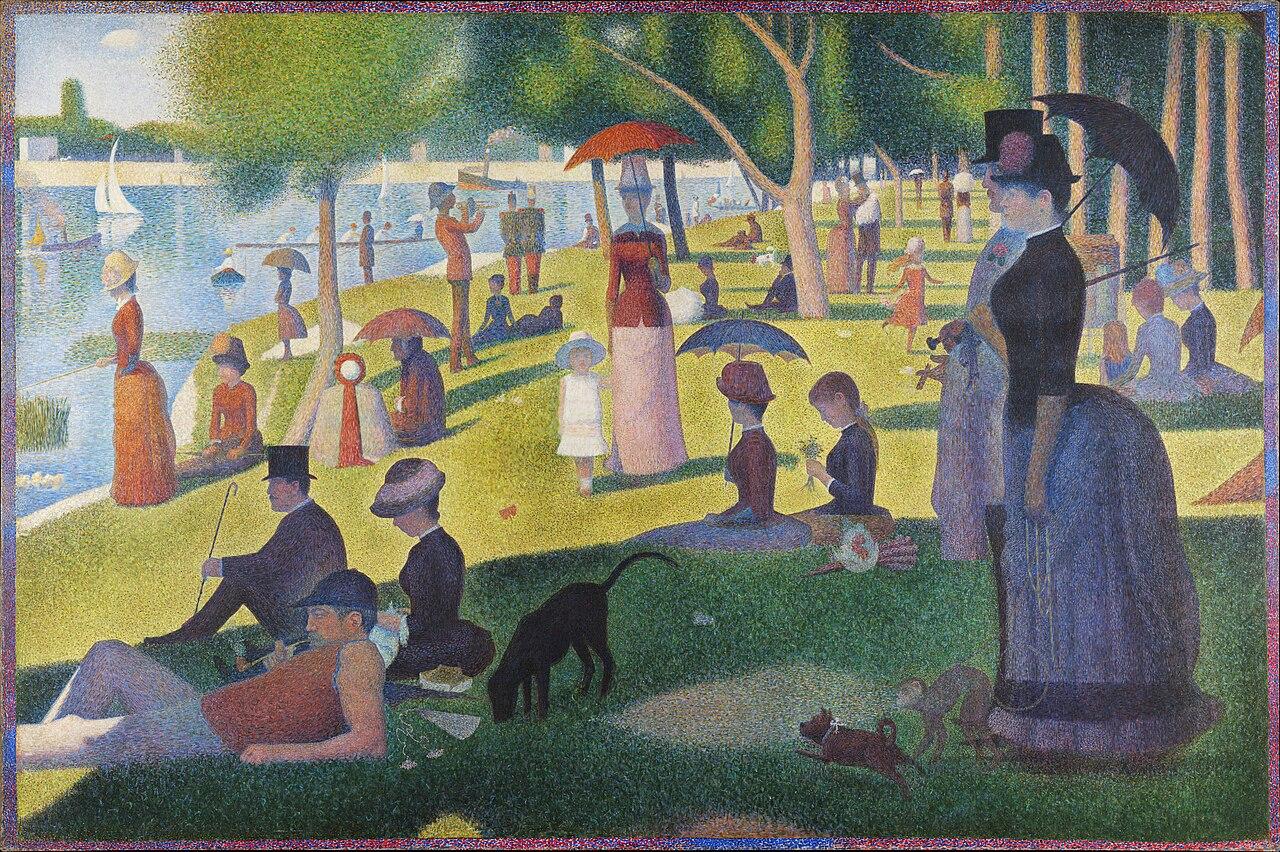
Georges Seurat's "A Sunday Afternoon on the Island of La Grande Jatte" is more than just a pretty park scene; it's a revolutionary masterpiece that redefined the art world. Painted between 1884 and 1886, the artwork transports us to a sunny Sunday on an island in the Seine, just outside of Paris. Seurat meticulously captures the leisure of Parisians enjoying their day off, depicting a diverse crowd of individuals – from fashionable couples and fishermen to soldiers and families with children – all rendered with remarkable detail and a sense of serene stillness. This painting serves as a window into the social life of late 19th-century France and provides valuable insight into the cultural values and leisure activities of the era.
Beyond its social commentary, "La Grande Jatte" holds immense historical significance as a cornerstone of the Neo-Impressionist movement and a prime example of pointillism. Inspired by scientific color theories, Seurat abandoned traditional brushstrokes, opting instead for meticulously placed dots of pure color. This innovative technique, initially called Divisionism, allowed colors to optically blend in the viewer's eye, creating a vibrant and luminous effect unlike anything seen before. This radical approach challenged artistic conventions and paved the way for future generations of artists to explore the possibilities of color and perception. The size of the painting (approximately 2 by 3 meters) further amplified its impact, showcasing the ambition and scope of Seurat's artistic vision.
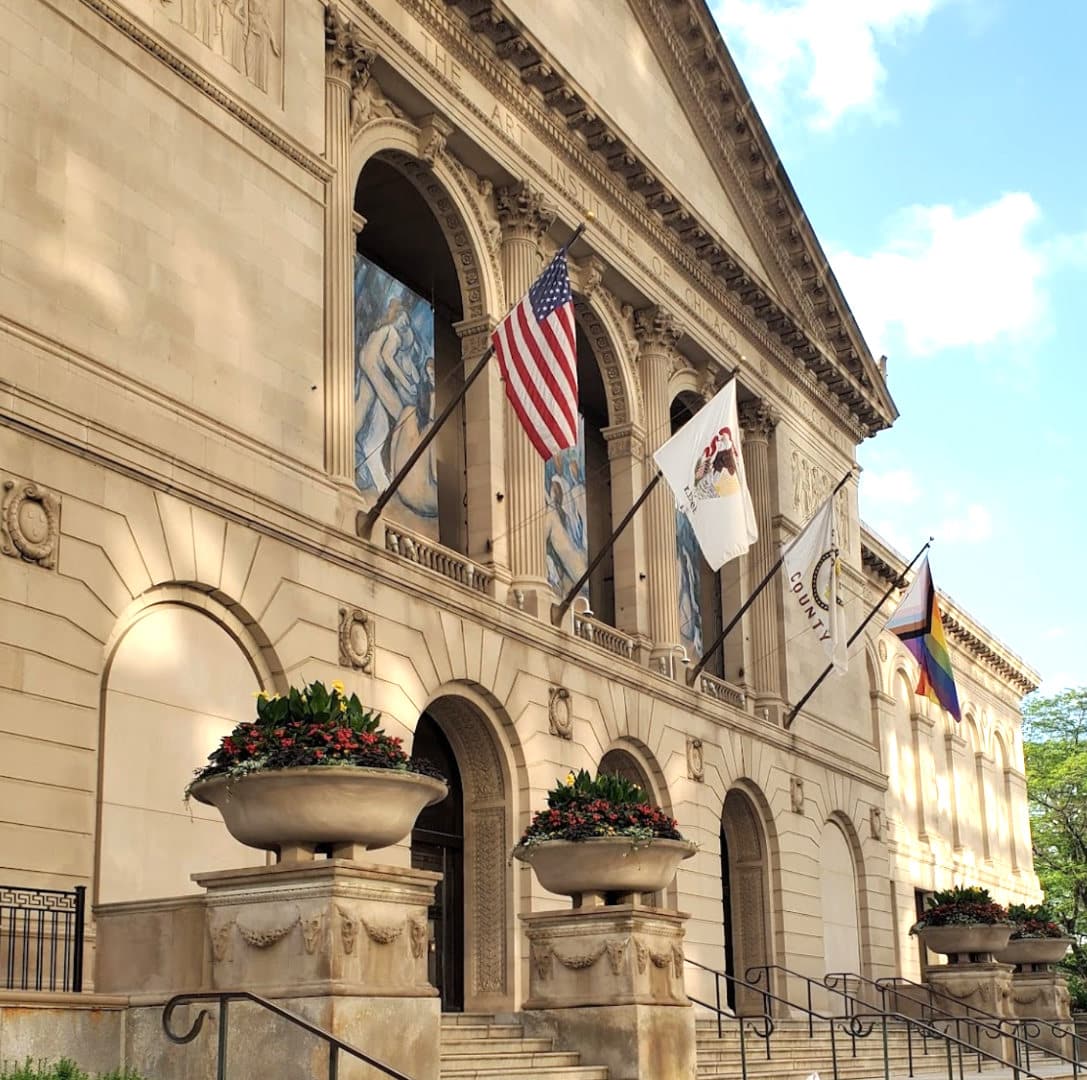
The significance of "A Sunday Afternoon on the Island of La Grande Jatte" extends beyond its historical context and artistic innovation. It serves as a testament to the power of art to capture a specific moment in time, reflect social dynamics, and push the boundaries of artistic expression. Seurat's meticulous approach, his embrace of scientific principles, and his commitment to portraying modern life in its "essential form" continue to inspire artists and viewers alike. It's a powerful example of how art can both mirror and shape our understanding of the world around us, prompting us to question our perceptions and appreciate the beauty and complexity of everyday life. The painting is housed in the Art Institute of Chicago, and remains a celebrated example of color theory and pointilism.
How to experience it
stand close for the dots, then step back for the whole image
Don’t stop here
More to explore by Georges Seurat
Same feeling, different artists
Similar Works by Other Artists
Keep exploring