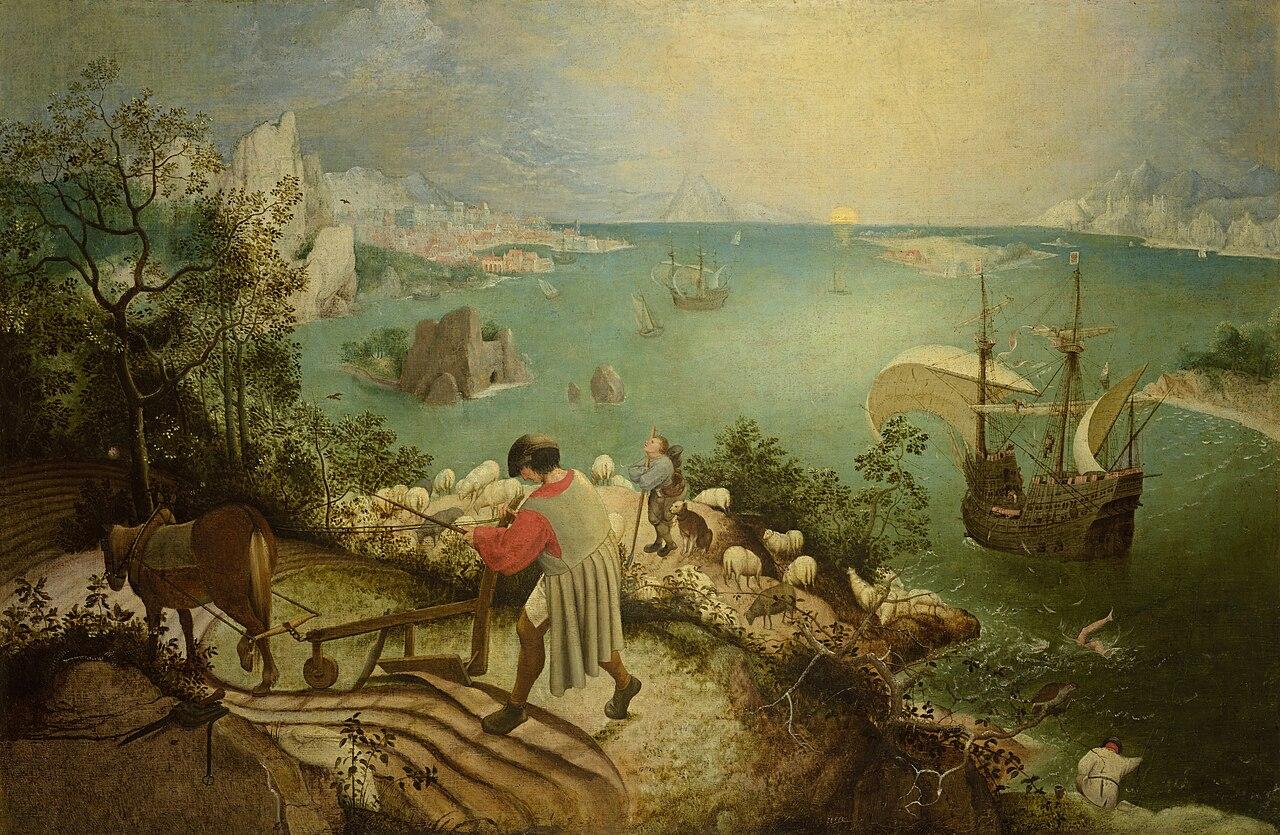
Landscape with the Fall of Icarus
Meet the artist
PPieter Bruegel the Elder1525–1569Belgian
Dates
1555
Specifications
- Movement
- Renaissance
- Medium
- Oil Painting
- Genre
- Landscape, Mythological
About the Artwork
Landscape with the Fall of Icarus is among the most philosophically provocative paintings attributed to the circle of Pieter Bruegel the Elder, dating to around 1560. The canvas depicts a vast Flemish coastal panorama: a ploughman tends his field in the foreground, a shepherd gazes at the sky, and a merchant ship glides serenely across a calm harbor. Only a tiny pair of legs disappearing beneath the water's surface in the lower right corner betrays the catastrophic event the title announces — the fall of Icarus, who flew too close to the sun on wings fashioned from wax and feathers.\n\nThis deliberate marginalization of the mythological drama is the painting's great philosophical achievement. Human activity rolls on indifferently: the farmer ploughs, the ship sails, and the world takes no notice of individual catastrophe. The composition draws directly on Ovid's Metamorphoses and may also have been inspired by a Flemish proverb — a ploughman cares little if a man dies. Though technical examinations in 1996 cast doubt on direct authorship by Bruegel himself, the composition is universally attributed to his invention. Measuring 73.5 by 112 centimeters, the work is held by the Old Masters Museum, part of the Royal Museums of Fine Arts of Belgium in Brussels, and has inspired some of the most celebrated poems in the English language, including W.H. Auden's Musée des Beaux Arts.
Don’t stop here
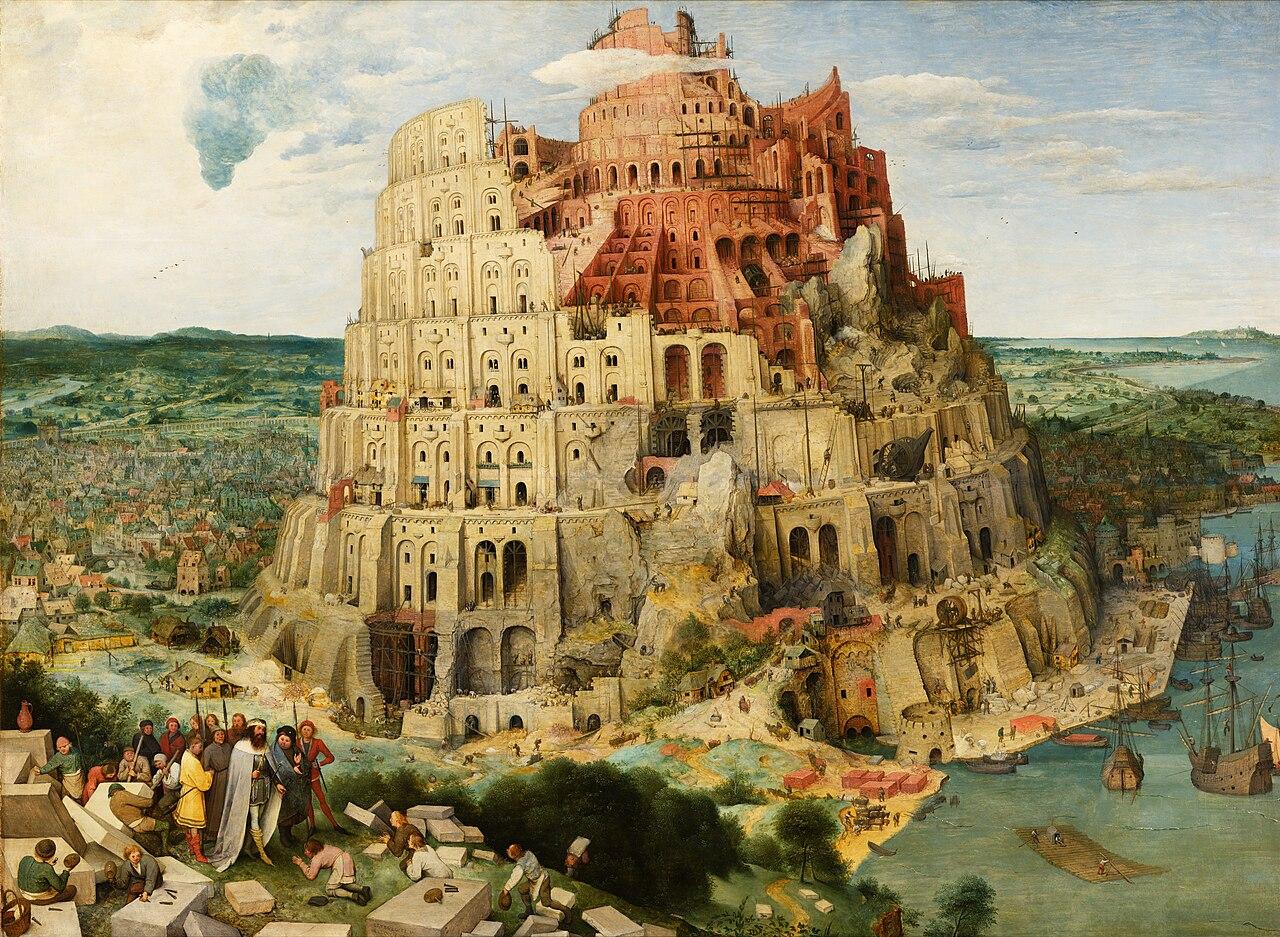
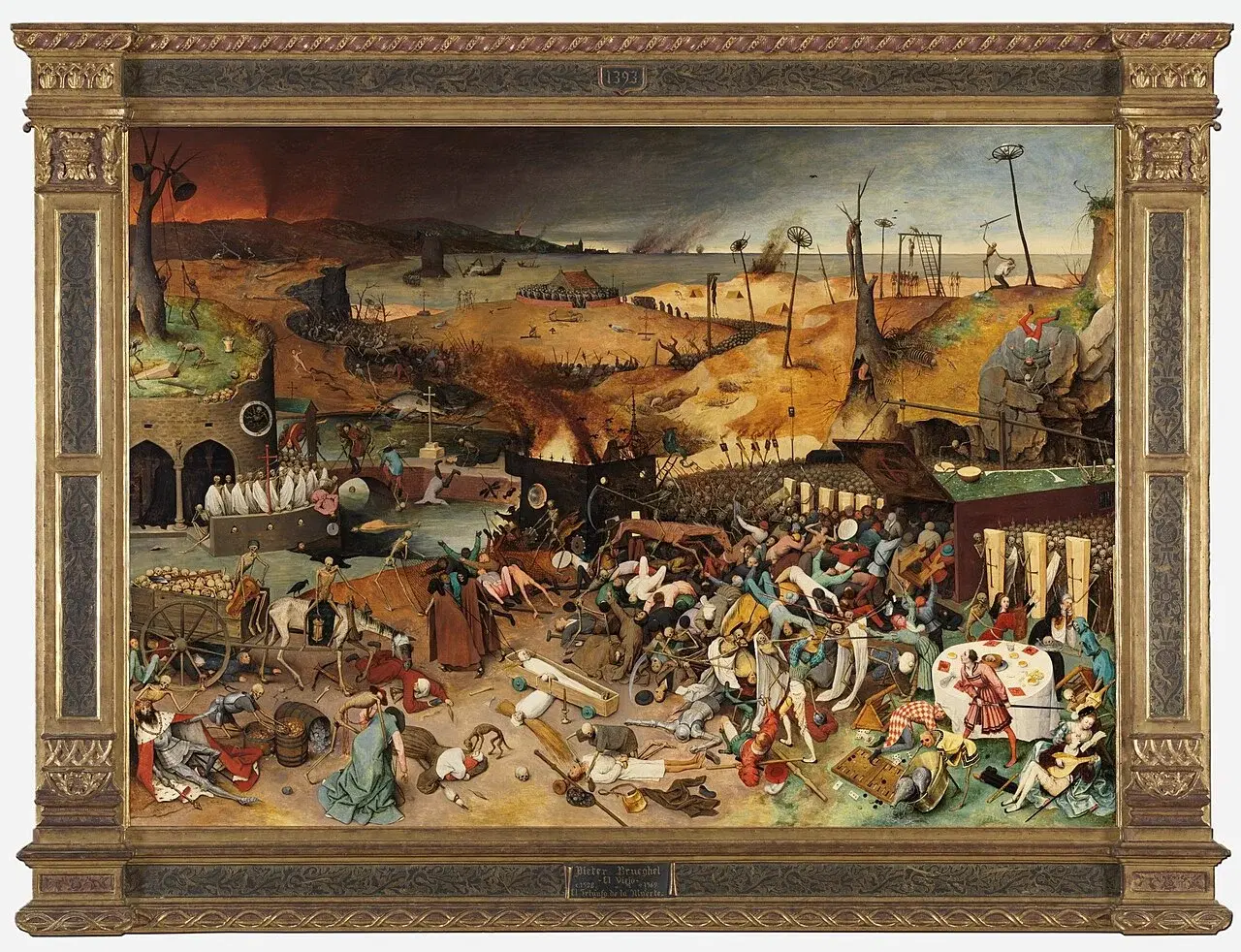
More to explore by Pieter Bruegel the Elder
Same feeling, different artists
Similar Works by Other Artists
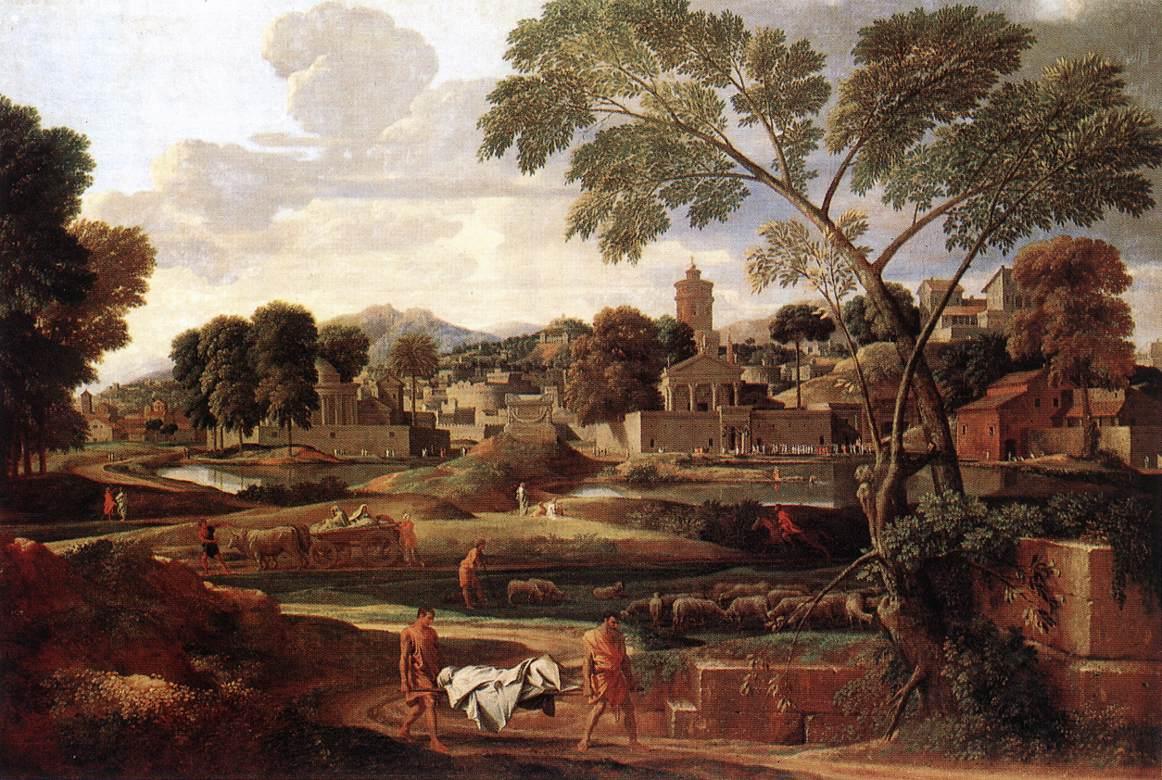
Landscape with the Funeral of Phocion
1648
63% match
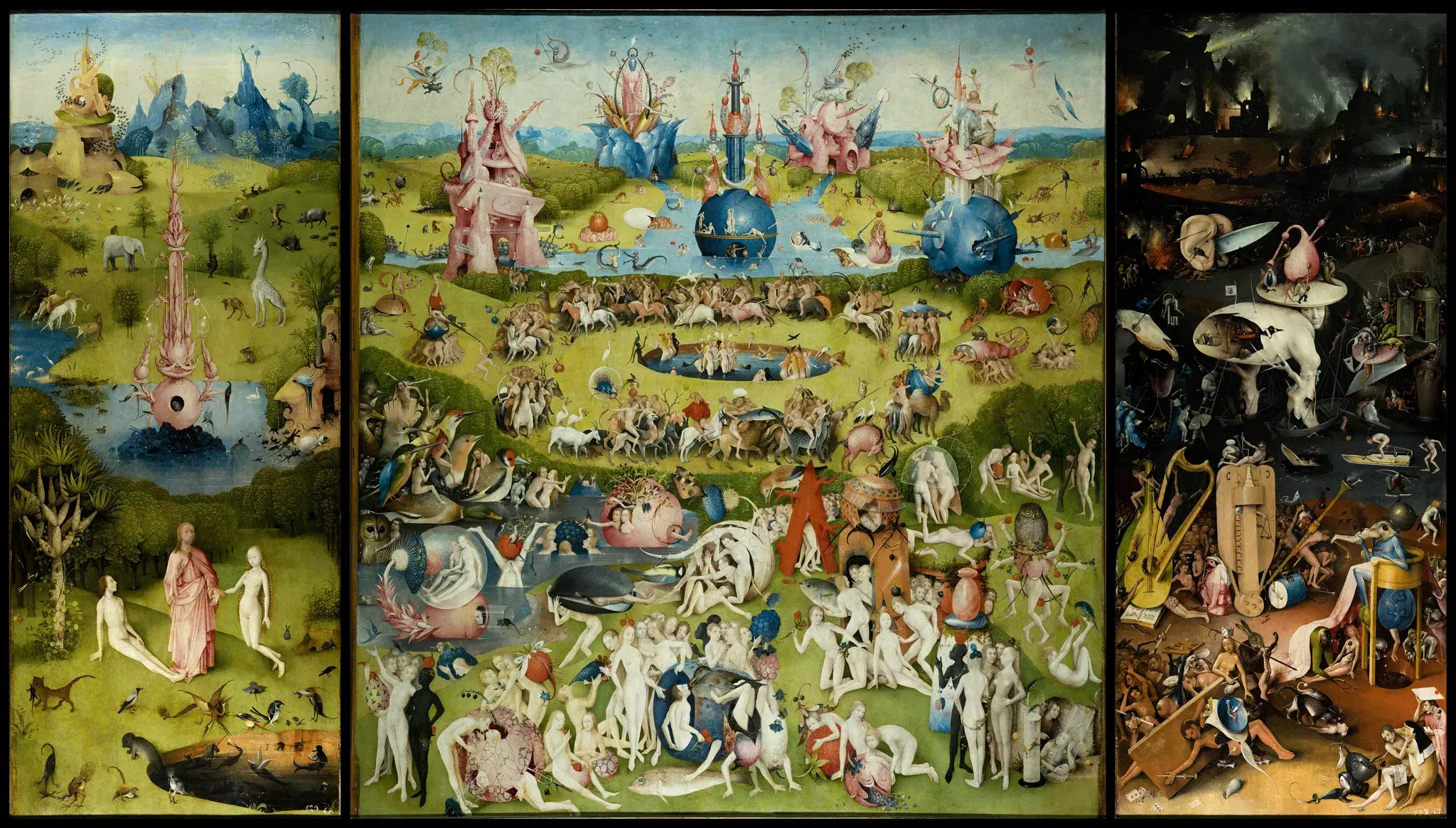
The Garden of Earthly Delights
1490
61% match
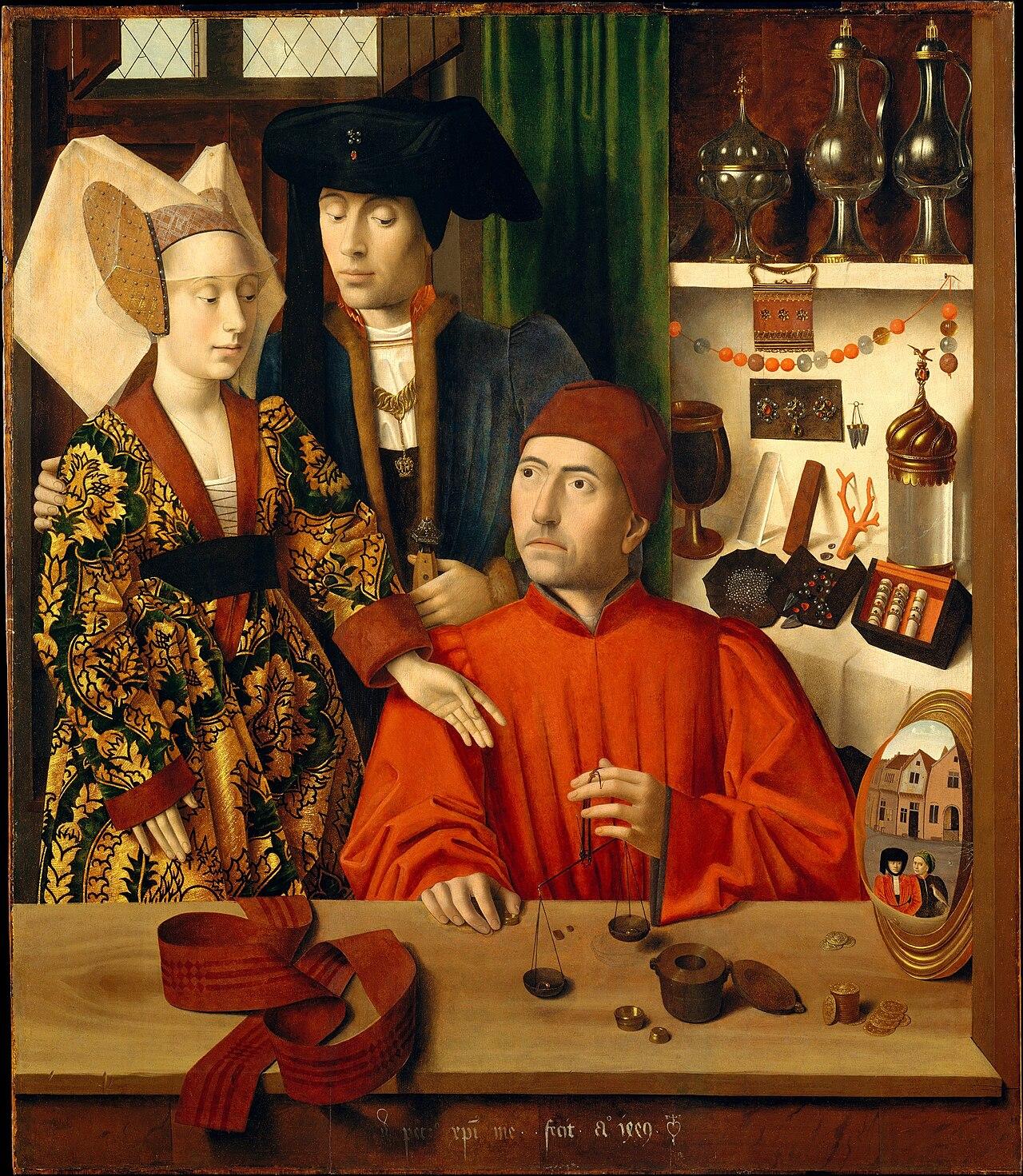
A Goldsmith in his Shop
1449
61% match
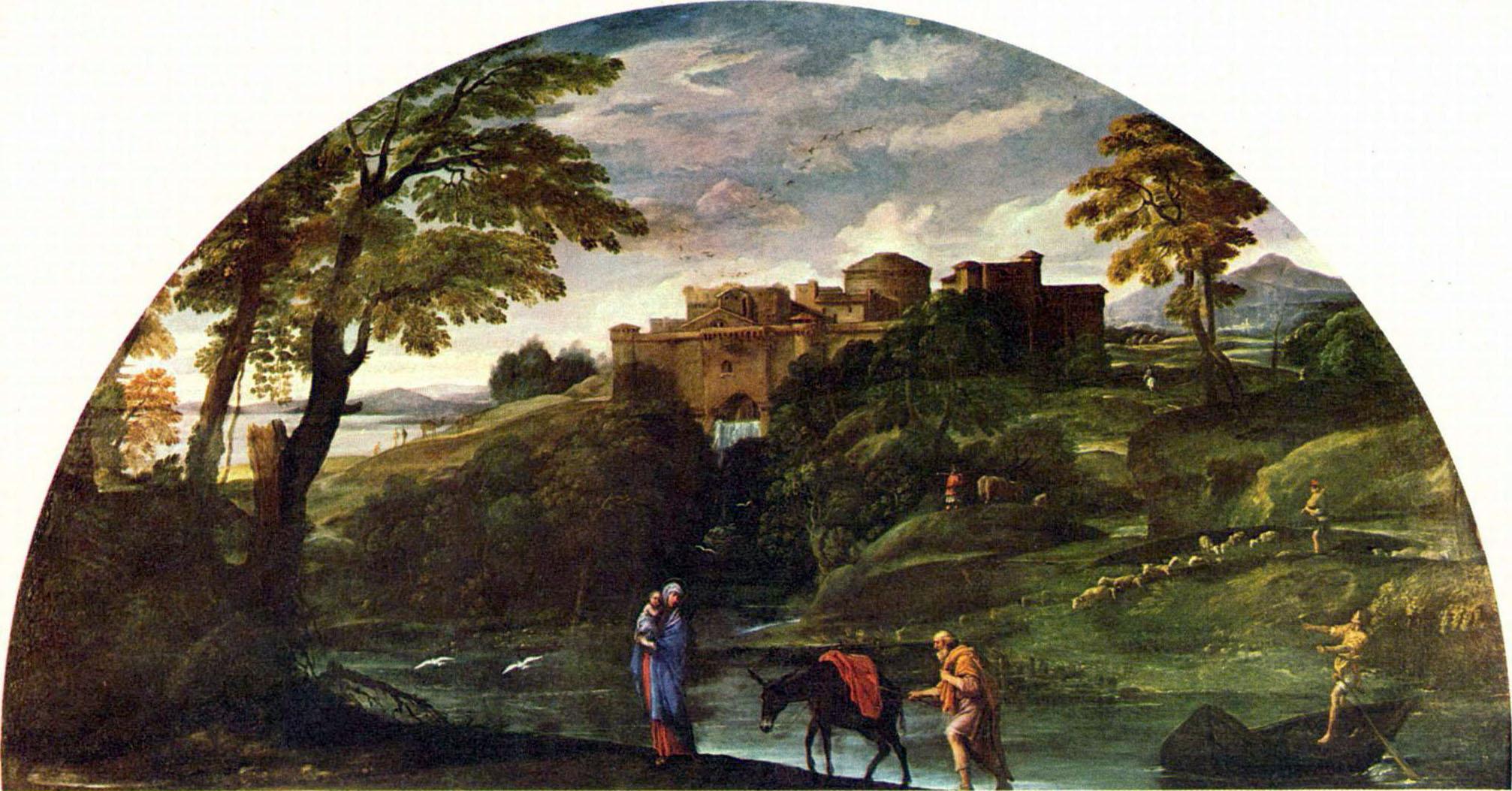
Landscape with the Flight into Egypt
1604
60% match
Christ in Limbo
1550
60% match
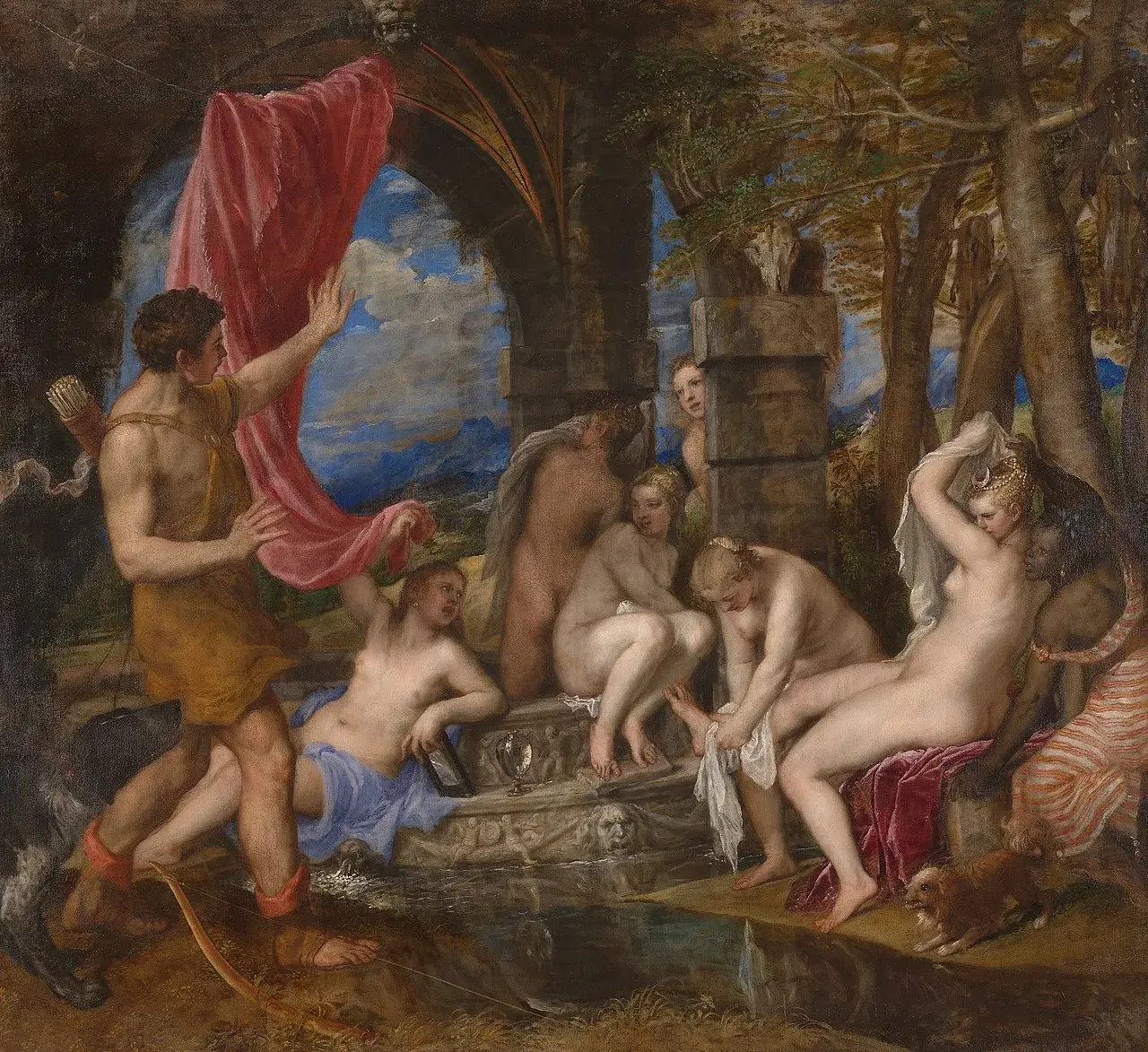
Diana and Actaeon
1556
59% match
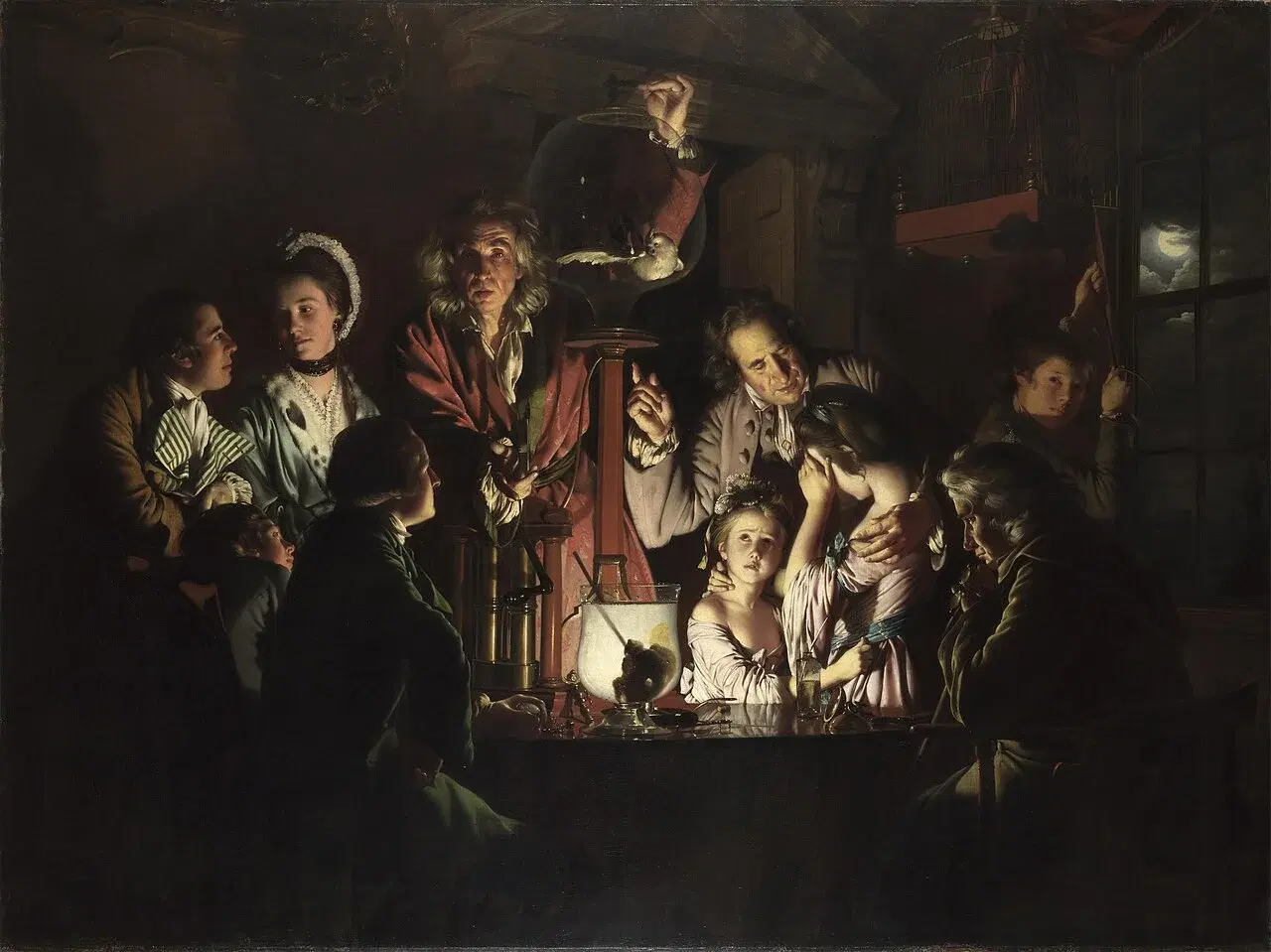
Experiment on a Bird in the Air Pump
1768
59% match
The Course of Empire
1833
59% match