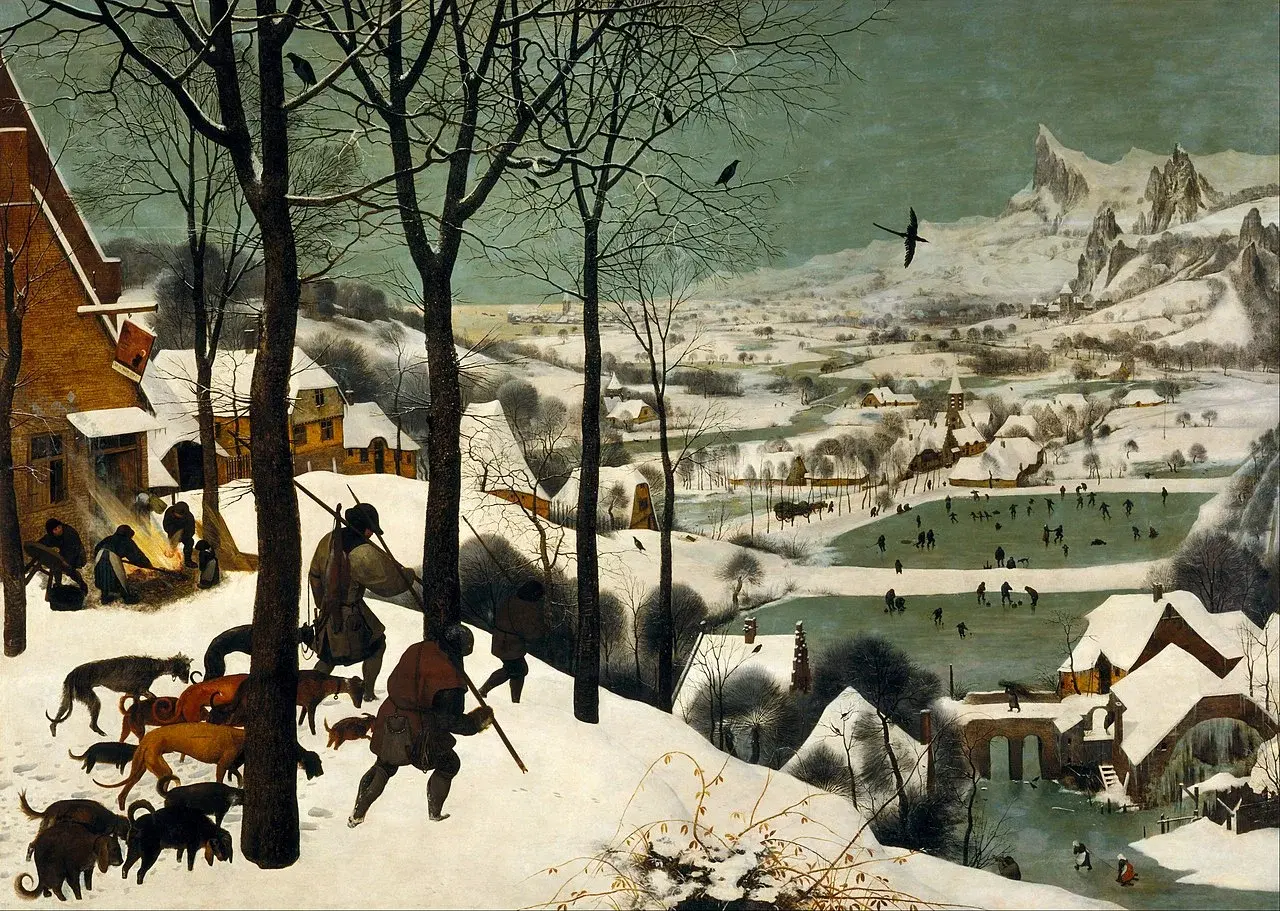
Hunters in the Snow
#68
Meet the artist
PPieter Bruegel the Elder1525–1569Belgian
Dates
1565
Specifications
- Original title
- Jagers in de sneeuw
- Dimensions
- 117 × 162 cm
Wikimedia Commons
About the Artwork
Pieter Bruegel the Elder's "Hunters in the Snow," painted in 1565, is a captivating glimpse into 16th-century life and a cornerstone of the Northern Renaissance. Part of a series depicting the seasons, this particular panel transports us to a frigid December/January scene. Three hunters, accompanied by their weary dogs, trudge through the snow after what appears to be an unsuccessful hunt. The painting masterfully captures the stark beauty of winter: bare trees, muted colors, and the distant activities of villagers enjoying the frozen landscape. It's more than just a pretty picture; it's a document of a time when Europe was entering the "Little Ice Age," a period of harsh winters that profoundly impacted daily life.
Bruegel's genius lies in his meticulous attention to detail and his ability to weave together multiple narratives within a single composition. From the crows perched in the trees (symbols of ill-omen) to the inn sign referencing Saint Hubertus (patron saint of hunters), every element contributes to the painting's rich symbolism. The artist's use of aerial perspective creates a sense of depth, drawing the viewer's eye into the vastness of the landscape. Notice the jagged, imaginary mountain peaks, a stylistic choice contrasting with the flat landscapes of the Low Countries, and the silhouettes of figures ice skating in the distance. These contribute to the painting's captivating atmosphere.
"Hunters in the Snow" matters because it represents a pivotal moment in art history. It exemplifies the Northern Renaissance's focus on realism, everyday life, and landscape painting. Its enduring popularity is a testament to Bruegel's skill in capturing universal human experiences – the struggle for survival, the beauty of nature, and the simple joys of community. The work's impact continues to resonate today, inspiring artists, poets, and filmmakers alike. Its inclusion in the BBC's "100 Great Paintings" solidifies its place as a true masterpiece and its presence in popular culture further attests to its timeless appeal.
How to experience it
begin with the hunters, then follow the eye into the valley
Don’t stop here
More to explore by Pieter Bruegel the Elder
Same feeling, different artists