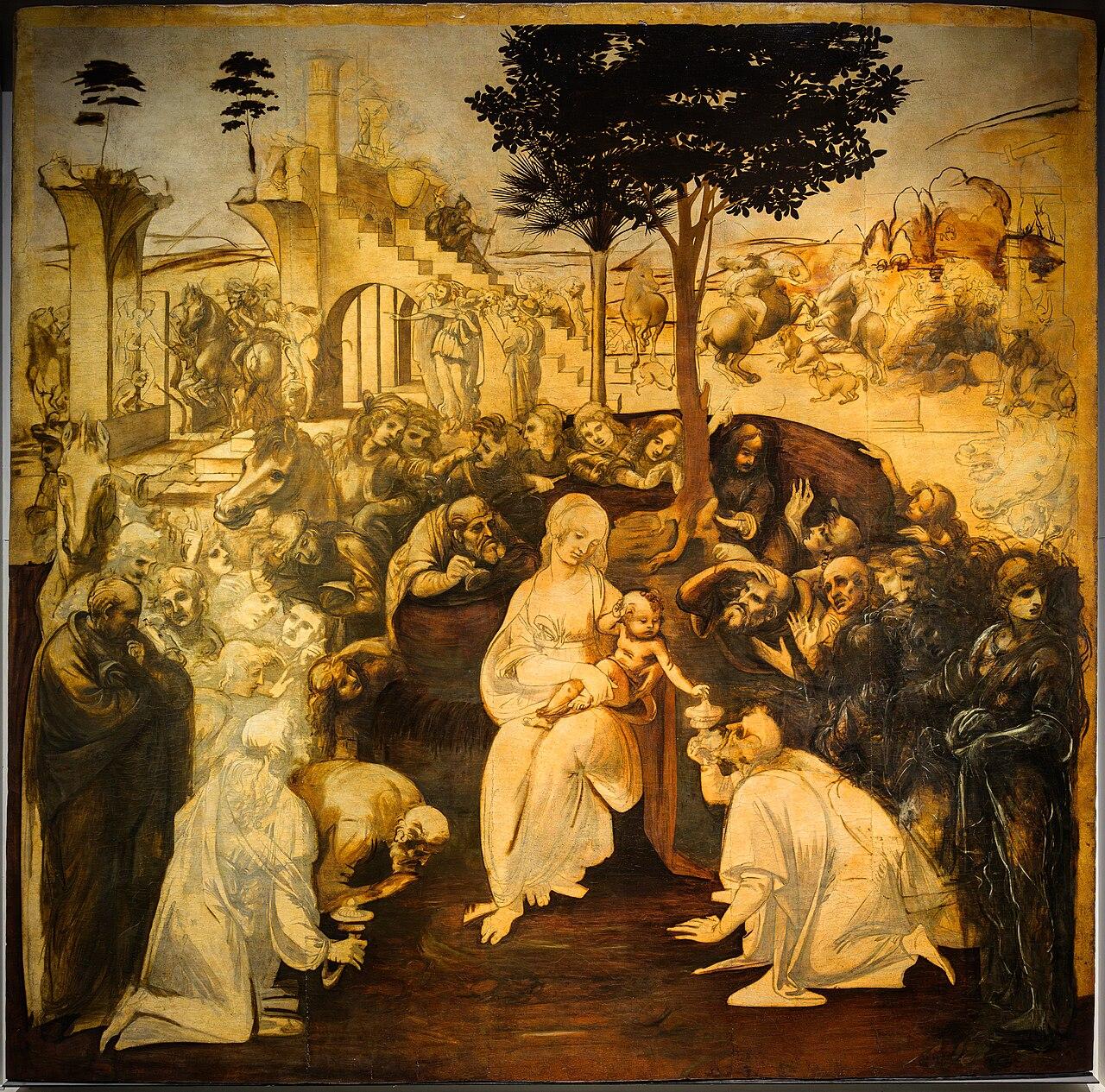
Adoration of the Magi
Meet the artist
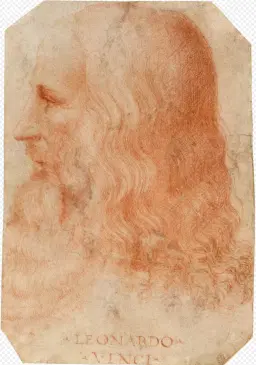
Leonardo di ser Piero da Vinci1452–1519Italian
Dates
1481–1482
Specifications
- Movement
- High Renaissance
- Medium
- Oil Painting, Tempera
- Genre
- Religious Art
About the Artwork
Leonardo da Vinci received the commission for the Adoration of the Magi in 1481 from the Augustinian monks of San Donato in Scopeto, near Florence. He worked on it intensively, developing the entire composition directly on the large panel rather than transferring a finished drawing — an unusual approach even by his own standards. Yet in 1482 he departed for Milan at the invitation of Ludovico Sforza, leaving the work in a state of elaborate underpaintng: some figures barely sketched in charcoal, ink, and watercolor, others brought to a higher degree of finish, as if Leonardo were thinking aloud across the surface.\n\nDespite its unfinished state, the Adoration is regarded as one of the most visionary works of the Renaissance. The Virgin and Child occupy the luminous center of a densely populated scene, surrounded by the kneeling Magi and a turbulent semicircle of onlookers whose faces register astonishment, awe, and contemplation. Behind them, crumbling ruins and galloping horses suggest a world in upheaval yielding to a new spiritual order. A figure on the far right, standing apart and gazing outward, is often identified as a self-portrait of the young Leonardo. The painting has been housed in the Uffizi Gallery in Florence since 1670, and underwent an extensive restoration completed in the 2010s.
Don’t stop here
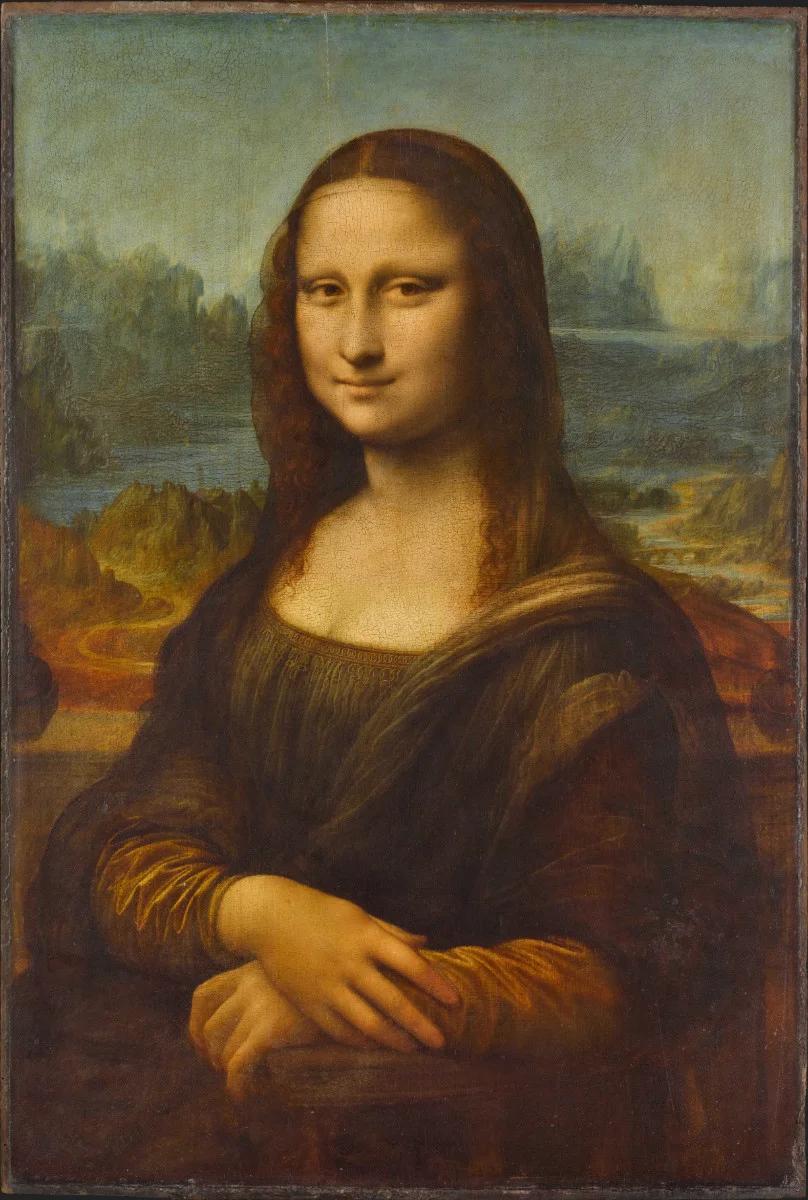
More to explore by Leonardo di ser Piero da Vinci
Same feeling, different artists