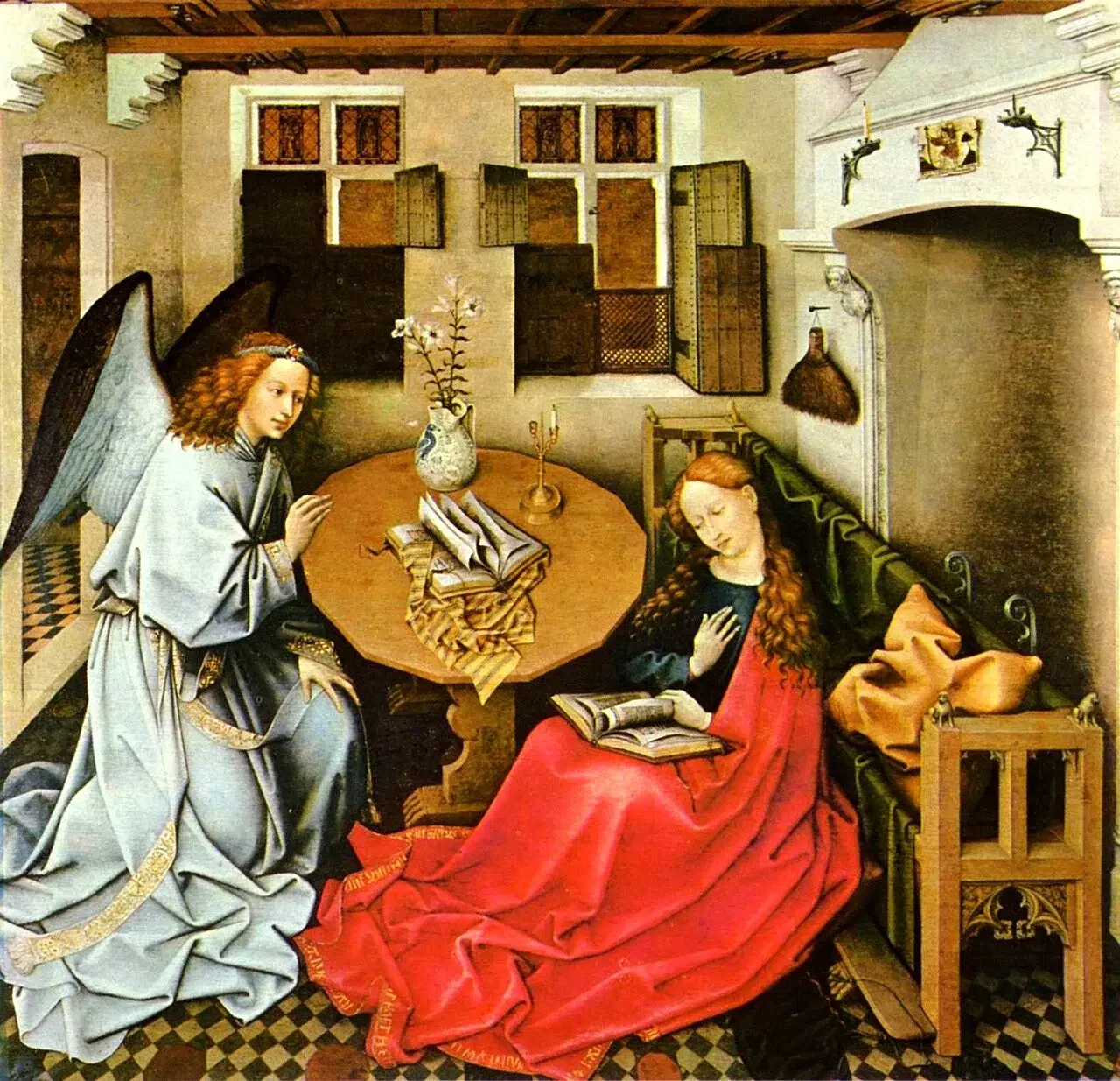
Mérode Altarpiece
1427
68% match
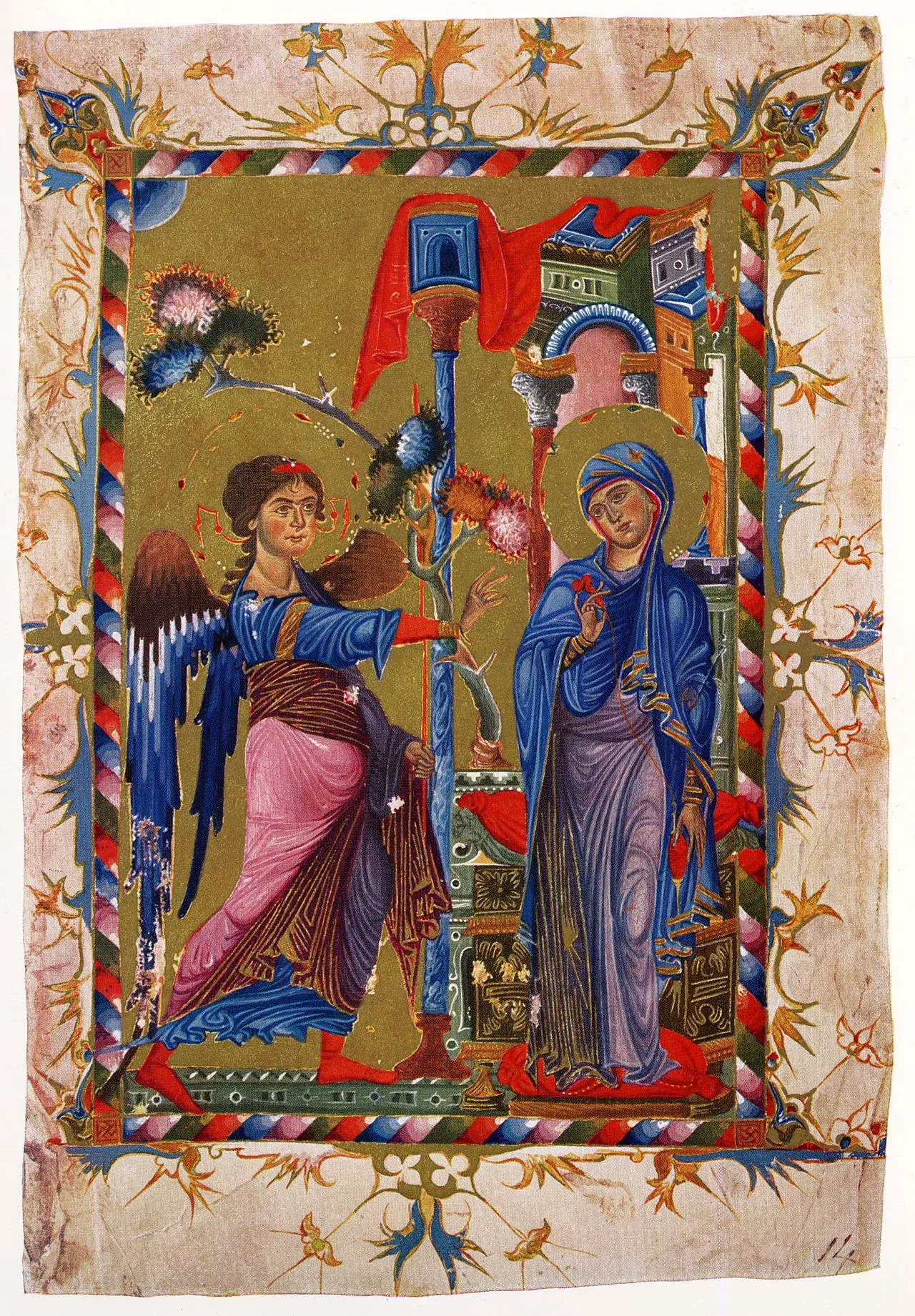
c. 1438–1445
Fra Angelico's "The Annunciation" is a cornerstone of Renaissance art, capturing the pivotal moment when the Archangel Gabriel informs Mary that she will conceive and bear Jesus, the Son of God. Rooted in the Gospel of Luke, this scene marks the Incarnation and is celebrated annually on the Feast of the Annunciation. Angelico's depiction is more than just a biblical illustration; it's a theological statement rendered with exquisite grace and technical skill, placing it firmly within the tradition of Marian art.
Angelico's artistic techniques are particularly noteworthy. He masterfully employs linear perspective to create a believable space, drawing the viewer into the scene. The delicate use of color, particularly the vibrant blues and reds, adds a sense of ethereal beauty. His figures, while stylized, possess a naturalism that departs from earlier, more rigid depictions. Light plays a crucial role, illuminating the figures and imbuing the scene with a divine presence. The meticulous detail, from the intricate folds of Mary's robe to the serene expression on Gabriel's face, showcases Angelico's dedication to both realism and spiritual expression.
"The Annunciation" matters because it encapsulates the Renaissance's humanist ideals within a deeply religious context. It demonstrates the growing emphasis on naturalism and human emotion in art, while simultaneously reaffirming faith. Angelico's work serves as a visual representation of divine intervention, inviting viewers to contemplate the mystery and significance of the Annunciation. Its enduring popularity lies in its ability to convey both the theological weight and the human drama of this pivotal moment in Christian history.
Same feeling, different artists