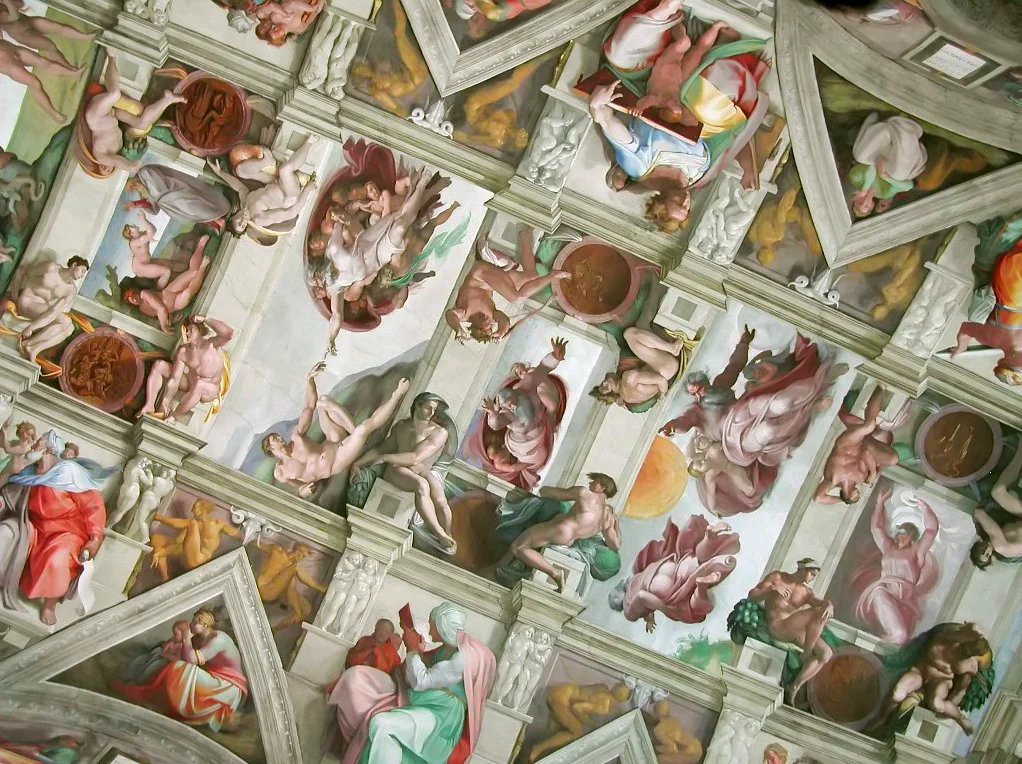
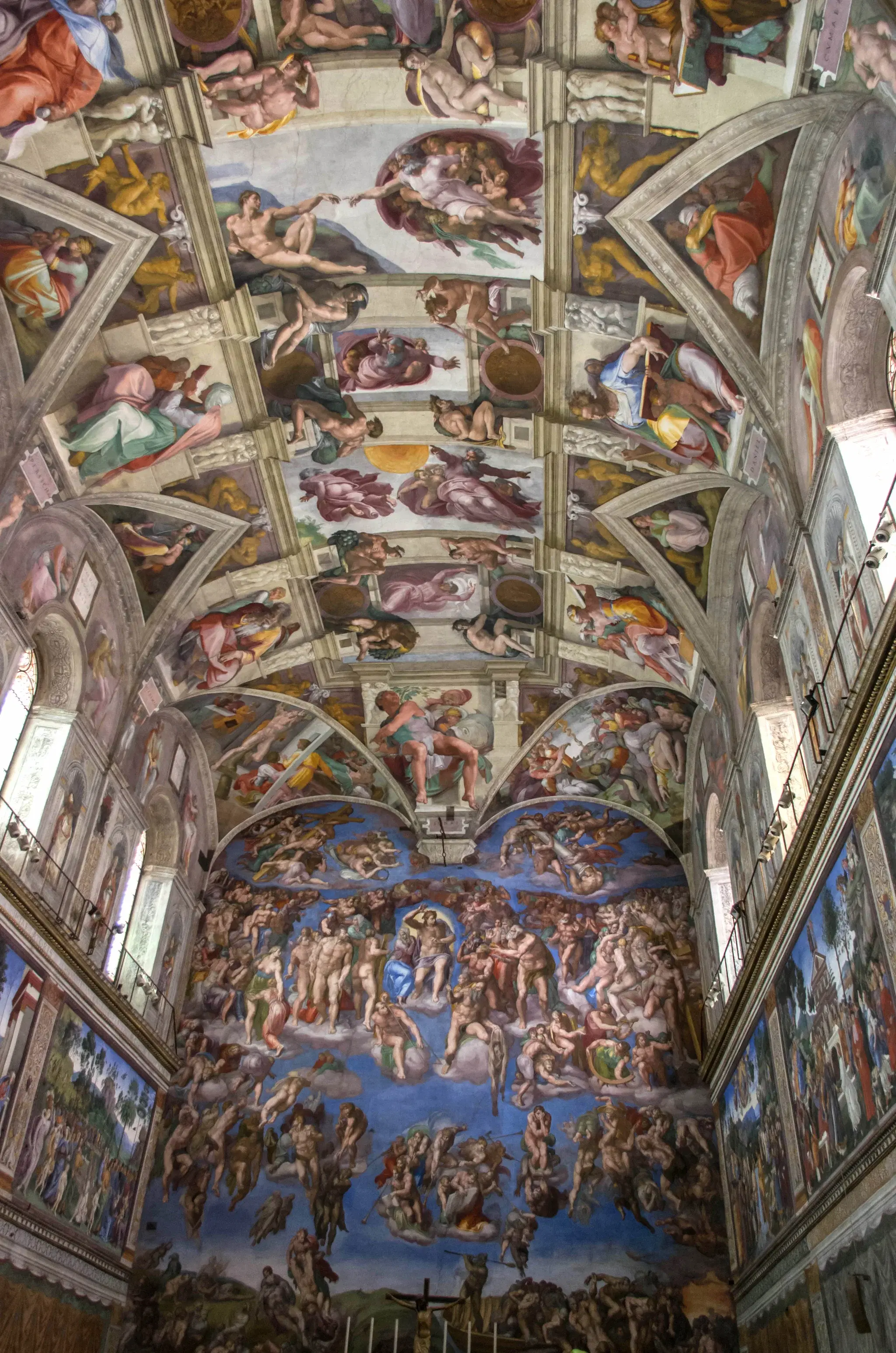
Sistine Chapel Ceiling
#50
Meet the artist
MMichelangelo1475–1564Italian
Dates
1508–1512
Specifications
- Original title
- Volta della Cappella Sistina
- Dimensions
- 40 × 13 meters
Wikimedia Commons
About the Artwork
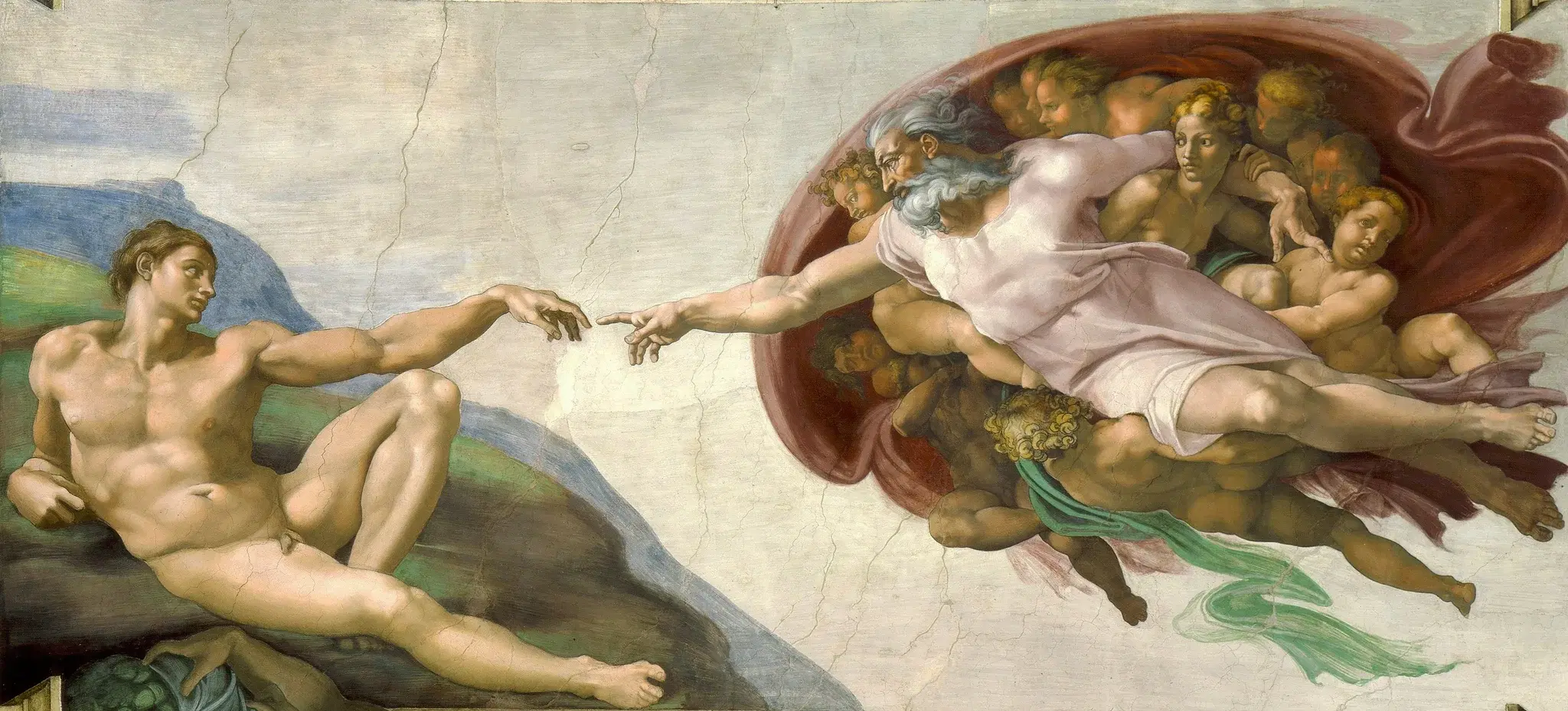
The Sistine Chapel ceiling, a breathtaking fresco masterpiece painted by Michelangelo between 1508 and 1512, stands as a cornerstone of High Renaissance art. Commissioned by Pope Julius II for the Sistine Chapel within the Vatican, the ceiling dramatically transformed the space, shifting it from a simple, star-studded blue expanse to a dynamic narrative showcasing scenes from the Book of Genesis. At the heart of the ceiling are nine central panels, including the iconic "Creation of Adam," which depicts the moment God imparts life to the first man. Beyond these central scenes, the ceiling is teeming with figures – prophets, sibyls, ancestors of Christ, and ignudi (nude youths) – all meticulously rendered, demonstrating Michelangelo's unmatched skill in depicting the human form in a variety of poses and emotional states. The Sistine Chapel ceiling is not merely a decorative element; it's a powerful visual expression of Catholic doctrine and a testament to human potential.
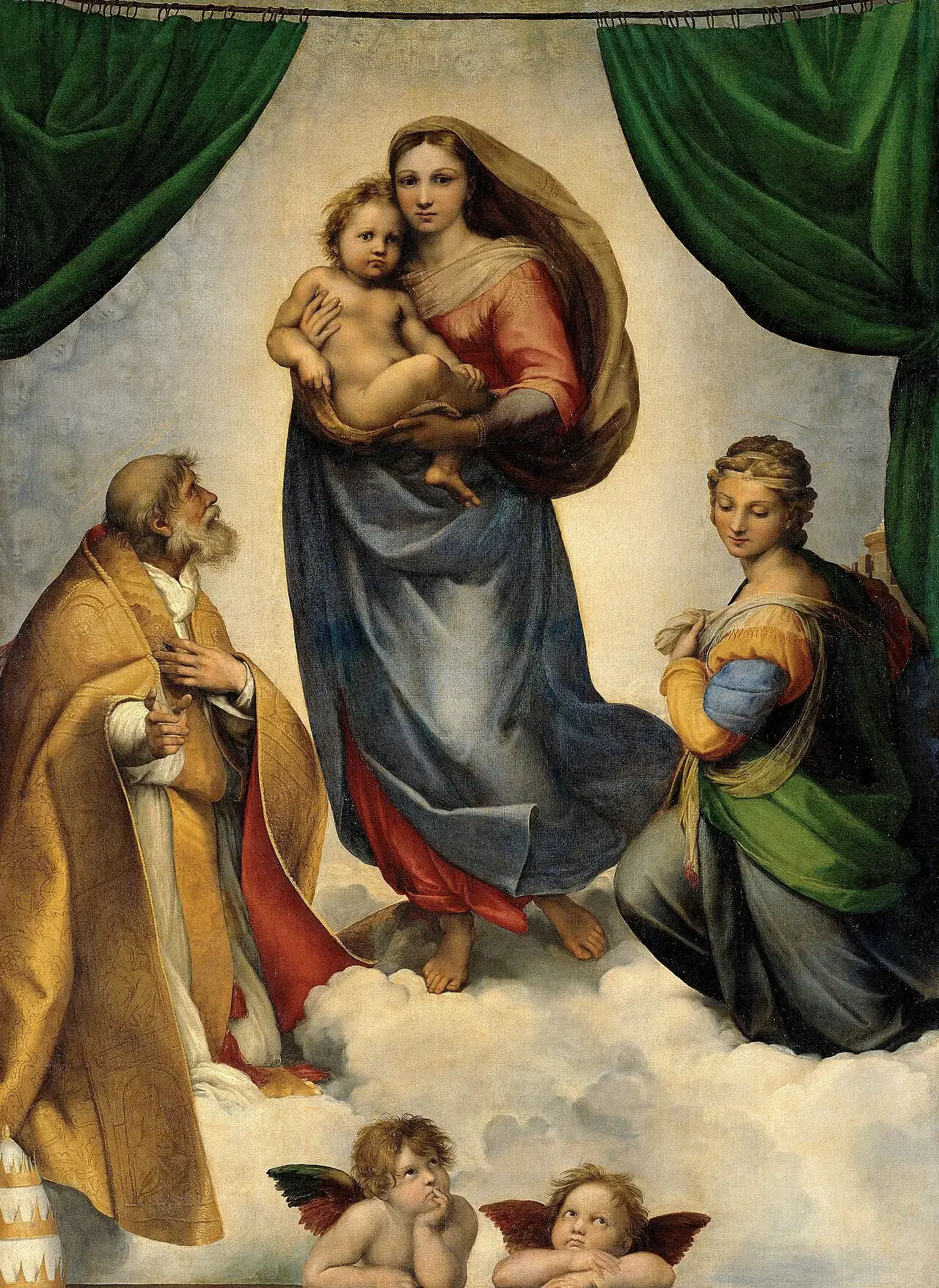
The creation of the Sistine Chapel ceiling was fraught with challenges. Michelangelo, primarily a sculptor, was initially reluctant to accept the commission, suggesting Raphael for the job, but Pope Julius II insisted. The artist designed and built his own scaffolding system to reach the vast ceiling, and despite initial attempts to find skilled assistants, he ended up painting the majority of the fresco single-handedly. The techniques Michelangelo employed, including his understanding of anatomy, perspective, and the fresco process itself, were groundbreaking. The scale of the project and the complexity of the composition are astounding, solidifying Michelangelo's reputation as one of history's greatest artists. The ceiling's impact was immediate, inspiring countless artists and continuing to influence artistic expression to this day.
The Sistine Chapel ceiling's significance extends far beyond its artistic merits. It resides within a space of immense historical and religious importance, the site of papal conclaves and other significant Catholic services. The ceiling's narratives, interwoven with the existing wall frescoes by artists like Botticelli and Perugino, and later with Raphael’s tapestries, create a cohesive visual program representing key tenets of the Catholic faith. The ceiling has undergone several restorations, most recently from 1980 to 1994, ensuring that future generations can appreciate the brilliance and grandeur of Michelangelo's vision. It remains a powerful symbol of the Renaissance, the papacy, and the enduring power of art to inspire awe and reverence.
How to experience it
scan the vault section by section rather than trying to read everything at once
Don’t stop here
More to explore by Michelangelo
Same feeling, different artists