Nighthawks
#22
Meet the artist

Edward Hopper1882–1967American
Dates
1942
Specifications
- Dimensions
- 84.1 × 152.4 cm
Wikimedia Commons
About the Artwork
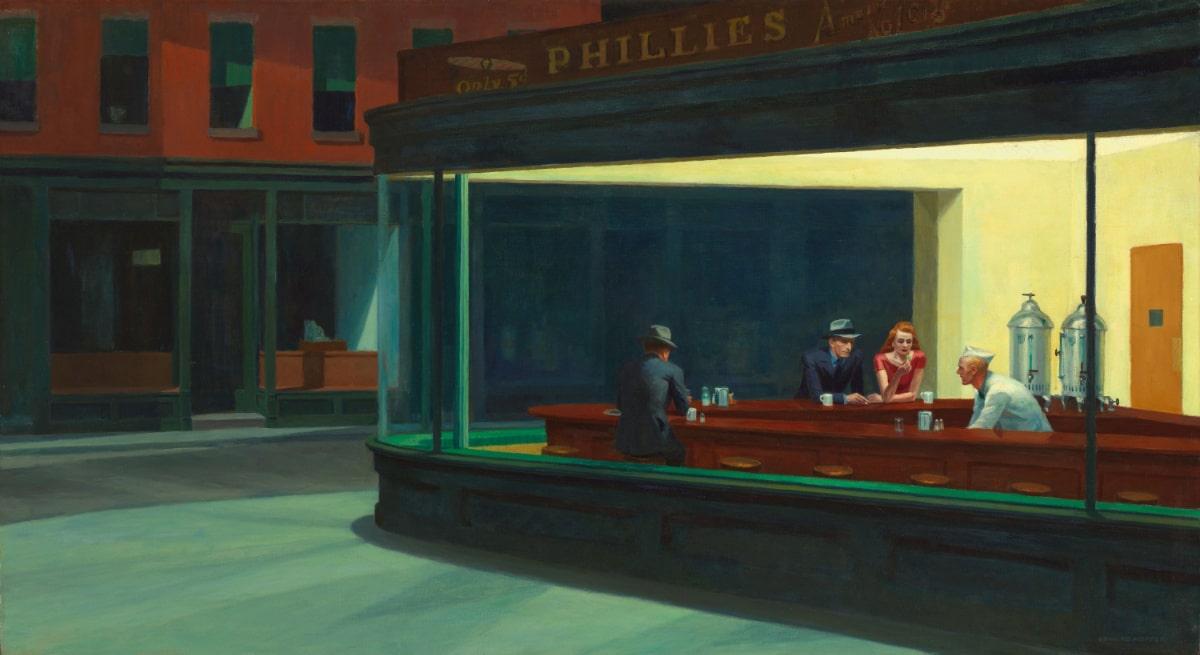
Edward Hopper's "Nighthawks," painted in 1942, is one of the most recognizable and iconic American paintings of the 20th century. It depicts four figures inside a brightly lit all-night diner in a darkened city street. The scene is both familiar and unsettling, capturing a sense of urban loneliness and isolation that resonated deeply with viewers during World War II and continues to do so today. The painting’s stark realism and cinematic composition contribute to its enduring power, inviting viewers to project their own narratives and emotions onto the scene.
Hopper masterfully employs light and shadow to create a dramatic and emotionally charged atmosphere. The brilliant interior light of the diner spills out onto the deserted street, emphasizing the contrast between the warmth of the interior and the coldness of the night. The figures within the diner are rendered with meticulous detail, yet their faces are largely obscured, adding to the overall sense of anonymity and detachment. This interplay of light, shadow, and carefully constructed composition creates a sense of unease, suggesting that something is not quite right beneath the surface of this seemingly ordinary scene.
“Nighthawks” is significant not only for its artistic merit but also for its cultural impact. It has been widely interpreted as a reflection of the anxieties and uncertainties of American life during the mid-20th century. The painting’s themes of loneliness, alienation, and the search for connection in an increasingly impersonal world continue to resonate with contemporary audiences. Its influence can be seen in countless films, photographs, and other works of art, solidifying its place as a defining image of the American experience.
How to experience it
stand back until the neon geometry locks in
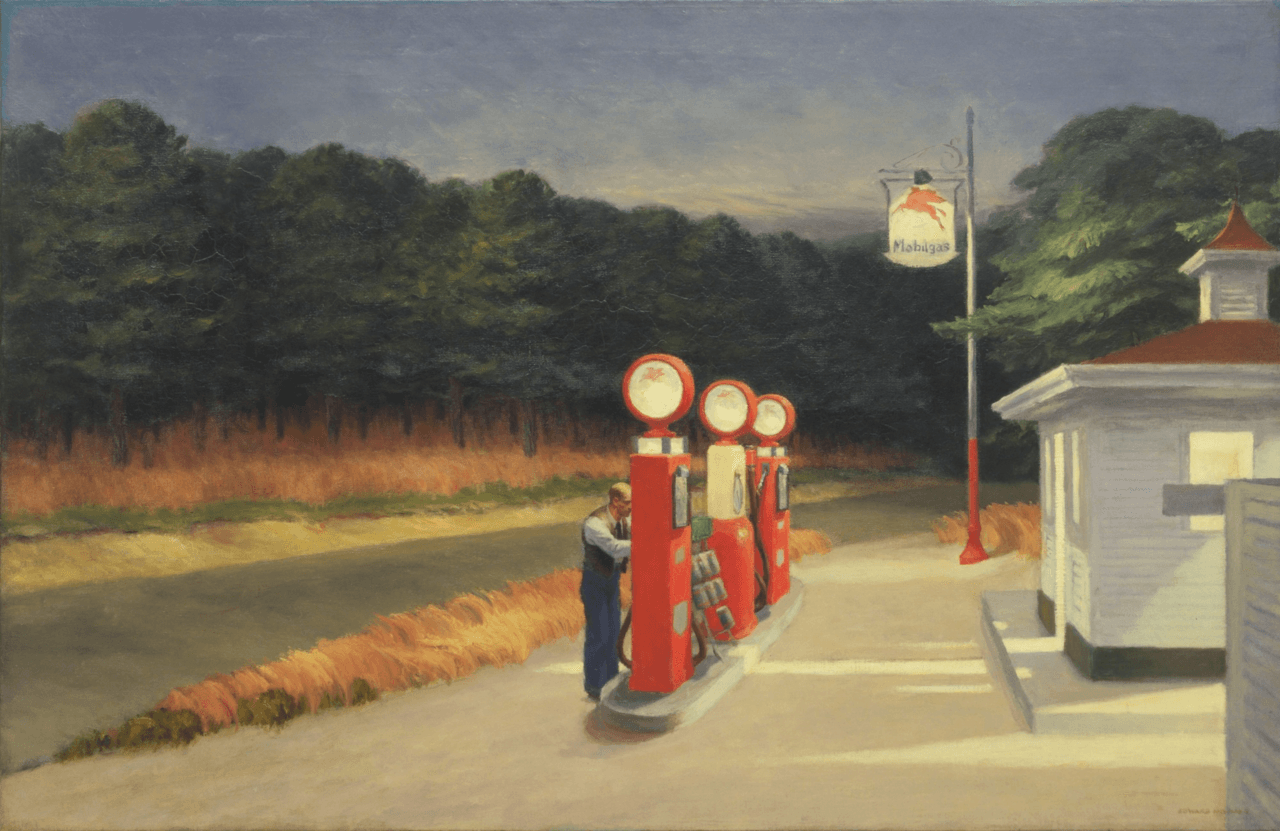
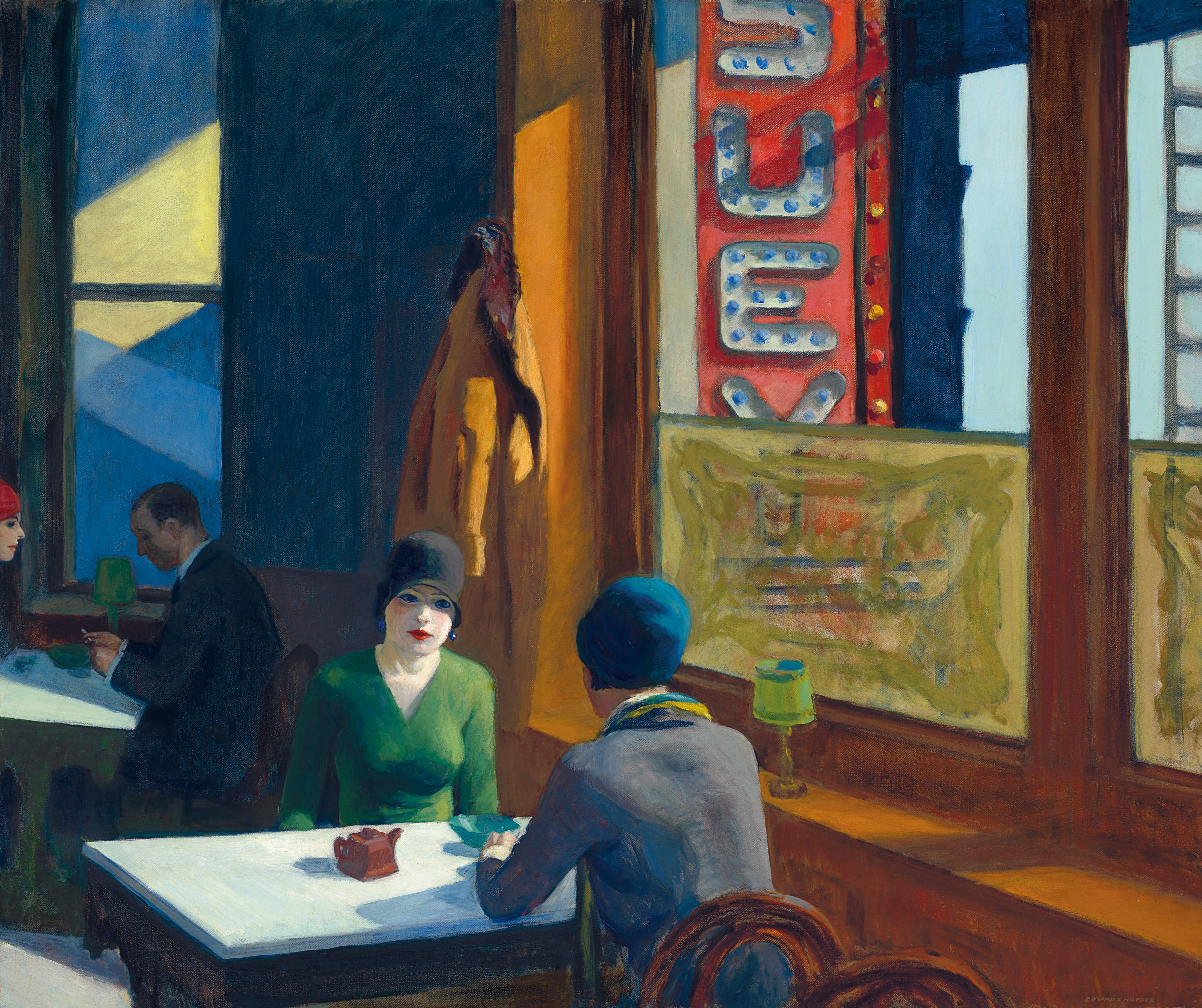
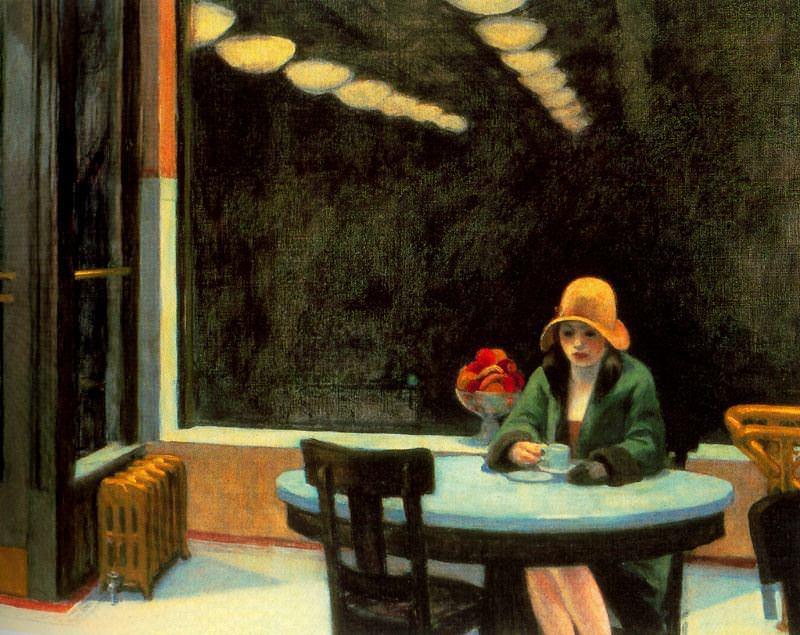
Same feeling, different artists
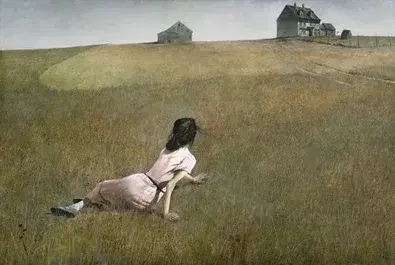
Similar Works by Other Artists
Keep exploring