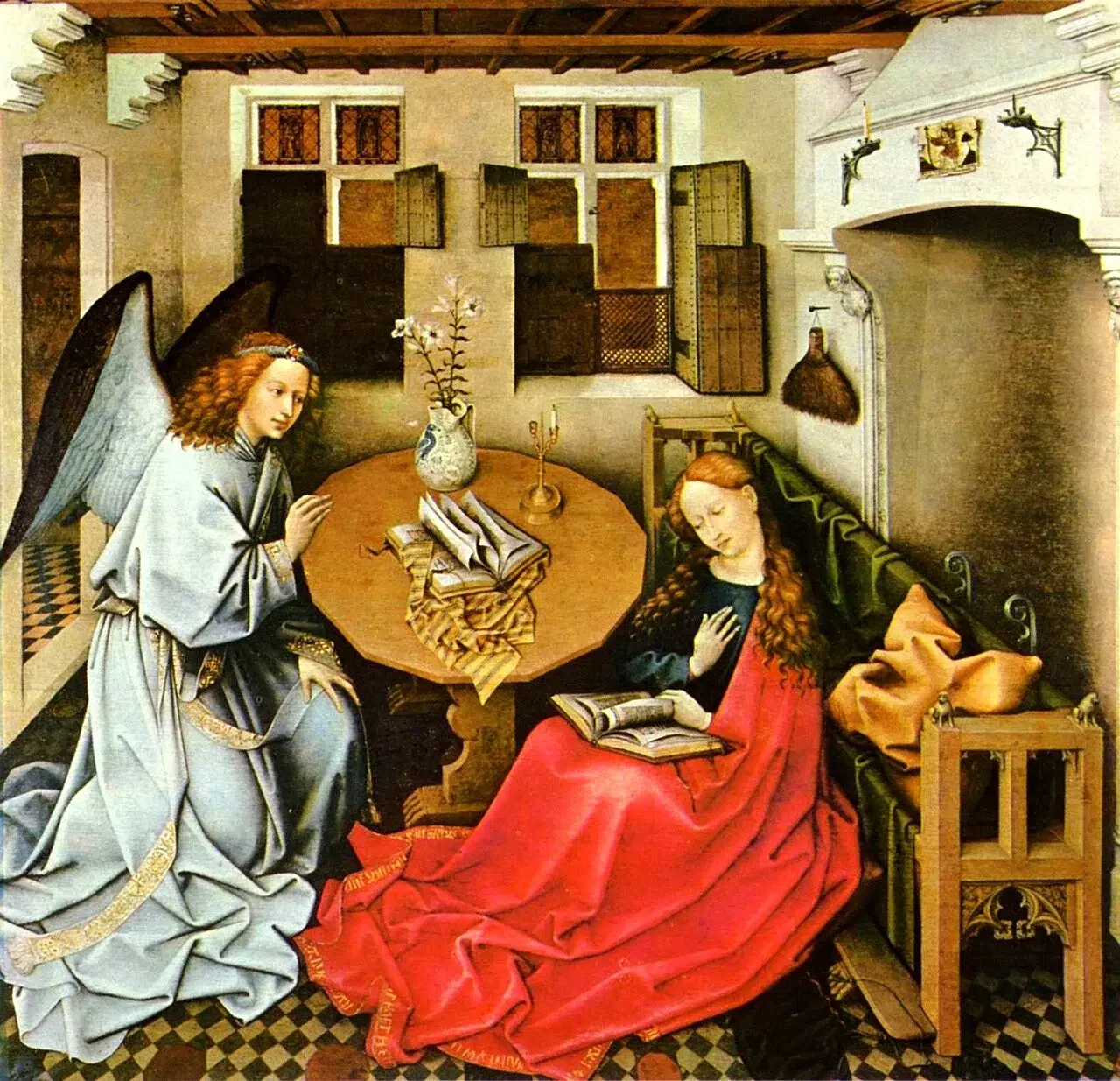
Mérode Altarpiece
#67
Meet the artist
RRobert Campin1375–1444Belgian
Dates
c. 1427–1432
Specifications
- Dimensions
- 64.5 × 117.8 cm
Wikimedia Commons
About the Artwork
The Mérode Altarpiece, a triptych painted in the workshop of Robert Campin around 1427-1432, is a cornerstone of early Netherlandish art. This small, private altarpiece depicts the Annunciation in the central panel. The Virgin Mary, startled from her reading, is visited by the Angel Gabriel in a contemporary, bourgeois setting, emphasizing the Incarnation's relevance to everyday life. The left panel shows the donors, Peter Inghelbrecht and his wife Margarete Scrynmakers, kneeling in prayer, while the right panel depicts Joseph, Mary's husband, in his workshop, crafting a mousetrap – a symbolic representation of Christ trapping the devil. The intimate and realistic details, from the copper basin in the Annunciation to the tools in Joseph's workshop, mark a significant departure from the stylized and symbolic representations of earlier religious art.
Historically, the Mérode Altarpiece signifies a pivotal shift towards greater naturalism and the use of perspective in painting. Campin's workshop, including possibly the young Rogier van der Weyden, pioneered these techniques, influencing generations of artists. The inclusion of everyday objects and the placement of religious scenes in recognizable domestic settings helped viewers connect with the divine on a more personal level. The altarpiece embodies the burgeoning wealth and devotional practices of the rising merchant class in the Netherlands, who sought private and accessible art.
The meticulous attention to detail, the luminous colors achieved through layering thin glazes, and the masterful rendering of textures demonstrate the advanced techniques of early Netherlandish painting. The Mérode Altarpiece’s significance lies not only in its artistic innovation but also in its profound impact on the development of religious iconography and the role of art in private devotion. It exemplifies the transition from late Gothic to early Renaissance art and reveals the growing importance of realistic depiction in portraying religious narratives, shaping the course of Western art history.
How to experience it
get close to the tiny household details and symbols
Same feeling, different artists
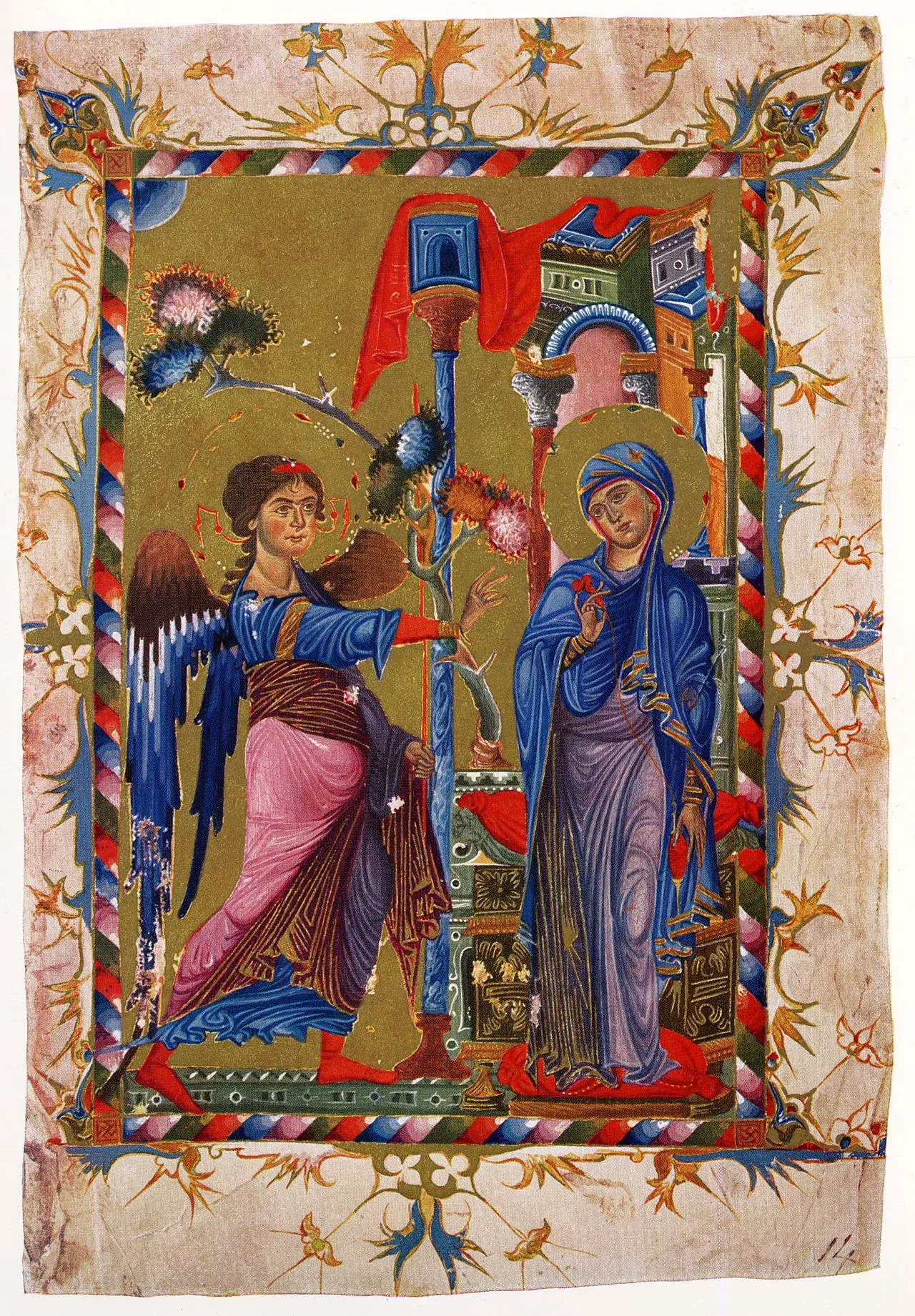
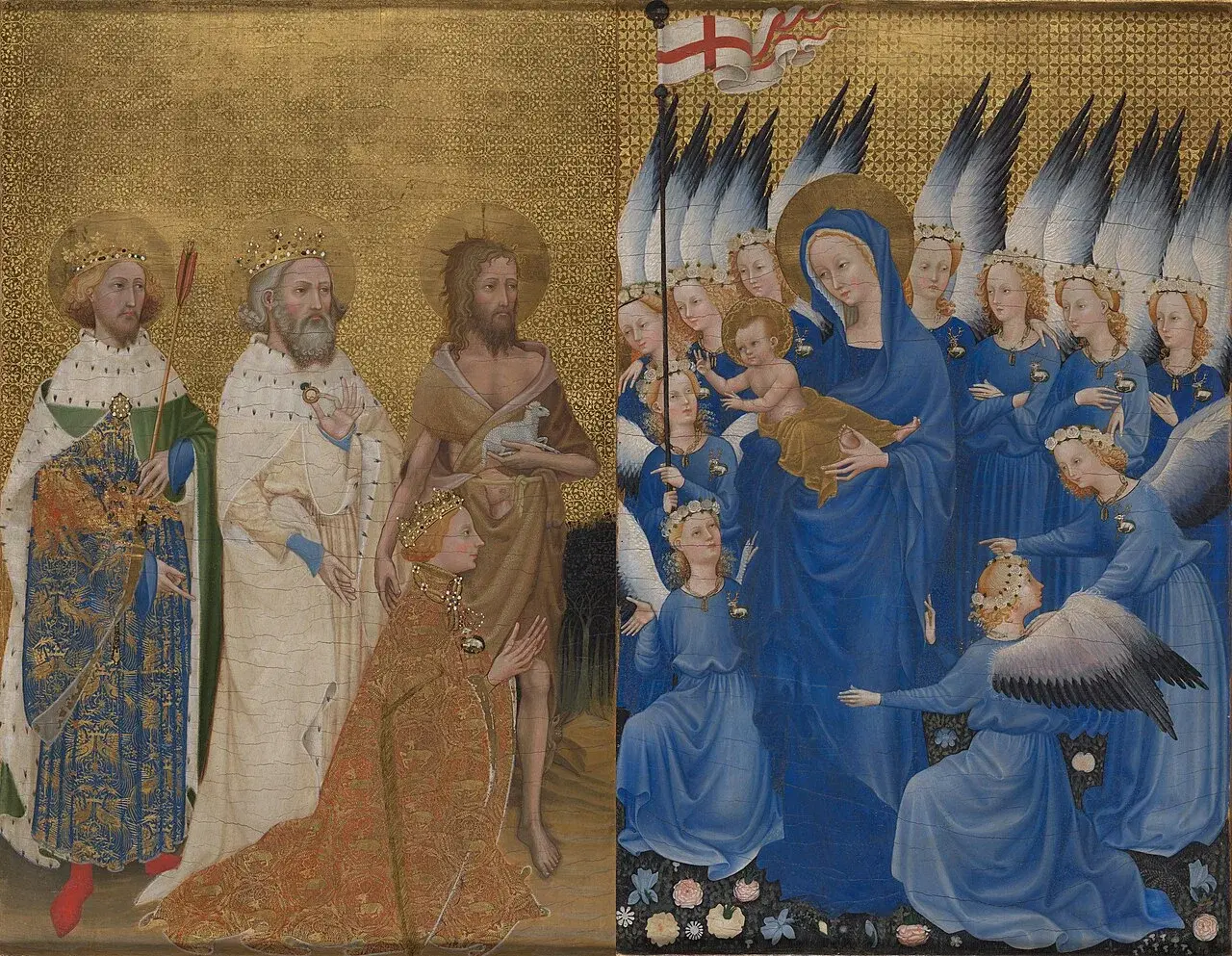
Similar Works by Other Artists
Keep exploring
Ends soon
Frieze New York 2026
13 May – 17 May 2026
The Shed New York
Matisse. The Pursuit of Harmony
9 Apr – 22 May 2026
Acquavella Galleries
Raphael: Sublime Poetry
29 Mar – 28 Jun 2026
Metropolitan Museum of Art
Marcel Duchamp
13 Apr – 22 Aug 2026
MoMA The Museum of Modern Art

Whitney Biennial 2026
8 Mar – 23 Aug 2026
Whitney Museum of American Art
Frida and Diego. The Last Dream.
1 Apr – 12 Sep 2026
MoMA The Museum of Modern Art
Noguchi’s New York
4 Feb – 13 Sep 2026
The Noguchi Museum
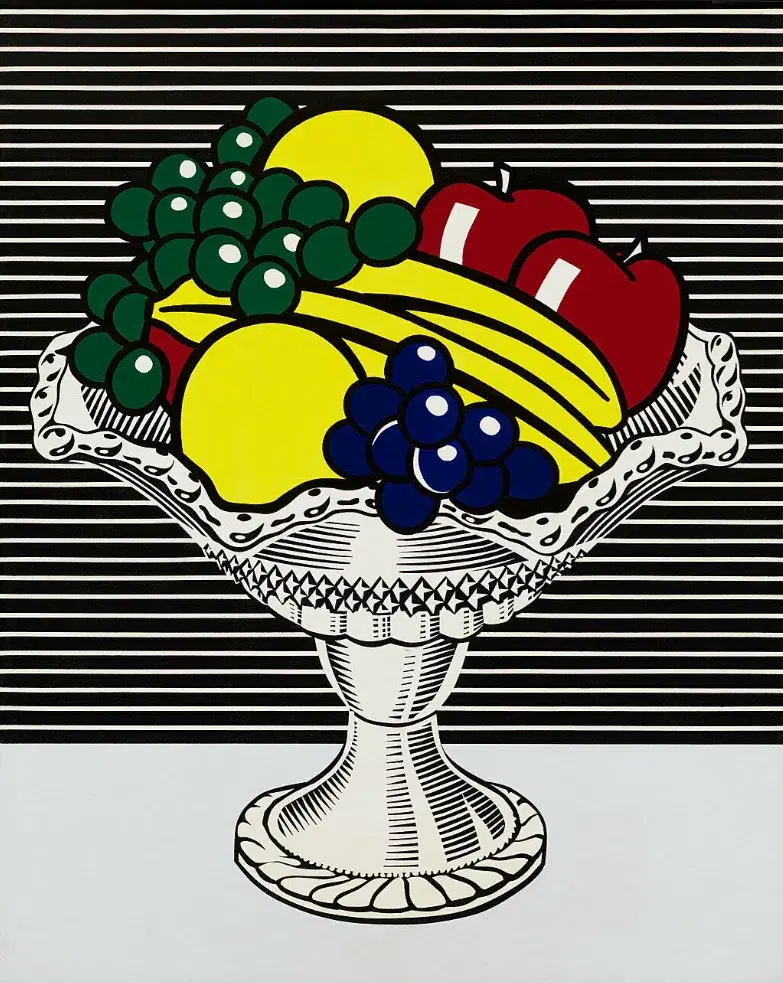
Roy Lichtenstein
1 Oct 2026 – 1 Jan 2027
Whitney Museum of American Art
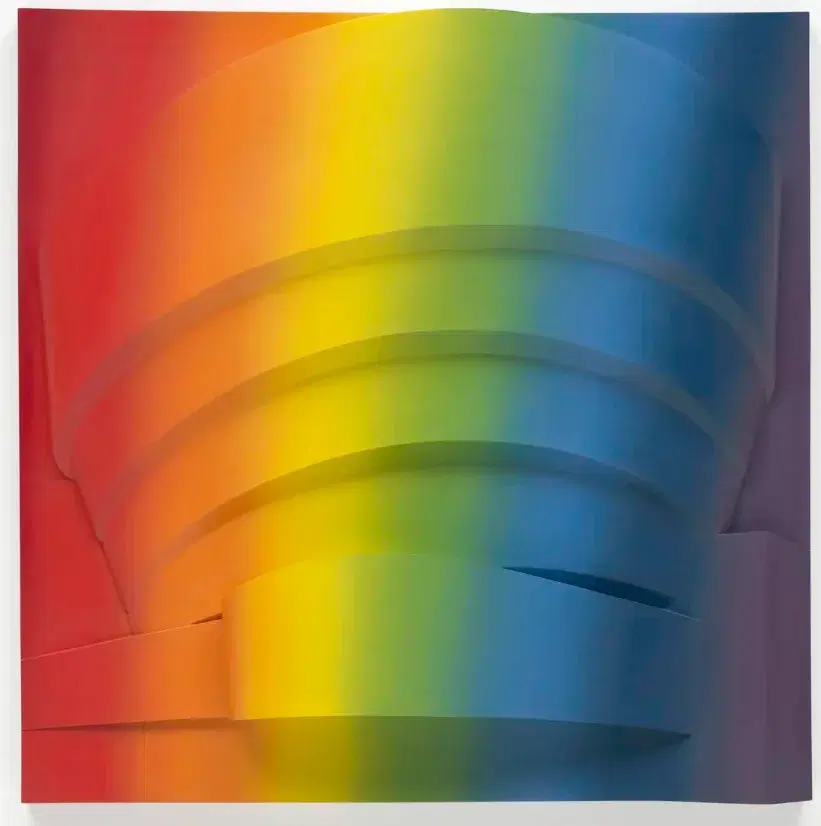
Guggenheim Pop
5 Jun 2026 – 10 Jan 2027
Solomon R. Guggenheim Museum
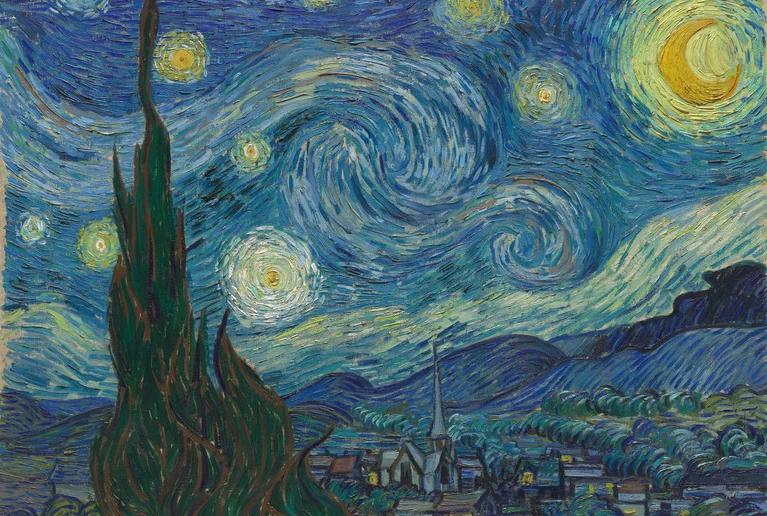
Moma Permanent Collection
MoMA The Museum of Modern Art