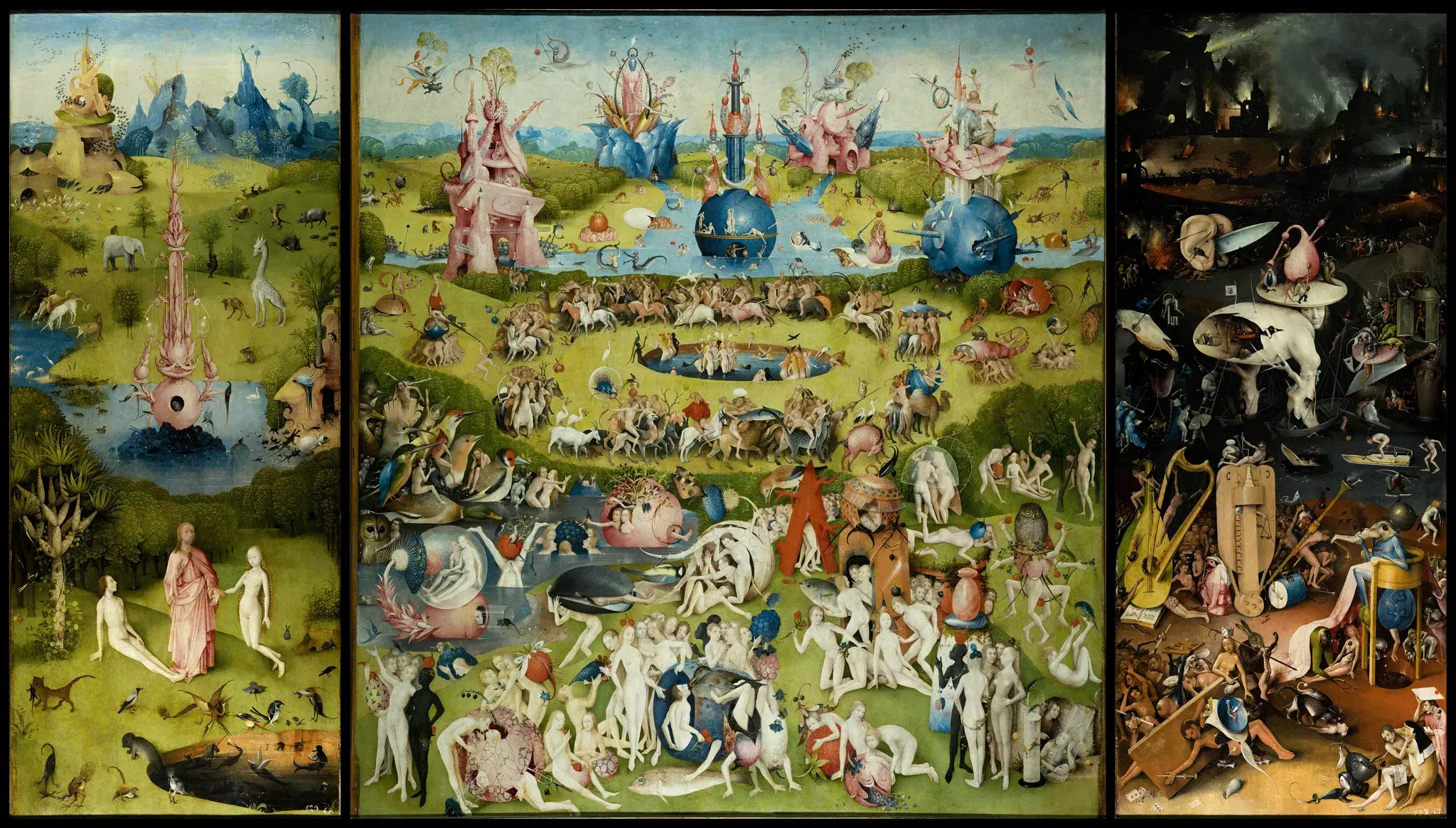
The Garden of Earthly Delights
1490
64% match
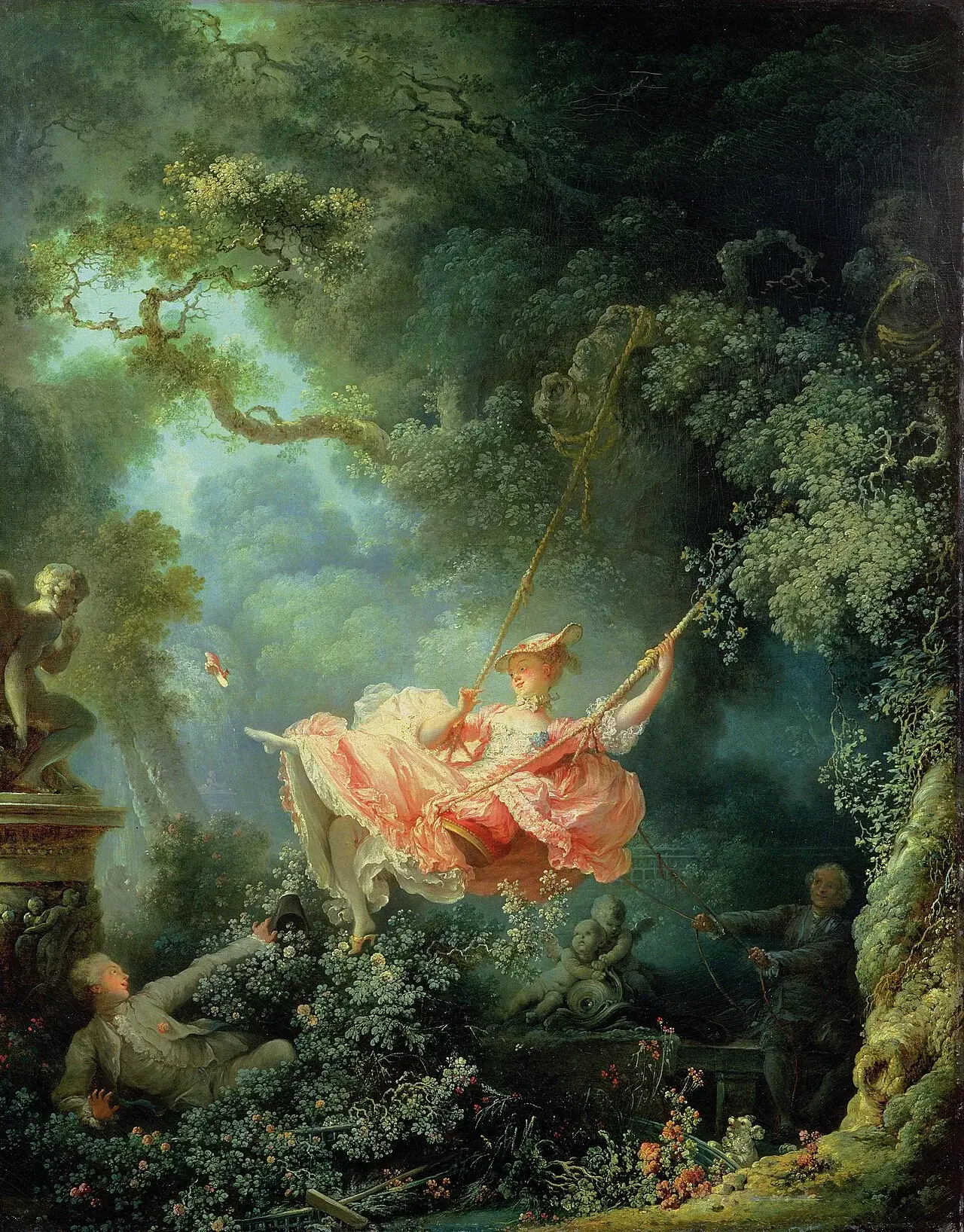
c. 1767
Jean-Honoré Fragonard's "The Swing," painted in 1767, is an iconic masterpiece of the Rococo period. The painting depicts a young woman on a swing, playfully kicking off her shoe as she is pushed by an elderly bishop hidden in the shadows. A young man, likely her lover, reclines in the bushes, gazing up at her with eager anticipation. The scene is set in a lush, overgrown garden, filled with vibrant colors and soft, diffused light, creating an atmosphere of frivolity and sensuality. The painting perfectly captures the aristocratic indulgence and lightheartedness prevalent in pre-revolutionary France.
"The Swing" is historically significant as a quintessential example of Rococo art. It embodies the era's emphasis on pleasure, romance, and the decorative arts, moving away from the more serious and moralistic themes of previous periods. Fragonard's masterful use of color, light, and composition contributes to the painting's overall effect. The loose, feathery brushstrokes and vibrant palette create a sense of movement and energy, while the suggestive subject matter reflects the libertine attitudes of the French aristocracy. The painting's enduring popularity lies in its ability to transport viewers to a world of fantasy, beauty, and playful intrigue, even as it hints at the societal inequalities that would soon lead to revolution.
The painting's enduring appeal also stems from Fragonard's adept use of artistic techniques. The soft lighting and pastel hues are characteristic of the Rococo style, creating a dreamlike atmosphere. Fragonard's skill in capturing the textures of silk, foliage, and skin adds to the painting's realism and sensuality. The composition, with its diagonal lines and asymmetrical arrangement, creates a dynamic and engaging visual experience. "The Swing" is not merely a depiction of a playful moment; it is a carefully constructed work of art that continues to captivate audiences with its beauty, wit, and historical significance.
Same feeling, different artists