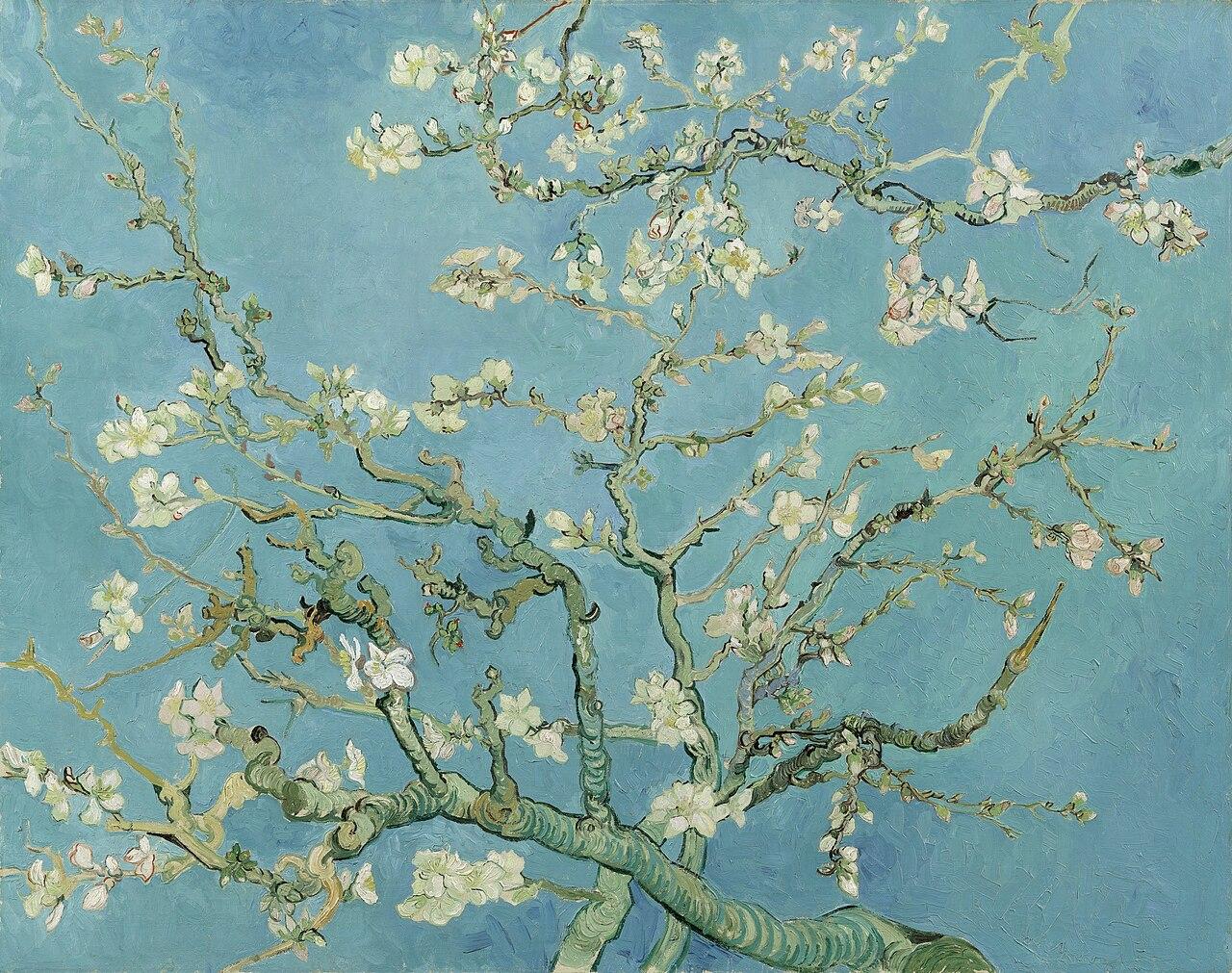
Almond Blossoms
Meet the artist
Vincent van Gogh1853–1890Dutch
Dates
1890
Specifications
- Movement
- Post-Impressionism
- Medium
- Oil Painting
- Genre
- Landscape
About the Artwork
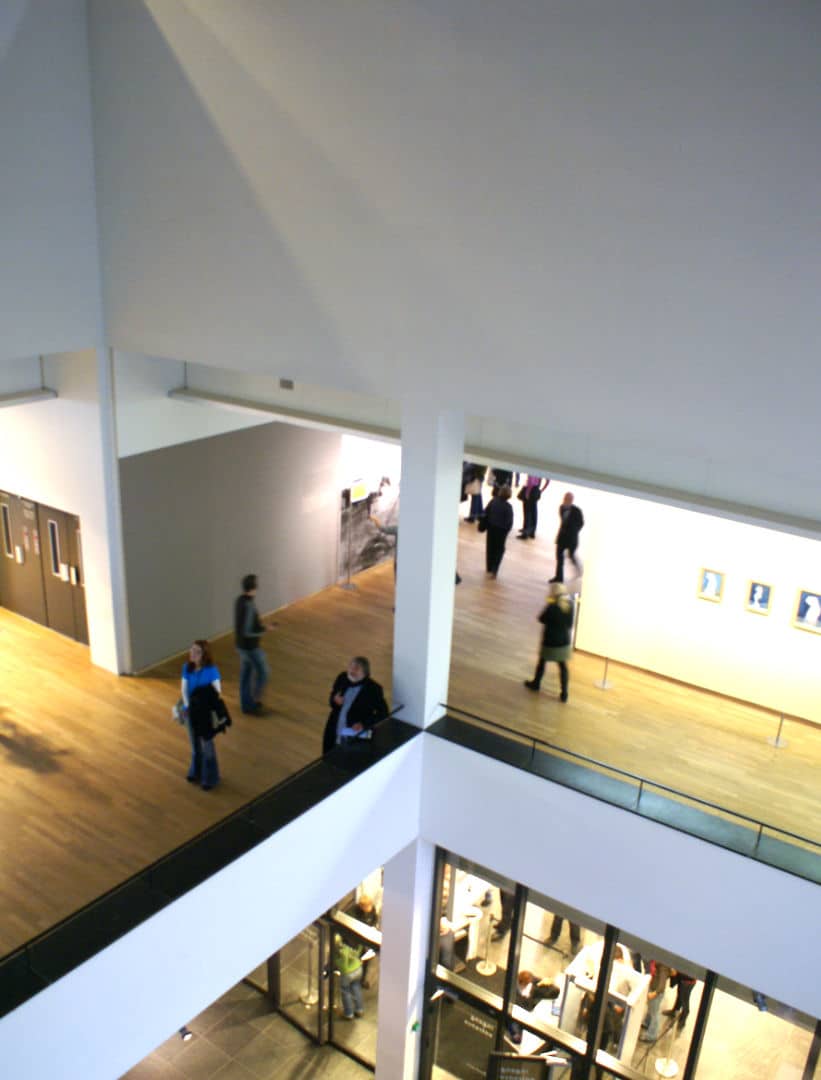
In February 1890, while staying at the Saint-Paul-de-Mausole asylum in Saint-Rémy-de-Provence, Vincent van Gogh learned that his brother Theo had become a father. The child was named Vincent Willem — after his uncle — and Van Gogh immediately set to work on a painting to hang above the infant's crib. The result was Almond Blossoms, a large canvas showing white flowers and budding branches set against a vivid turquoise sky, a gesture of pure tenderness from one brother to another.\n\nThe composition owes a clear debt to Japanese woodblock prints, which Van Gogh had long admired. The branches are rendered flat and close to the picture plane, the flowers simplified into bold graphic shapes, the sky reduced to an unmodulated field of color. Yet the effect is anything but cold: the white petals carry a sense of fragile optimism, of life reasserting itself in early spring. Almond Blossom was so precious to Theo's wife Jo that she refused ever to sell it, and after her death it passed to her son — the elder Vincent's namesake — who would go on to found the Van Gogh Museum in Amsterdam, where the painting remains on permanent display.
Don’t stop here
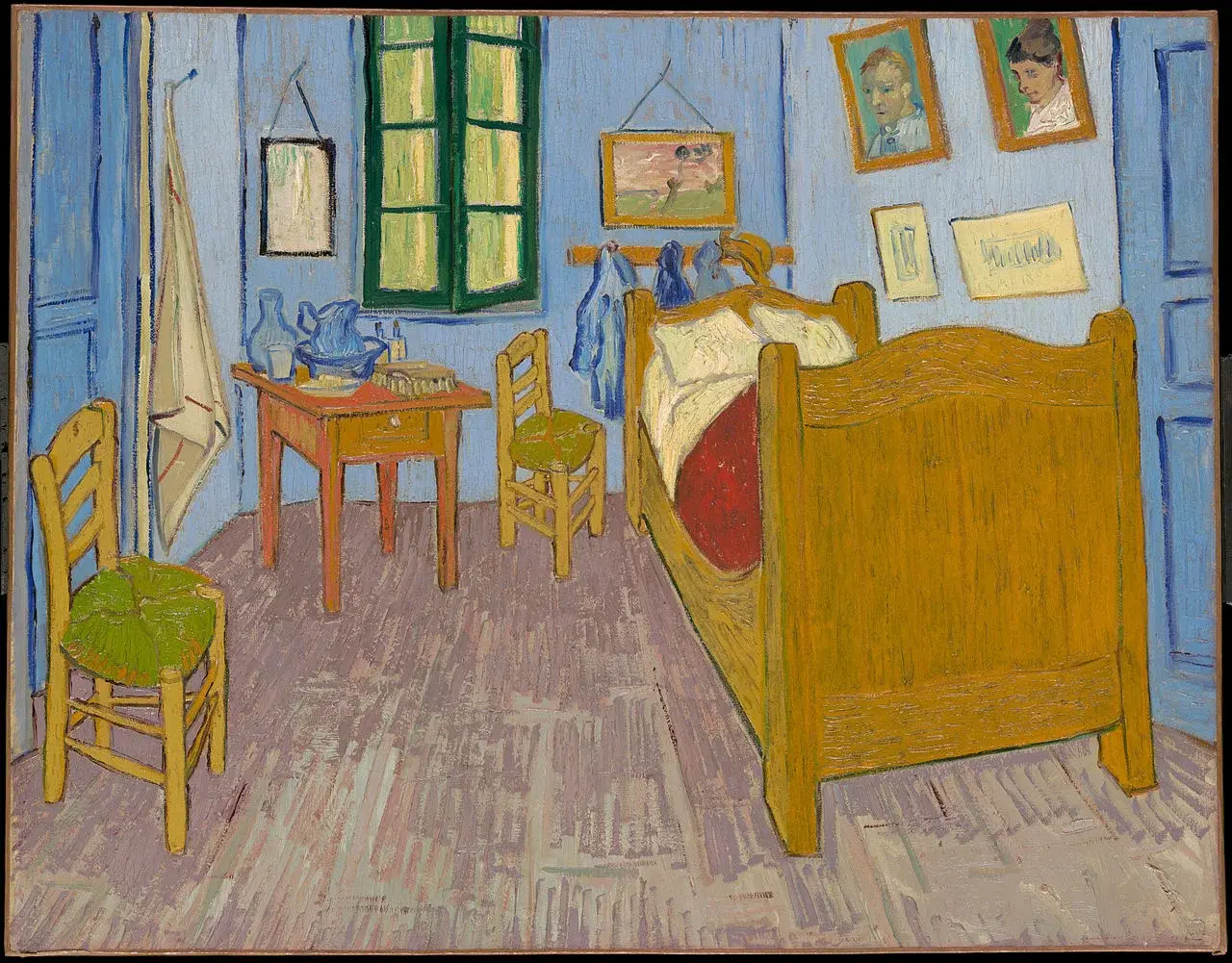
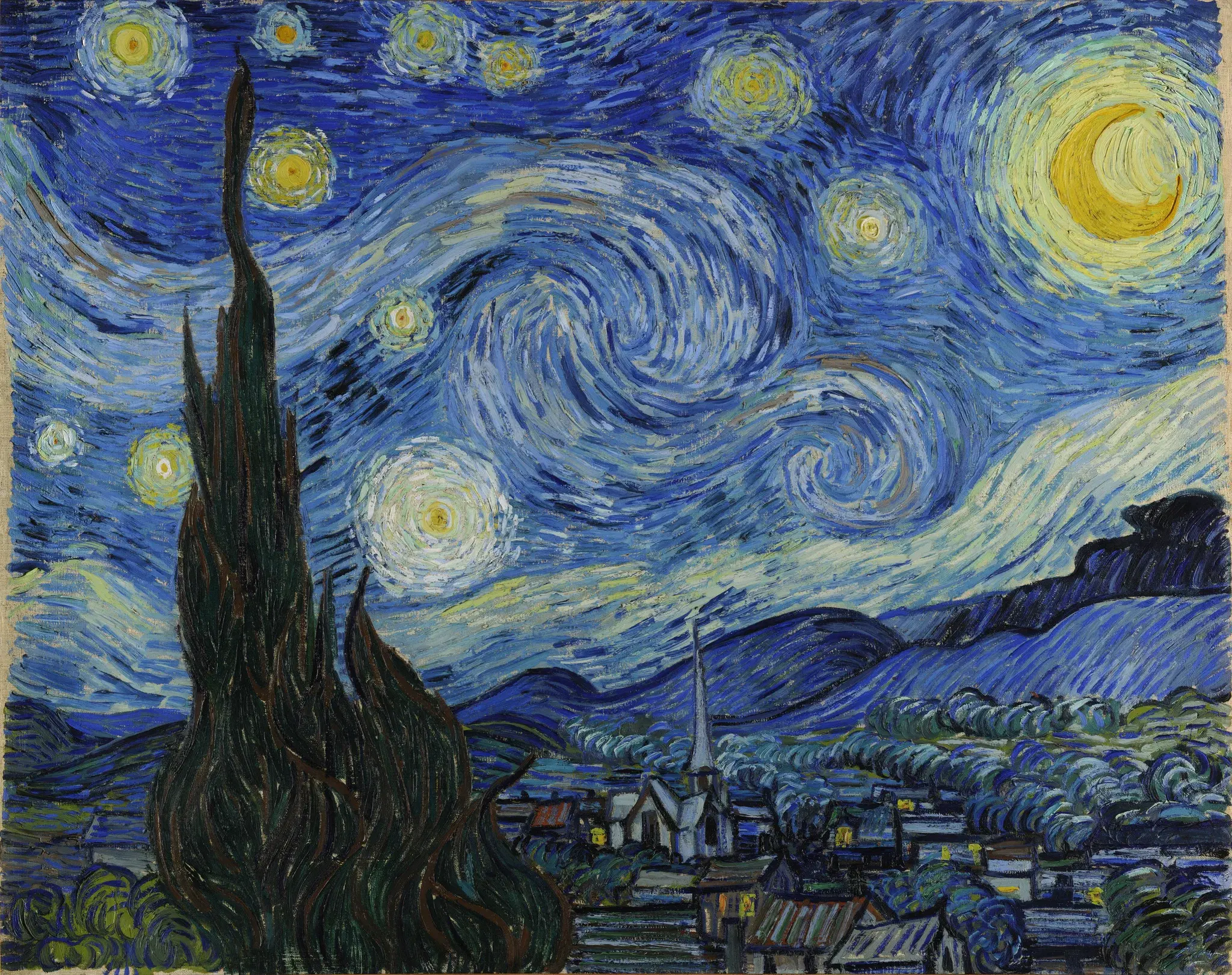
More to explore by Vincent van Gogh
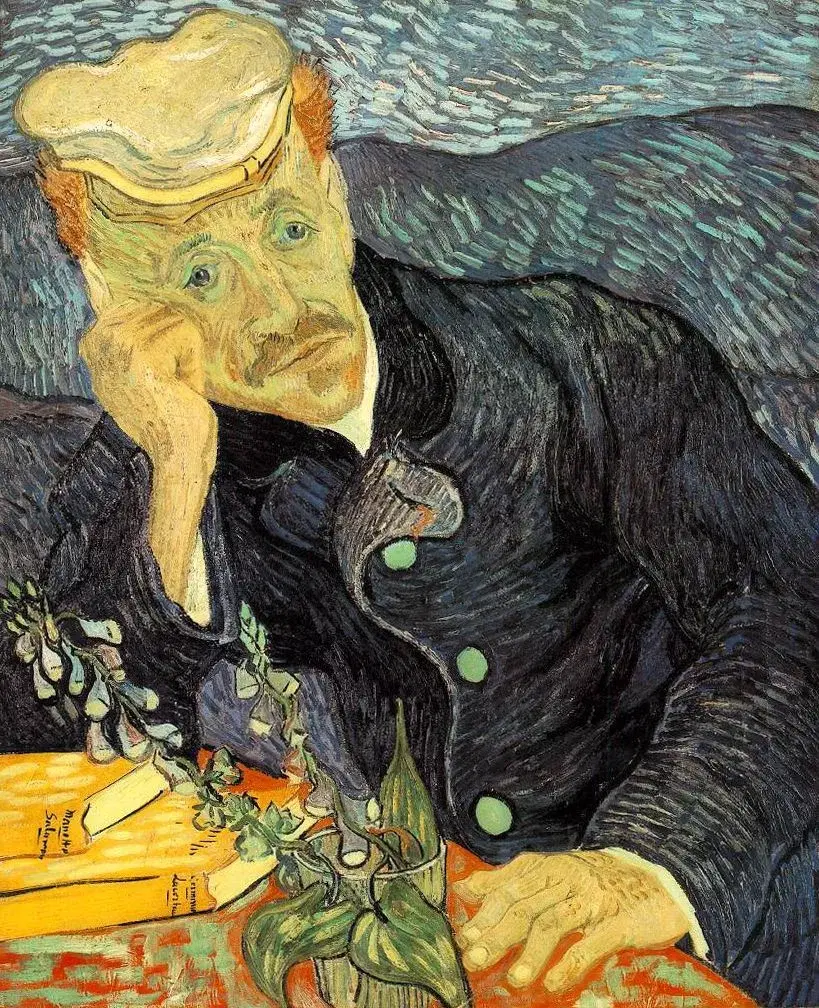
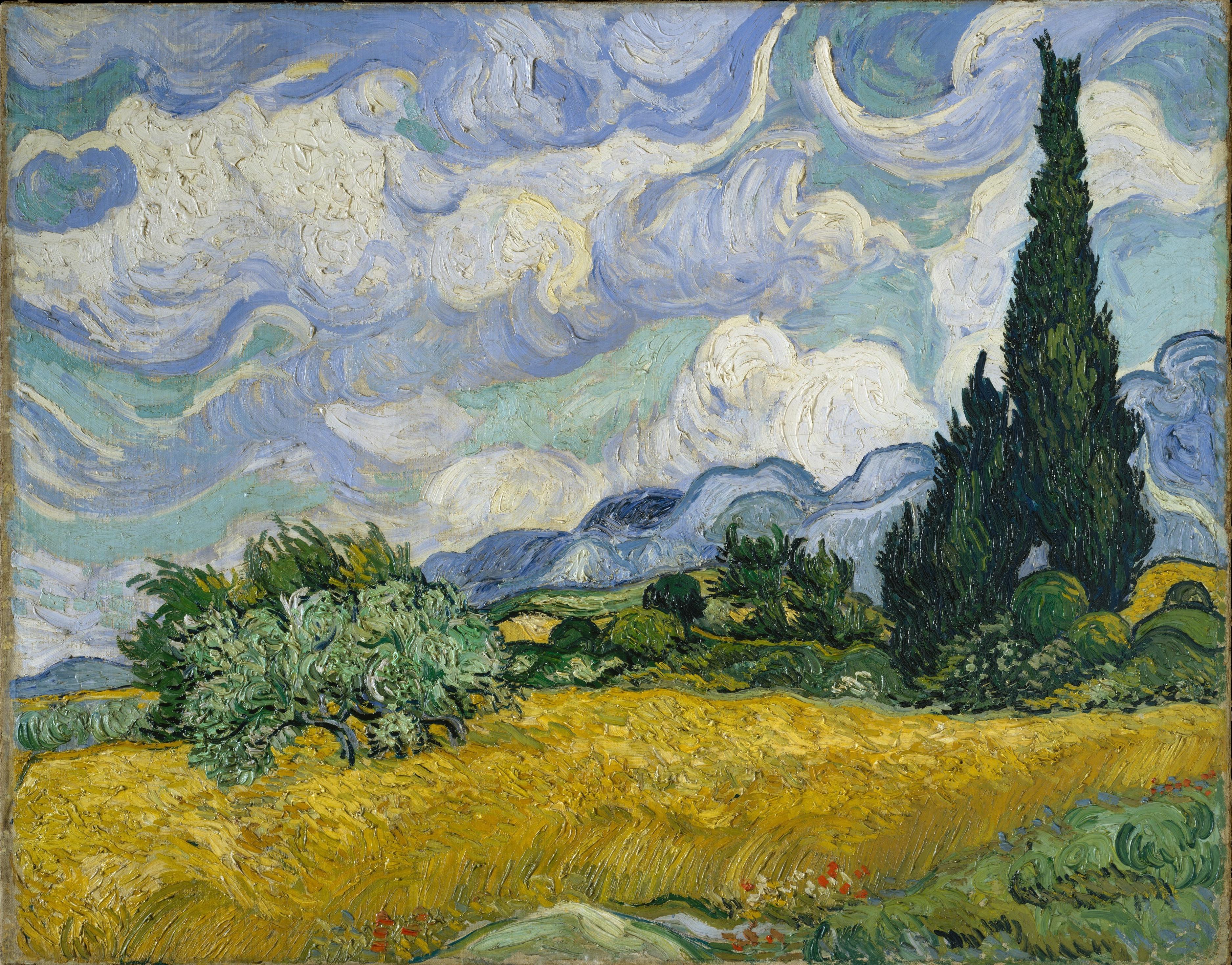
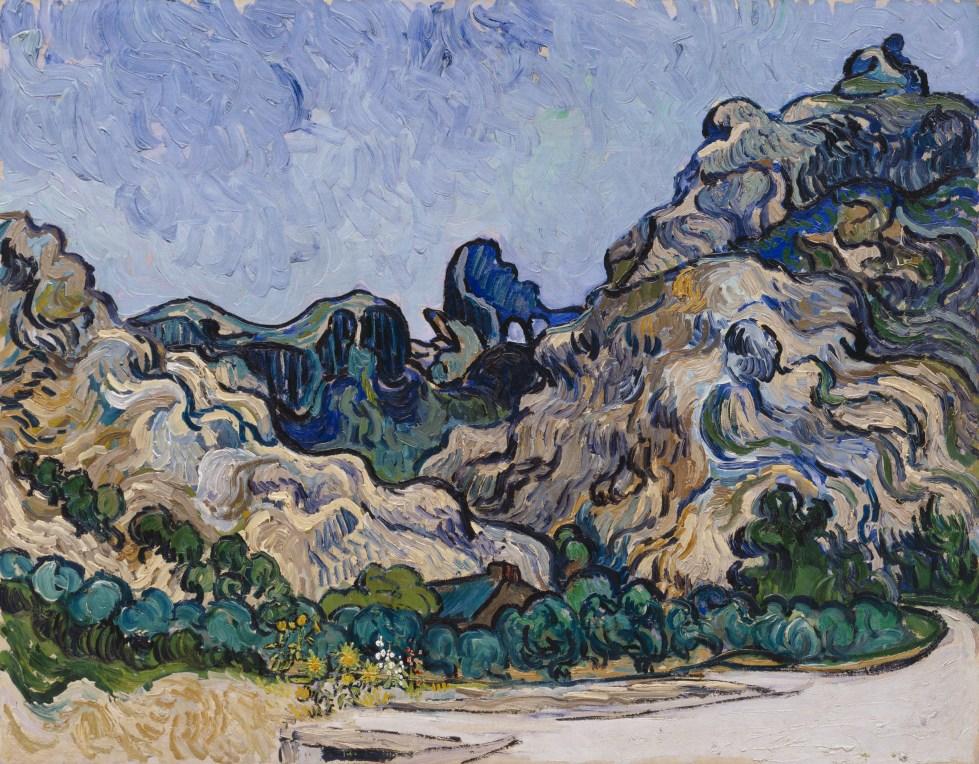
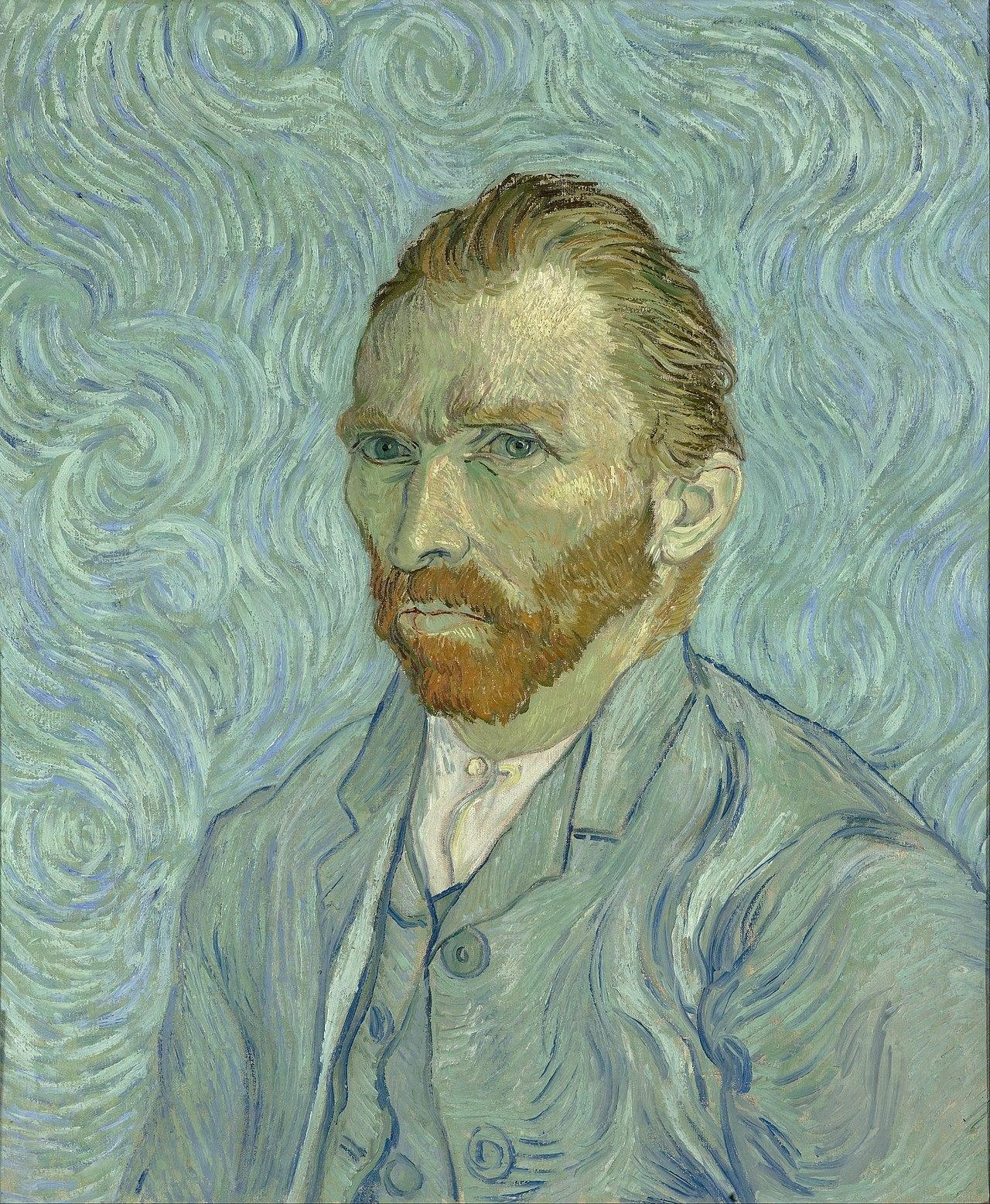
Same feeling, different artists
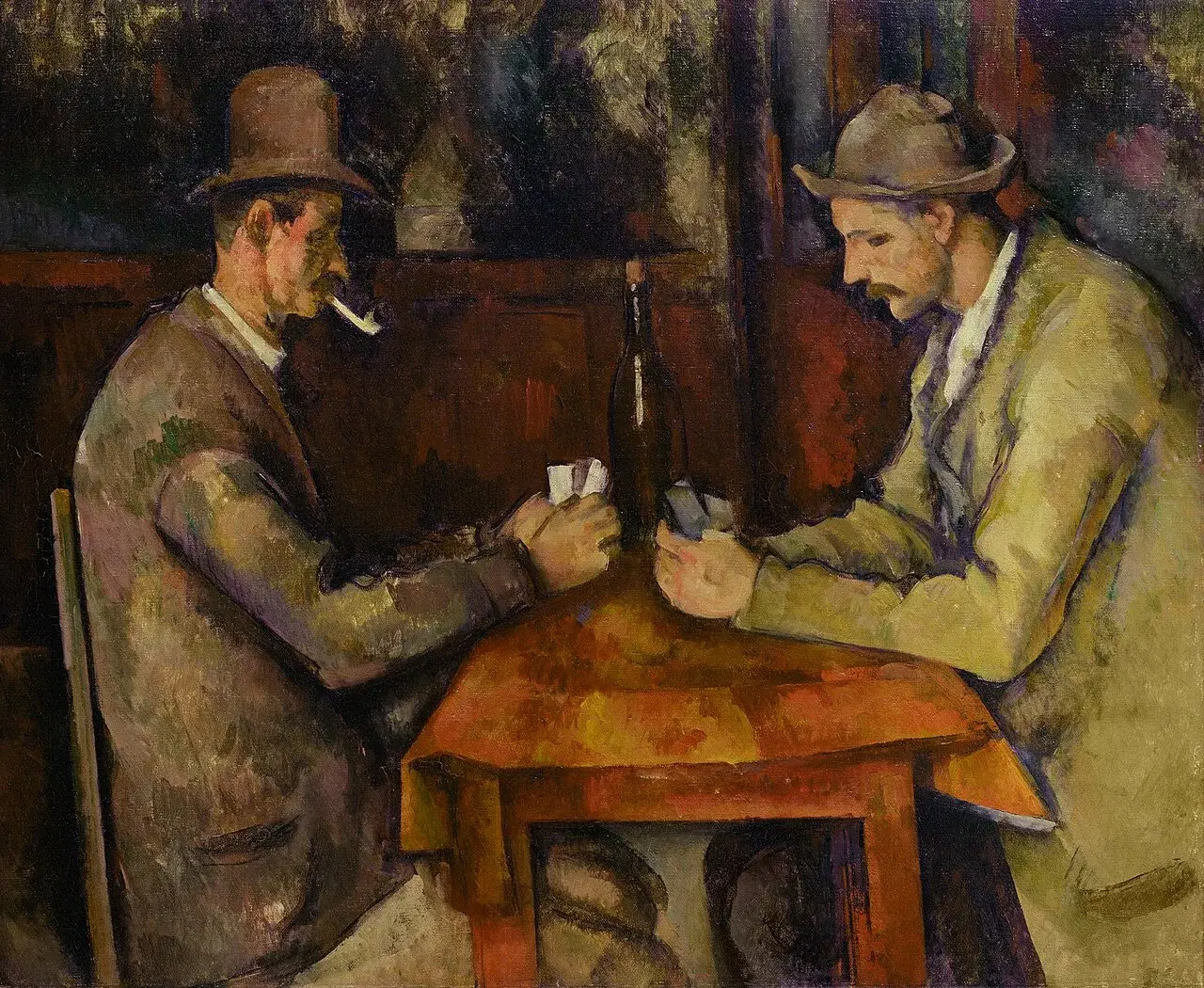
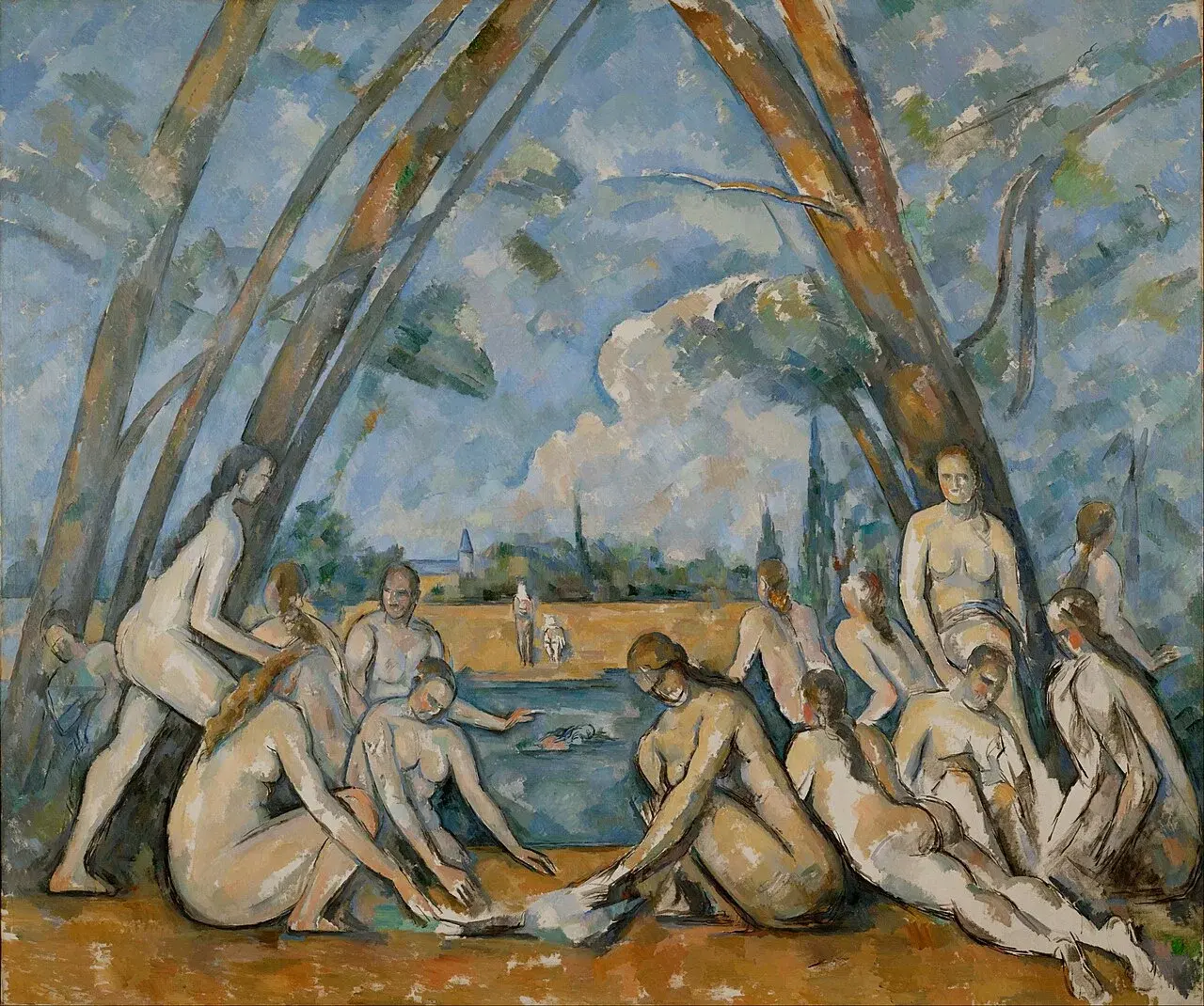
Similar Works by Other Artists
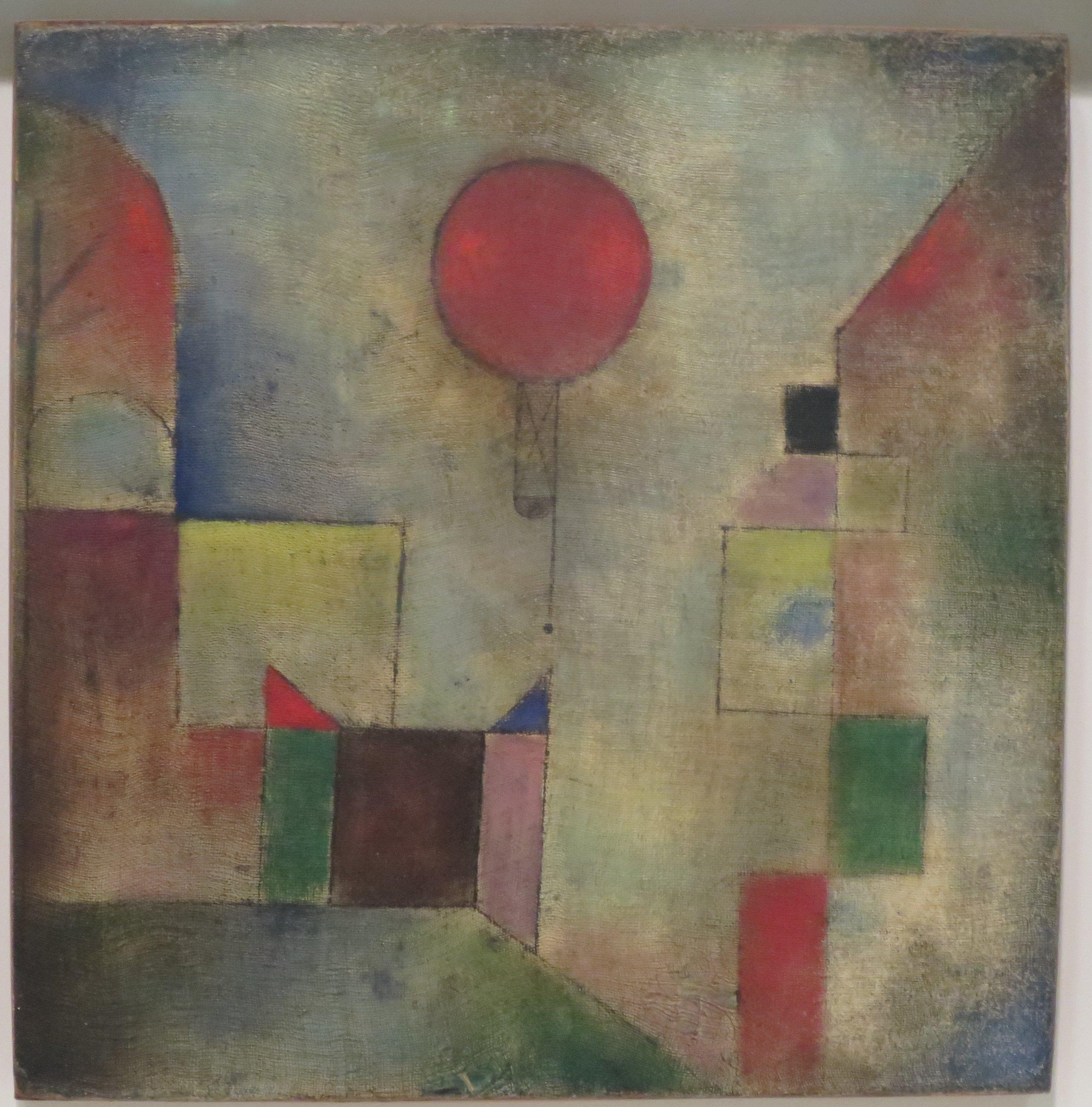
Keep exploring

Robbie Williams
8 Nov 2025 – 7 May 2026
Moco Museum Amsterdam
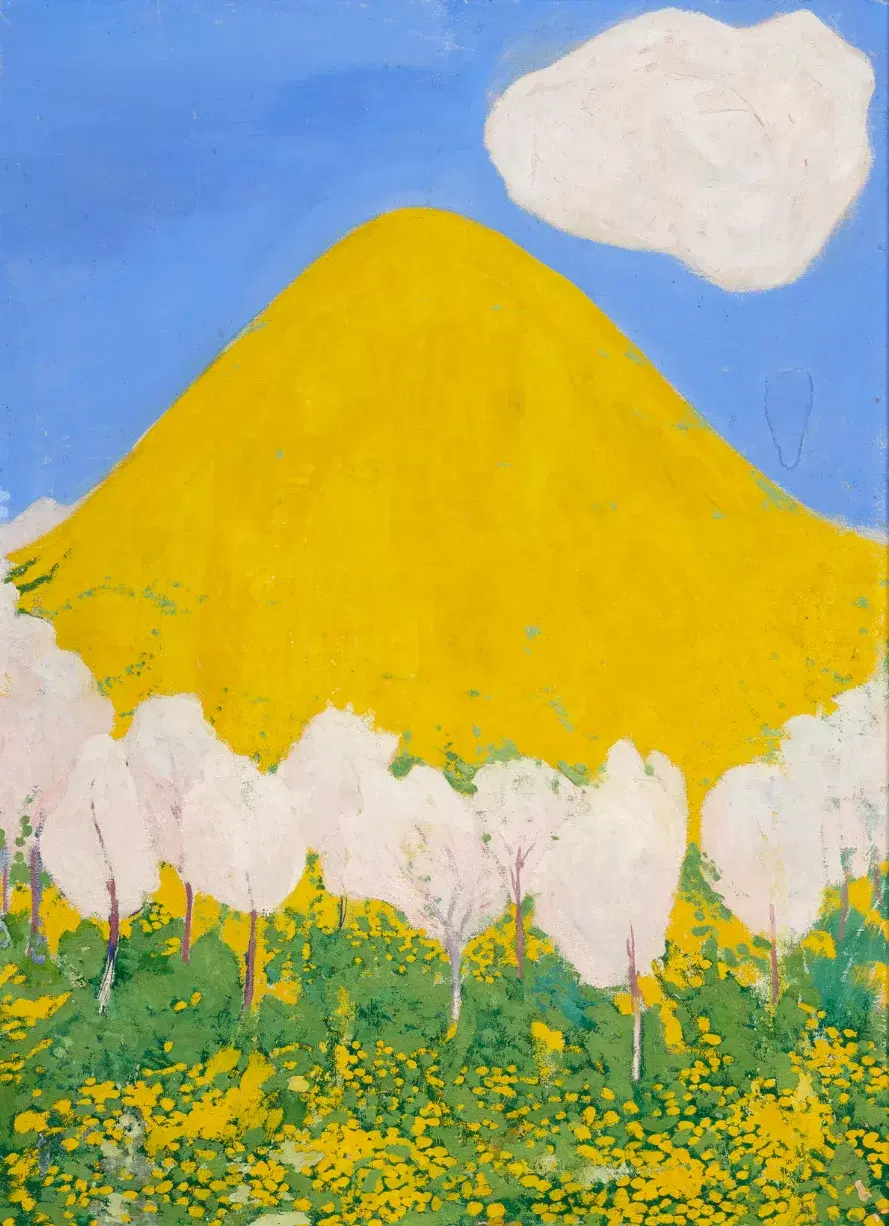
Ends soon
Exhibition Yellow
13 Feb – 17 May 2026
Van Gogh Museum
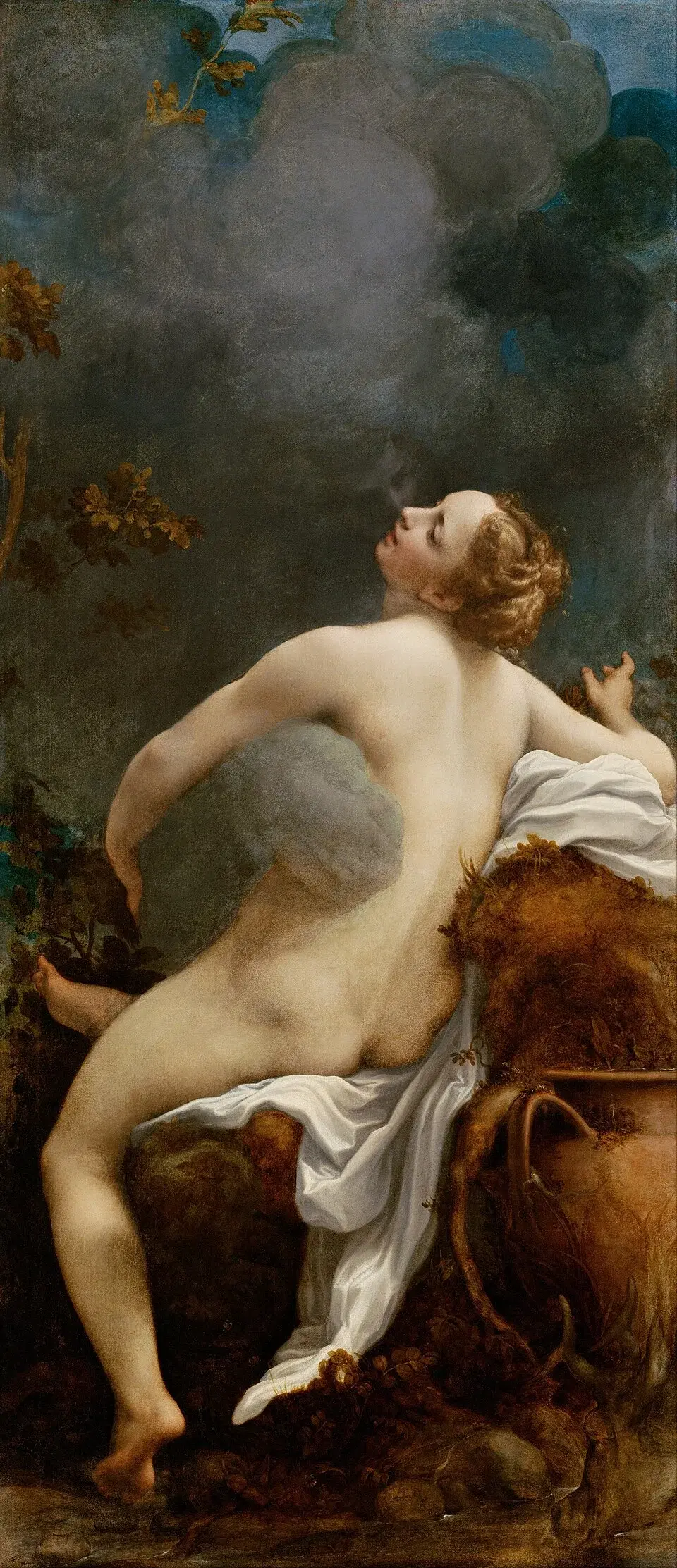
Metamorphoses
6 Feb – 25 May 2026
Rijksmuseum
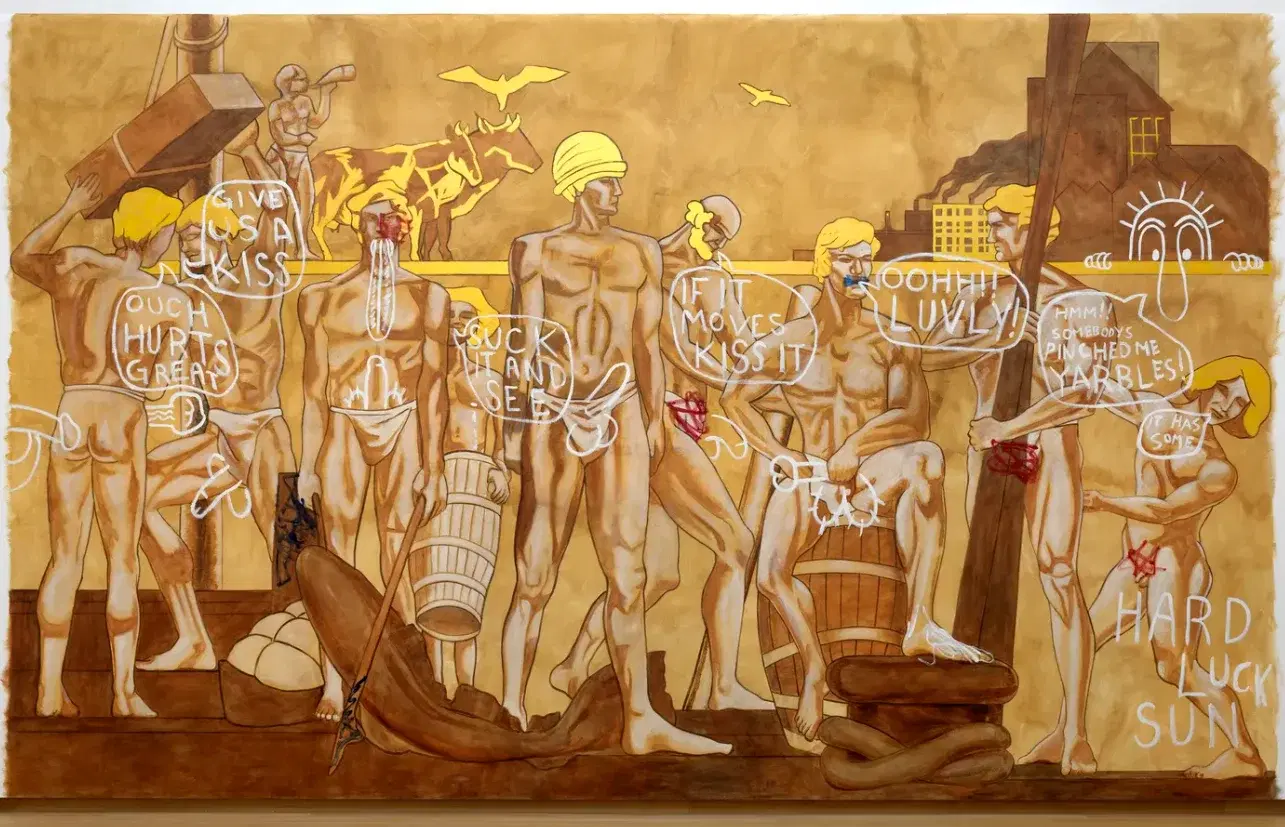
Manosphere: Masculinity Now
18 Apr – 2 Aug 2026
The Stedelijk Museum

Martin Parr
3 Apr – 12 Aug 2026
Foam Fotografiemuseum Amsterdam
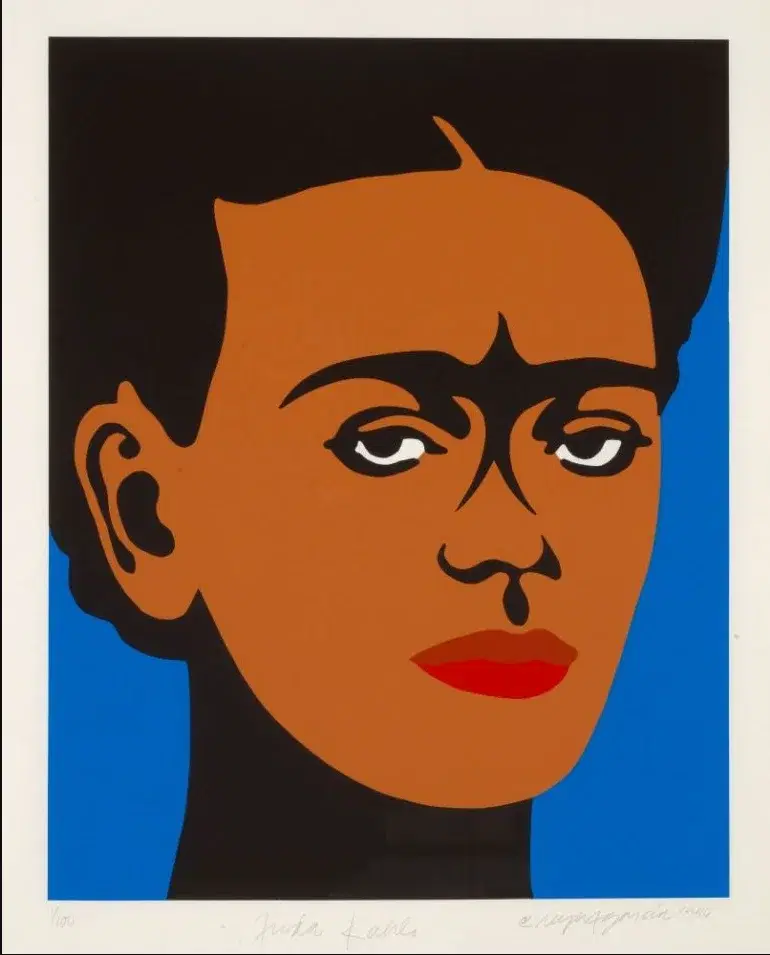
American Identities
13 Feb – 6 Sep 2026
H’ART Museum
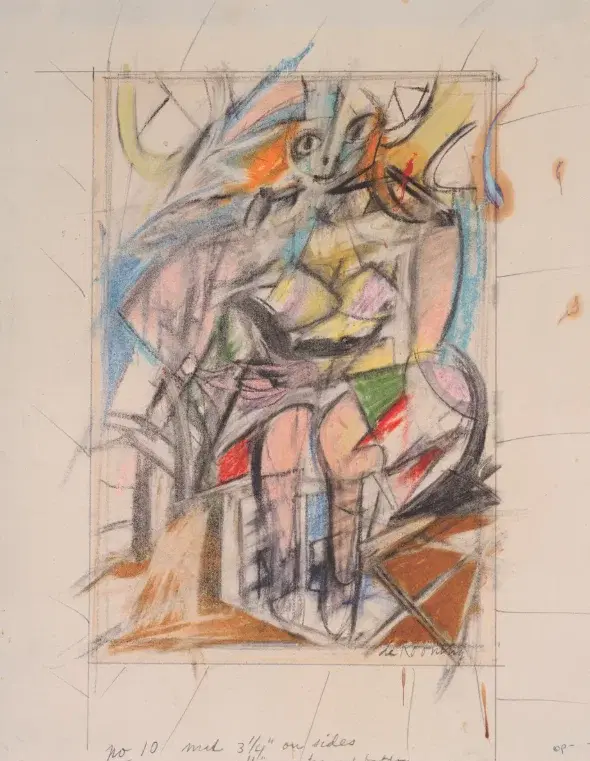
Willem de Kooning at work
9 Oct 2026 – 17 Jan 2027
Rijksmuseum
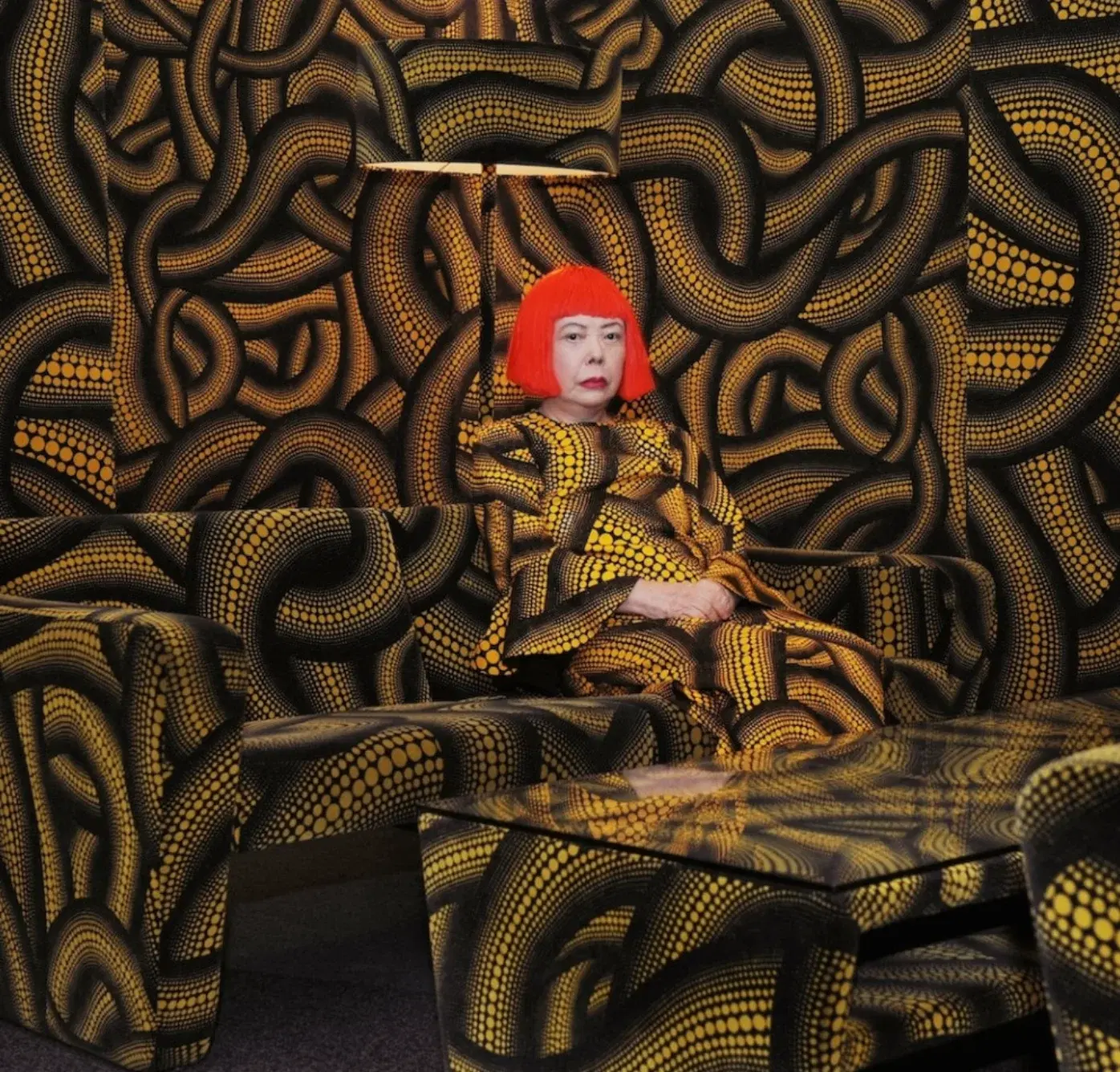
Yayoi Kusama
11 Sep 2026 – 17 Jan 2027
The Stedelijk Museum
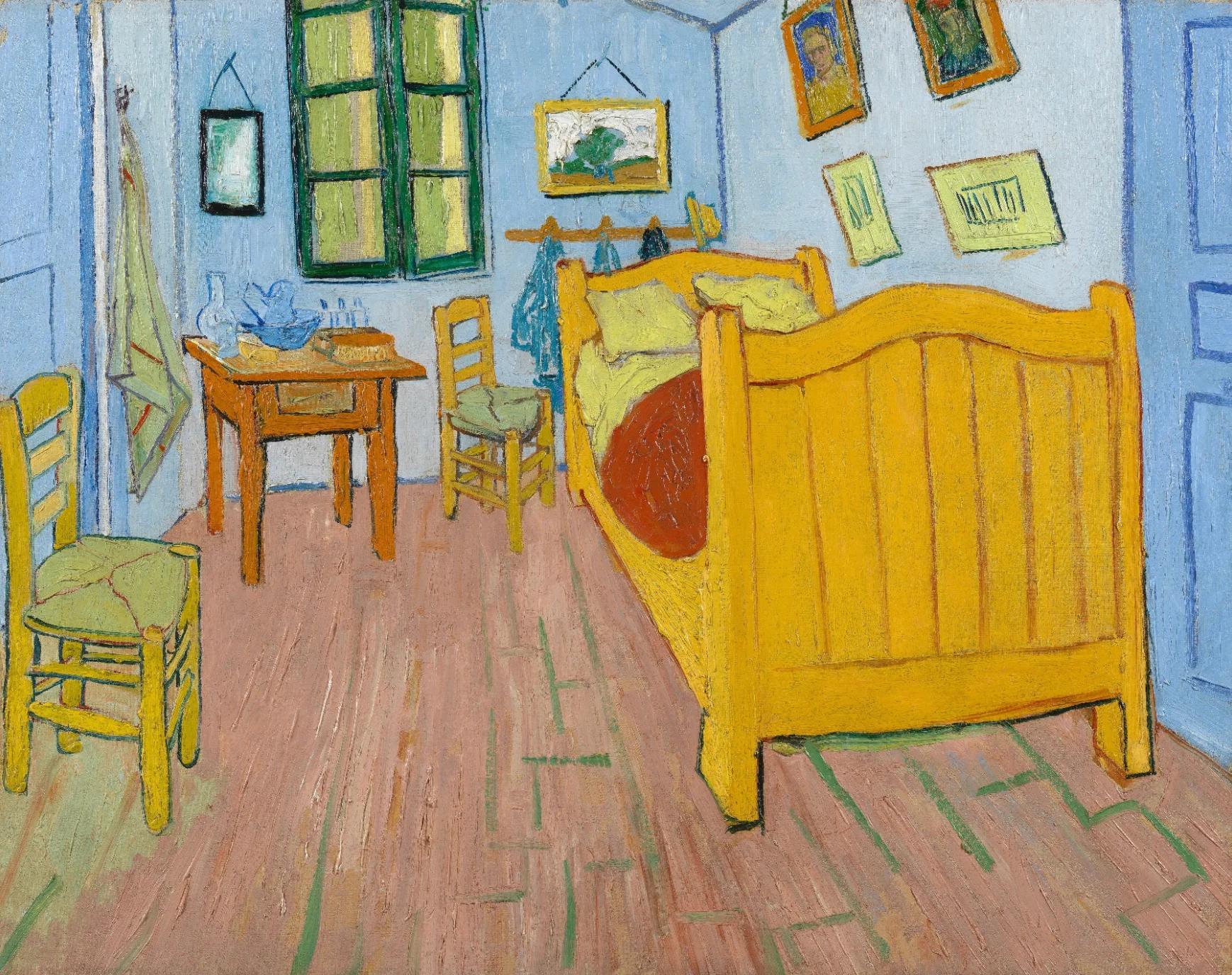
The Permanent Collection: Van Gogh’s Masterpieces
Van Gogh Museum
Modern Masters Amsterdam
Moco Museum Amsterdam