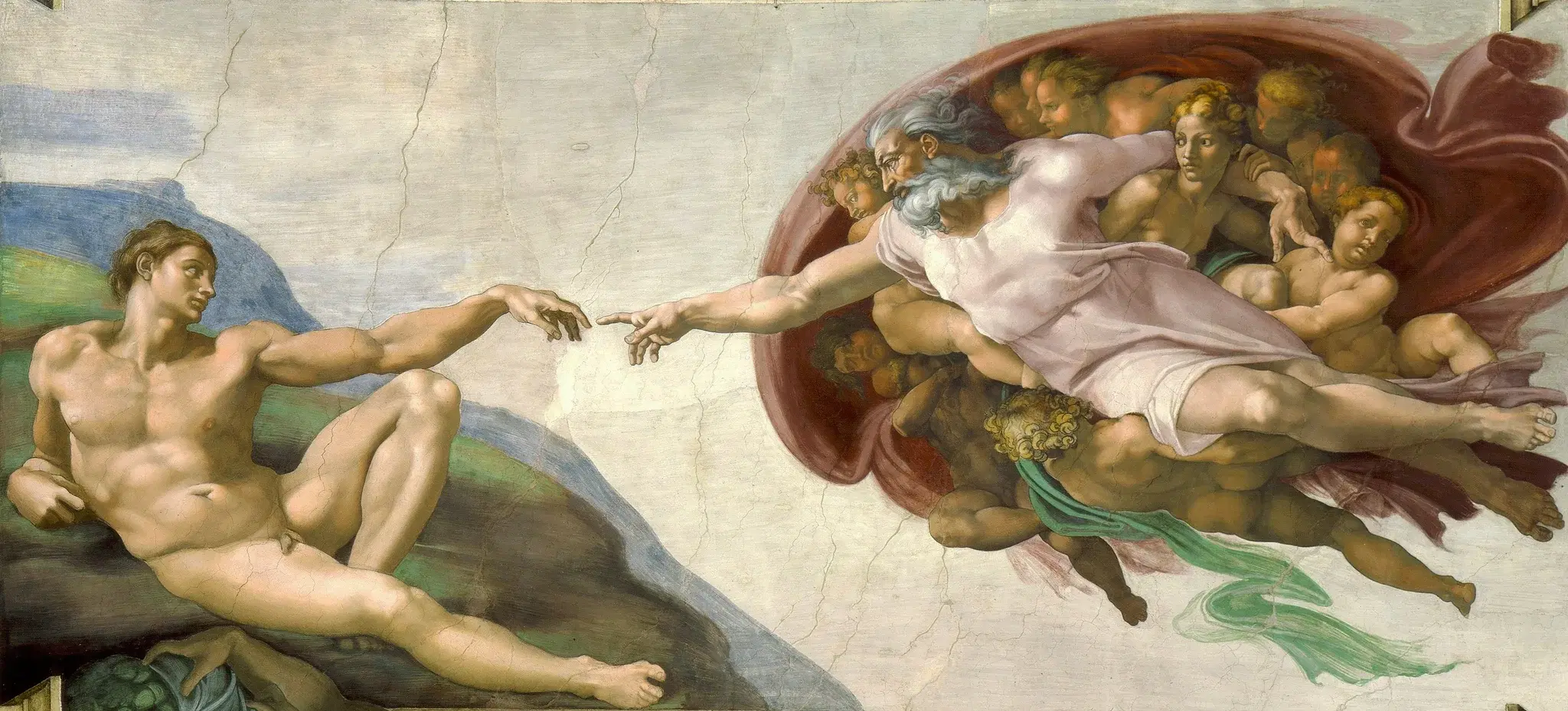
The Creation of Adam
#4
Two fingers. A gap of millimeters. And the moment that changed everything.
Meet the artist
MMichelangelo1475–1564Italian
Dates
c. 1511–1512
Specifications
- Original title
- Creazione di Adamo
- Movement
- High Renaissance
- Medium
- Fresco
- Genre
- Religious Painting
- Dimensions
- 280 × 570 cm
Wikimedia Commons
About the Artwork
Michelangelo's "The Creation of Adam," painted between 1508 and 1512, is arguably one of the most iconic images in Western art history. As a central panel in the Sistine Chapel ceiling, it depicts the biblical creation narrative from the Book of Genesis, specifically the moment when God imparts life to Adam, the first man.
A nearly weightless Adam reclines on the earth, his body relaxed, almost unfinished. Opposite him, God bursts forward surrounded by a swirl of figures, full of movement and intent.
Their hands reach toward each other — not touching, but almost.
That tiny gap holds all the tension.
Spotlight
Michelangelo captures creation not as an action, but as a charge — like electricity about to spark.
Adam mirrors God’s pose, suggesting humanity is made in divine image
God’s dynamic energy contrasts with Adam’s passive stillness — life hasn’t arrived yet
The space between their fingers is what makes the image iconic: creation is suspended, eternal
And then there’s the hidden layer:
Many believe the shape surrounding God resembles a human brain, hinting that what’s being given isn’t just life — but consciousness.
Worth the trip
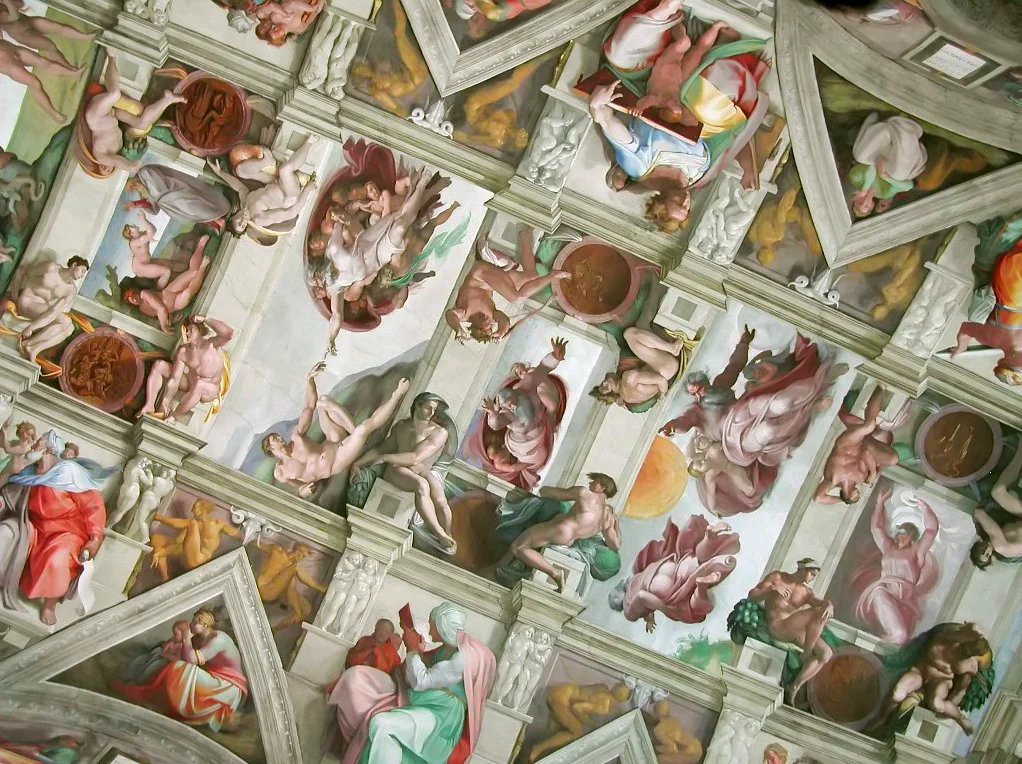
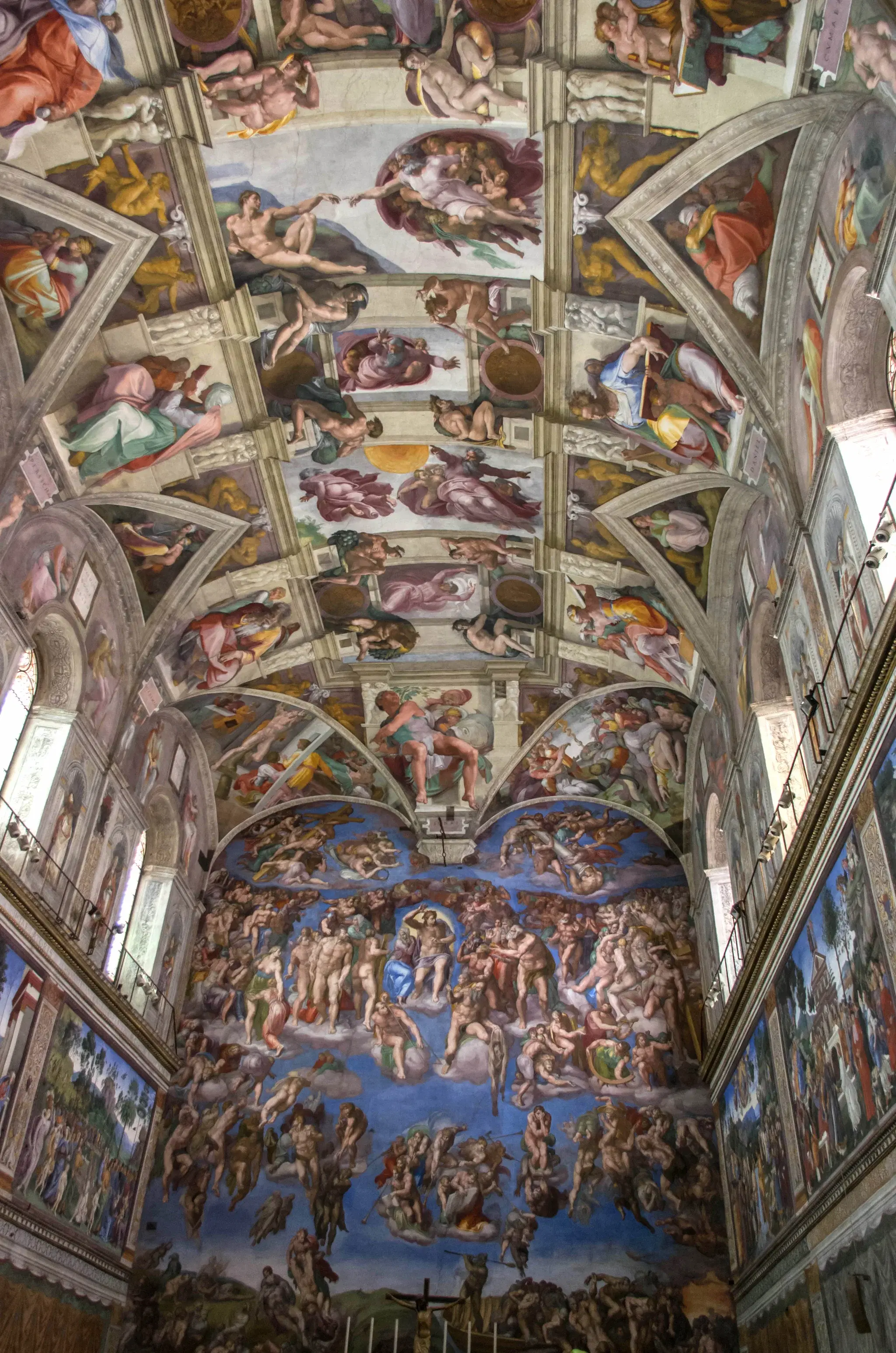
Because seeing it in the Sistine Chapel is completely different from any image.
You don’t stand in front of it — you stand under it, craning your neck, surrounded by one of the greatest visual stories ever created. In that moment, the scale, the silence, the crowd, the ceiling — everything disappears into that almost-touch. If there’s one image that defines human potential, connection, and origin… it’s this one.
How to experience it
Go early or late Midday = packed. First entry or late hours = better focus.
Don’t rush in Pause before looking up. Let your eyes adjust — it’s overwhelming.
Find your spot Stand slightly back to see the full panel — not just the hands.
Then zoom into the detail Focus on the fingers. That tiny gap is everything.
Notice the contrast God = movement, energy. Adam = stillness, potential.
Accept the chaos Crowds, guards, noise — let it fade. The moment is still there.
Artlovers tip
Don’t try to capture it. Just look up… and stay there a little longer than feels comfortable.
Don’t stop here
More to explore by Michelangelo
Same feeling, different artists