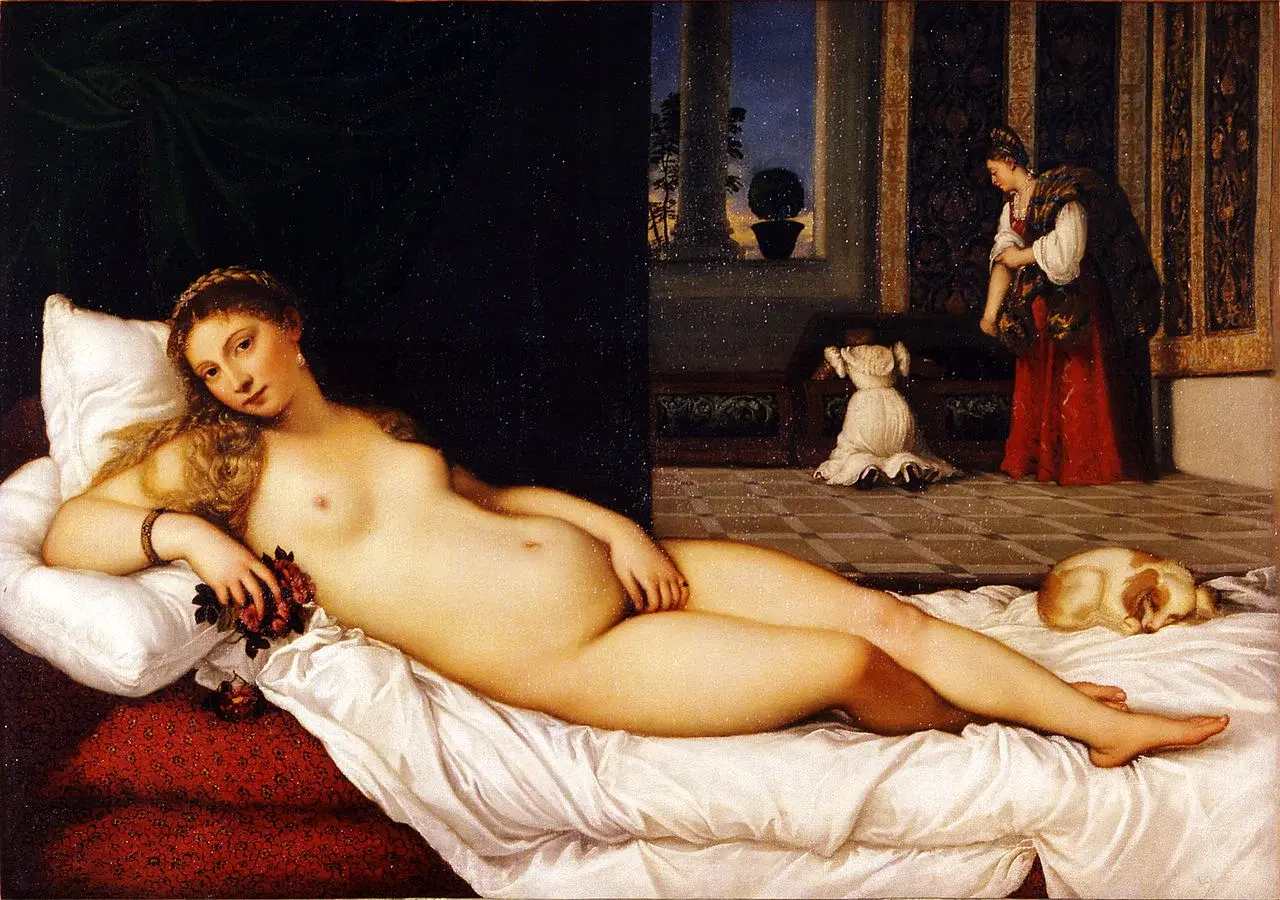
Venus of Urbino
#75
Meet the artist
TTitian1488–1576Italian
Dates
1538
Specifications
- Original title
- Venere di Urbino
- Dimensions
- 119 × 165 cm
Wikimedia Commons
About the Artwork
Titian's "Venus of Urbino," a masterpiece residing in the Uffizi Gallery, is a captivating oil painting that reimagines the classical goddess of love within the opulent setting of a Renaissance palace. Completed around 1538, the artwork presents a nude young woman, traditionally identified as Venus, reclining sensuously on a couch. The direct gaze of the figure, her relaxed pose, and the surrounding details of the richly decorated room all contribute to the painting's undeniable erotic charge, sparking debate among art historians about whether she is a goddess, a courtesan, or a symbol of marital love.
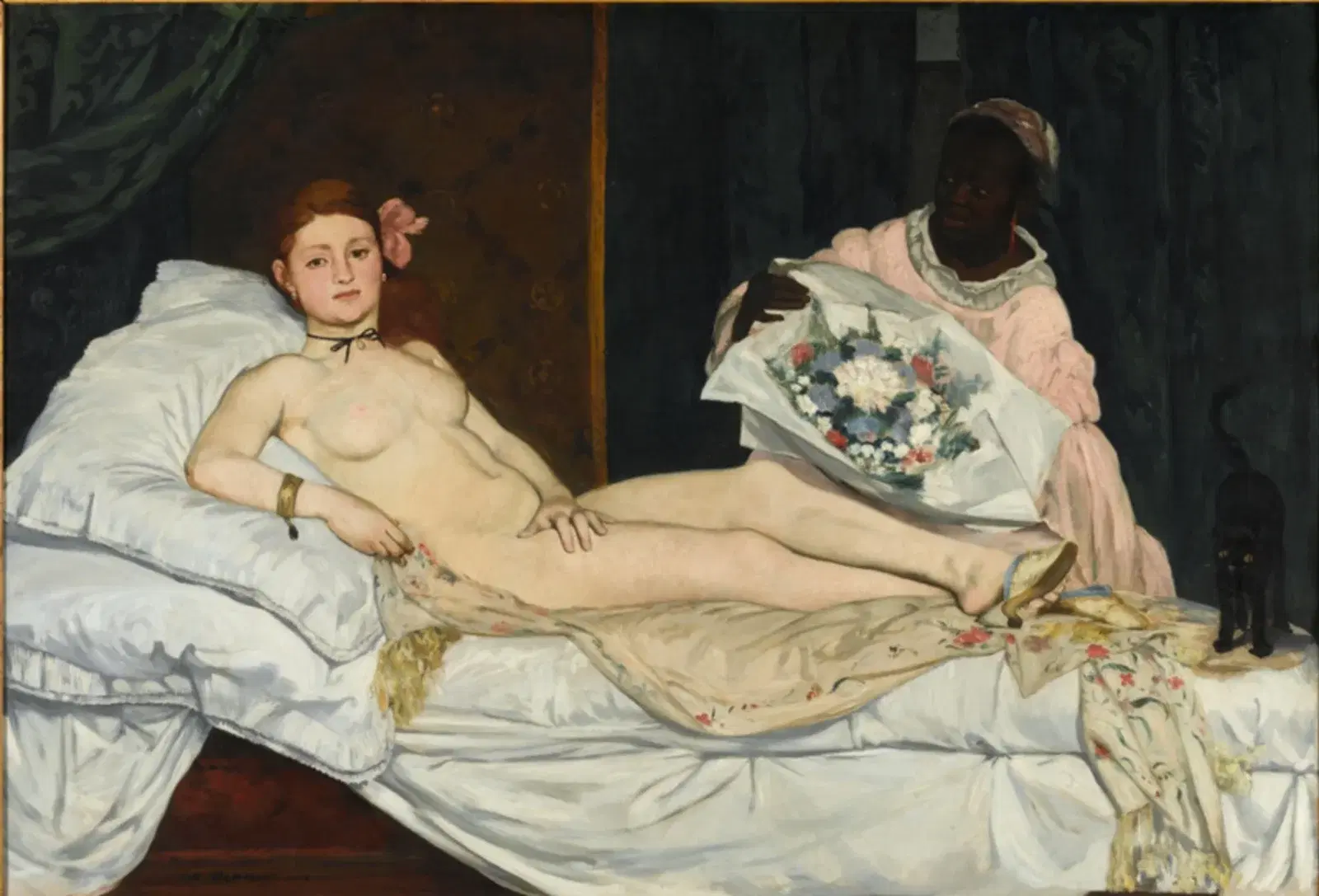
Historically, "Venus of Urbino" is significant for establishing a new standard for the reclining female nude in Venetian painting. Titian masterfully employs vibrant colors, soft textures, and subtle gradations of light to create a lifelike and alluring figure. The inclusion of symbolic elements, such as the dog (fidelity), the maids at the cassone (marriage), and even the possible interpretation of her hand gesture related to arousal assisting conception, adds layers of meaning to the work, linking it to Renaissance ideals and social customs. The painting's influence is evident in later works, most notably Manet's "Olympia," demonstrating its enduring impact on the development of modern art.
The enduring power of "Venus of Urbino" lies in its ability to engage viewers on multiple levels. It's a celebration of beauty and sensuality, a potential commentary on marriage and societal expectations, and a technical tour de force by one of the greatest painters of the Renaissance. Whether interpreted as a classical allegory or a straightforward depiction of a beautiful woman, the painting's arresting presence and complex symbolism continue to fascinate and provoke discussion, making it a cornerstone of Western art history.
How to experience it
notice the dog, maids and domestic setting as key parts of the image
Don’t stop here
More to explore by Titian
Same feeling, different artists